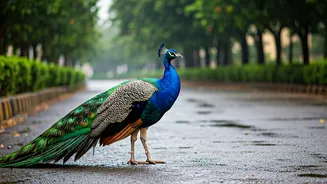







A Monsoon Spectacle on Pedder Road
In the early hours of June 24, 2026, as the much-awaited monsoon rains cooled the city, residents of South Mumbai were treated to a rare spectacle. A group of peacocks and peahens were seen calmly navigating the traffic-laden stretches of Pedder Road,
seemingly unfazed by the urban hustle. Passersby and commuters paused, their daily rush interrupted by the graceful birds. Phones quickly emerged to capture the moment, and soon, social media was flooded with videos and photos. Clips showed the birds walking along the road, while another popular video featured a peacock perched majestically on a balcony railing against the backdrop of high-rise buildings. Mumbaikars expressed their delight and astonishment online, with many calling it a beautiful and surreal start to the monsoon season. The term "Nature Reels" became fitting as these moments offered a rare pause from the city's fast pace, a reminder of nature's surprising appearances.
The Science Behind the Dance
The sight of peacocks emerging with the rains is a classic image, deeply embedded in Indian culture. While it appears they are 'dancing in the rain' out of joy, there's a scientific reason for this behaviour. The monsoon season, which typically begins around this time of year in many parts of India, coincides with the peafowl's breeding season. The elaborate dance, where the male fans out his spectacular train feathers, is a courtship ritual designed to attract a mate. The cooler temperatures and renewed greenery that accompany the rains create an ideal environment for mating and nesting. The increased availability of insects and worms after the first showers also ensures a steady food supply for the chicks once they hatch. So, when a peacock displays its full glory during a downpour, it's not just celebrating the weather; it's an instinctive and vital part of its life cycle.
Mumbai’s Urban Jungle
While spotting a peacock in the heart of South Mumbai is rare, it's not entirely unheard of. Mumbai, despite being a dense concrete metropolis, is flanked by green pockets that host a surprising diversity of wildlife. Peacocks are usually spotted in areas like Malabar Hill, Raj Bhavan, and the expansive Sanjay Gandhi National Park (SGNP). Social media users speculated that the birds seen on Pedder Road likely ventured down from the green zones around Malabar Hill and Doongerwadi, also known as the Tower of Silence, which is known for its resident peafowl population. These sightings highlight the unique interface between urban development and natural habitats in the city. The Indian peafowl is a highly adaptable species, capable of thriving in both forests and human-dominated landscapes like agricultural fields and city fringes. Their increasing numbers and visibility in urban areas are subjects of ecological studies, indicating both successful conservation and a changing relationship with their environment.
A Moment of Shared Joy and Caution
The reaction to the peacock sightings has been overwhelmingly positive, a collective moment of wonder for a city often defined by its relentless pace. For many, it was a welcome reminder of the biodiversity that coexists with them. One user on social media commented, “Mumbai never fails to surprise. This is beautiful,” capturing the general sentiment. Another noted that it was a sign of the city "healing with the onset of monsoon." This event, however, also brings a quiet reminder of the need for coexistence. While the birds appeared calm, their presence on busy roads poses risks. As wildlife becomes more habituated to urban environments, it becomes crucial for citizens to admire from a distance and ensure the animals have safe passage. These peacocks of Pedder Road didn't just create a viral moment; they offered a lesson in the delicate, and often beautiful, balance between human life and the wild.