





The Current Digital Footprint
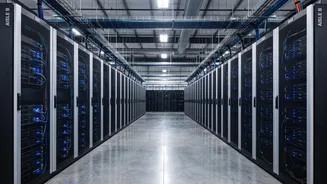
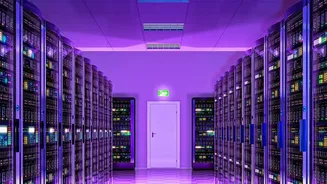
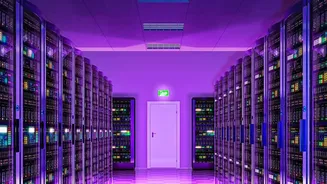
Our increasingly online world runs on data centers, sprawling facilities packed with servers that store, process, and move information. In 2024, these centers consumed an estimated 415 to 460 terawatt-hours (TWh) of electricity, accounting for roughly
1.5% of total global electricity use. To put that into perspective, this consumption is roughly equivalent to the entire annual electricity generation of a country like Germany. While historical efficiency gains have helped temper this growth, the sheer expansion of digital services has kept the overall demand on an upward trajectory. This sets the stage for a dramatic increase as new, more power-hungry technologies become mainstream.
The AI and Crypto Accelerants
The primary driver behind the projected surge in electricity demand is the explosive growth of artificial intelligence and, to a lesser extent, cryptocurrency mining. According to a recent IEA report from November 2026, AI is expected to account for three-quarters of the growth in data center electricity consumption by 2030. Training complex AI models and running the constant stream of 'inference' tasks—the work an AI does to answer your question or generate an image—are incredibly energy-intensive. One analysis notes that a single ChatGPT query consumes nearly ten times the power of a standard Google search. The hardware that powers this revolution, particularly specialized AI servers, has a power density that has increased significantly, concentrating massive energy needs into single facilities.
A Doubling of Demand by 2030
The IEA's base-case scenario projects that by 2030, global electricity consumption from data centers could more than double, reaching between 945 and 1,000 TWh. This amount would be comparable to the current electricity consumption of Japan. This rapid increase means that data centers' share of global electricity demand is set to climb to nearly 3% by the end of the decade. The growth is not uniform, however. The United States and China are expected to see the most significant increases, together accounting for nearly 80% of the global growth. Projections show that by 2030, data centers in the US could be powered largely by natural gas, while those in China may rely heavily on coal, leading to a projected 70% rise in the sector's carbon emissions.
The Situation in India
India is in the midst of its own data center boom, driven by data localization policies, a massive digital consumer base, and the race to adopt AI. The country's data center capacity has grown significantly, with Mumbai and Chennai emerging as major hubs. Currently, data centers account for about 0.5% of India's total electricity consumption. However, this figure is expected to rise dramatically. One forecast projects India's data center electricity demand could grow nearly fivefold between 2024 and 2030, from 13 TWh to 57 TWh. Another report suggests demand could surge eightfold by 2035. This rapid expansion has attracted billions in investment from both domestic conglomerates and global hyperscalers like Amazon, Google, and Microsoft, all looking to build out capacity for cloud services and AI.
The Push for a Greener Cloud
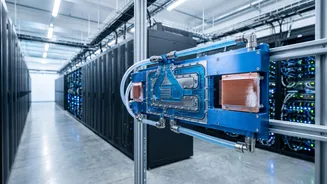
The technology industry is not ignoring this challenge. In fact, major tech companies like Google, Microsoft, Amazon, and Meta are among the largest corporate buyers of renewable energy in the world. In Europe, the IEA expects renewables to supply about 70% of data center electricity by 2030. There's also a significant focus on improving efficiency, not just in cooling systems but also in the software and hardware itself. The IEA notes that the energy required for a single AI task is declining rapidly. However, this is being offset by the sheer growth in the number of users and the increasing complexity of AI applications. To ensure a stable and clean power supply, some companies are even exploring advanced nuclear technologies, such as small modular reactors (SMRs), to provide reliable, low-carbon energy directly to their facilities.