




A Perennial Race Against Time
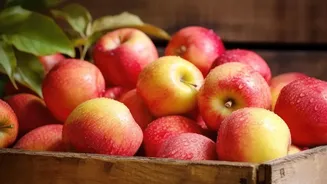
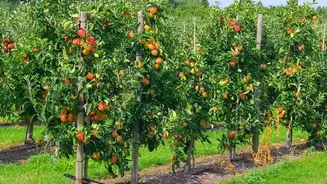
For generations, the rhythm of life in Kashmir's apple orchards was dictated by a harsh reality: once picked, the fruit's clock was ticking. Apples, being perishable, had to be transported and sold quickly. This often led to a market glut during the peak
harvest season from August to October. With trucks lining the highways and markets flooded, prices would plummet, forcing many growers into distress sales. Farmers had little bargaining power, often having to sell their year's hard work at whatever price was offered, while a significant portion of the produce—sometimes up to 30%—would be lost to spoilage due to a lack of adequate storage facilities. This seasonal pressure not only squeezed farmer incomes but also posed a threat to the cultivation of heritage apple varieties, which are prized for their unique flavour but can be more delicate.
The Cool Revolution: CA Storage
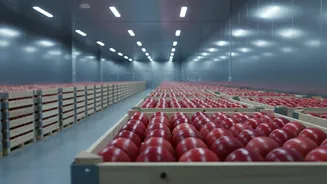
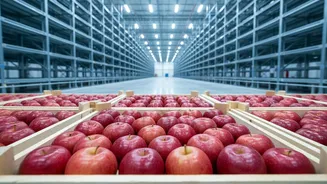
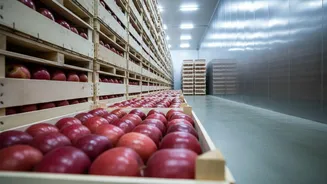
The game-changer has been the widespread adoption of Controlled Atmosphere (CA) storage. Unlike simple refrigeration, CA facilities are high-tech warehouses that precisely manage the environment where apples are stored. Inside these sealed chambers, oxygen levels are drastically reduced from the natural 21% to around 1.5-2%, while carbon dioxide, temperature, and humidity are carefully regulated. This process essentially puts the apples to sleep, dramatically slowing their ripening and decay. The technology allows apples that would spoil in weeks to be preserved in pristine condition for up to ten months. This innovation gives farmers and traders unprecedented control, transforming the apple from a perishable good into a semi-durable commodity.
From Spoilage to Strategic Selling
The impact of this technology on the ground has been transformative. Instead of panic-selling during the harvest glut, farmers can now store their A-grade produce and release it to the market in a phased manner, months after the harvest. This ability to wait for periods of higher demand, typically in the winter and spring, has stabilised prices and significantly boosted farmer incomes. It has become a lifeline, protecting growers from unforeseen disruptions like highway closures, which in the past could lead to catastrophic losses. The Kashmir Valley now has a substantial and growing CA storage capacity, with major hubs in areas like Lassipora in Pulwama, which alone hosts dozens of units. This infrastructure is not just about preservation; it's about shifting market power back into the hands of the growers.
Preserving a Cherished Heritage
Beyond the immediate economic benefits, modern logistics are helping to secure the future of Kashmir's unique apple heritage. The region is home to traditional varieties like the Ambri, Maharaji, and American Trel, each with a distinct taste and aroma that are part of Kashmir's cultural identity. However, many of these native varieties have been under threat, eclipsed by newer, more commercially uniform, high-density types that appeal to mass markets based on appearance. The financial stability provided by CA storage gives farmers a buffer, making it more viable to continue cultivating these heritage apples. By ensuring that even delicate, traditional varieties can reach distant markets in perfect condition, the cold chain helps create and sustain a premium niche for these unique fruits, safeguarding biodiversity and a priceless agricultural legacy.
The Road Ahead: Challenges and Opportunities
While the growth of cold storage has been a resounding success, challenges remain. The benefits are not yet equally distributed, as the cost can be prohibitive for small and marginal farmers, who may still rely on middlemen. Furthermore, as capacity grows, there are concerns about potential over-saturation and ensuring that the focus remains on quality over quantity. The next frontier involves further integrating the entire value chain—from investing in refrigerated 'reefer' vans for transport to developing processing units for value-added products like juices and concentrates. Expanding into international markets, which requires meeting global standards for packaging and certification, is another major opportunity that this new infrastructure makes possible.