




Unlocking a 2,500-Year-Old Climate Diary
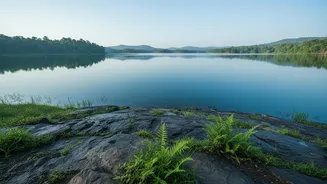
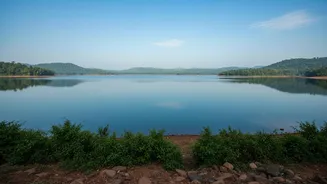
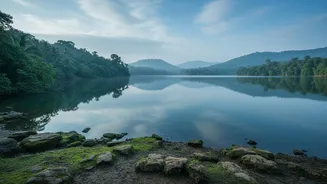
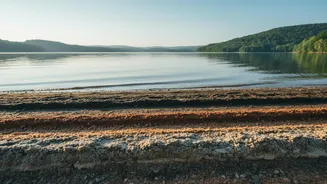
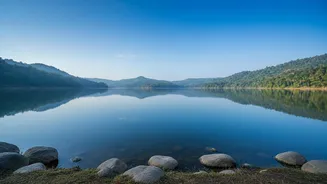
In the heart of India's Core Monsoon Zone (CMZ), scientists have found an incredible natural archive. Researchers from the Birbal Sahni Institute of Palaeosciences (BSIP) in Lucknow journeyed to Raja Rani Lake in Chhattisgarh's Korba district. There,
they extracted a 40-centimetre-long sediment core from the lake bed. This seemingly simple tube of mud is, in fact, a layered history book of environmental changes stretching back about 2,500 years. Each layer contains microscopic pollen grains, shed by the plants that grew around the lake centuries, or even millennia, ago. By carefully analysing this pollen—a science known as palynology—the researchers could reconstruct the region's past vegetation and, by extension, its climate history with remarkable detail.
A Stronger, Wetter Past
The pollen record told a dramatic story. It revealed that between roughly 1060 and 1725 CE, Central India experienced a period of unusually strong and intense Indian Summer Monsoon (ISM) rainfall. This period corresponds with what is known globally as the Medieval Climate Anomaly, a time of widespread warmer temperatures. The pollen from these layers was dominated by species from moist, tropical deciduous forests, painting a picture of a warm, humid climate lush with forest-loving plants. This finding challenges previous assumptions and provides strong evidence that the monsoon was once far more powerful than what we consider normal today. Crucially, the sediment core showed no evidence of any significant dry spells during this centuries-long period within the core monsoon zone.
Why Ancient Mud Beats Modern Tech
So why is a column of lake mud more insightful than a network of sophisticated weather stations? It comes down to time and perspective. Modern instrumental records are incredibly precise, but they are also very short, offering only about 150 years of data at best. They provide a mere snapshot in the grand scheme of Earth's climate. Furthermore, weather stations are geographically sparse and can be influenced by localised effects like urban growth. In contrast, lake sediments offer a continuous, long-term record. They capture an integrated signal of regional climate over thousands of years, preserving evidence of everything from rainfall patterns and vegetation shifts to soil erosion and fire events. These natural archives allow scientists to distinguish short-term weather from long-term climate variability, providing a crucial baseline to understand the changes we are witnessing today.
Lessons for India's Climate Future
This research is more than just a fascinating history lesson; it has profound implications for the future. Understanding the natural variability of the Indian Summer Monsoon—a system that governs the lives and livelihoods of hundreds of millions—is critical for accurate climate modelling. By revealing how the monsoon responded to past global warm periods, the Chhattisgarh study provides invaluable data for predicting how it might behave in our own era of climate change. This knowledge can help improve long-term strategies for agriculture, water resource management, and disaster preparedness. It highlights how studying the past gives us the tools we need to better navigate the environmental challenges of the future.