






The Old World of Payment Fees
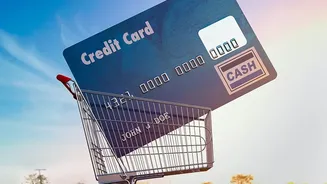
Before UPI dominated the landscape, accepting digital payments came at a clear cost for businesses. Every time a customer paid with a credit or debit card, the merchant paid a fee known as the Merchant Discount Rate (MDR). This percentage, typically ranging
from 0.9% to over 2%, was deducted from the transaction value. While seemingly small, these fees added up, representing a significant operational expense, especially for businesses with thin margins. The MDR was split between several players: the bank that issued the customer's card, the bank that provided the merchant's payment terminal, and the card network itself (like Visa or Mastercard). For companies, this was a straightforward cost of doing business—a necessary evil to offer customers the convenience of digital payments.
Enter UPI: A Paradigm Shift
Launched in 2016, UPI turned this model on its head. As an open, interoperable system managed by the National Payments Corporation of India (NPCI), it enabled instant bank-to-bank transfers via a simple mobile interface. Its most disruptive feature, cemented by a government mandate in 2020, was the elimination of MDR on UPI and RuPay debit card transactions. Suddenly, businesses could accept unlimited digital payments without losing a percentage of their revenue. This policy choice was designed to accelerate digital adoption, especially among small merchants who were previously deterred by transaction fees. The result was an explosion in digital payments, with UPI now accounting for the vast majority of retail digital transaction volumes in India.
From Cost Centre to Growth Engine
The zero-MDR regime has prompted a profound mindset shift within Indian companies. Instead of viewing payment acceptance as a cost to be minimized, businesses now see it as a strategic tool for growth. With the friction of fees removed, companies have aggressively pushed UPI to acquire new customers, especially in Tier 3 to Tier 6 cities where digital payment adoption was previously low. The rich transaction data generated by UPI has become an invaluable asset. Fintech lenders and even traditional banks now use these digital footprints to assess creditworthiness for new-to-credit customers, expanding access to loans for small businesses and individuals. Startups have built entire business models on UPI's rails, starting with payments and diversifying into services like lending, insurance, and wealth management.
A New Chapter: The Return of MDR
The era of completely free UPI for all merchants is, however, evolving. The zero-MDR model, while a success for adoption, placed immense financial strain on the banks and payment companies that maintain the infrastructure. Government subsidies helped but didn't cover the full cost of running the massive ecosystem. In a significant policy shift, the NPCI announced in September 2026 that a 0.4% MDR will apply to person-to-merchant UPI transactions above ₹2,000, effective from October 15, 2026. This move is intended to create a sustainable revenue model to fund the system's security, innovation, and expansion. However, crucial protections remain: person-to-person transfers are still free, and the majority of transactions, which are below the ₹2,000 threshold, will not attract this charge. Small merchants are also largely exempt, ensuring the original goal of financial inclusion is not compromised.
The Road Ahead for Indian Businesses
The reintroduction of a structured, low-cost MDR for higher-value transactions marks a new phase of maturity for UPI. For companies, payment costs are once again a line item to consider, but the landscape is irrevocably changed. The new 0.4% rate is still significantly lower than typical credit card fees, keeping UPI the most affordable digital option for most businesses. The change forces a more sophisticated approach. Businesses must now analyze their transaction patterns, comparing the costs of UPI against other methods and potentially using different payment providers to optimize expenses. But the strategic value of UPI remains. The mindset of using digital payments to drive formalization, gather data, and access new customer segments is now deeply embedded in Indian corporate strategy. The cost may no longer be zero, but the value proposition has never been higher.