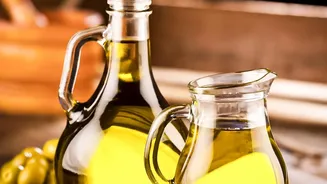







A Global Issue on the Indian Stove
The price you pay for a bottle of sunflower, soy, or palm oil is rarely just a local story. India is the world's largest importer of vegetable oils, sourcing nearly two-thirds of its demand from other countries. This makes domestic prices highly sensitive
to what happens in global markets. Key suppliers include Malaysia and Indonesia for palm oil, and Argentina, Brazil, Russia, and Ukraine for soy and sunflower oils. Any disruption in these regions, whether from geopolitical events or extreme weather, quickly ripples into Indian household budgets. Over the past year, these factors have contributed to a nearly 20% rise in vegetable oil prices in India, a key driver of overall food inflation.
The Government's Delicate Balancing Act
To manage the rising costs, the Indian government is reportedly considering a cut in import duties on vegetable oils. This isn't a simple decision. On one hand, reducing taxes can lower retail prices and provide immediate relief to consumers, which is crucial during the high-demand festive period. On the other hand, the government must also protect the interests of its own oilseed farmers. A deep cut in import duties could make imported oil so cheap that it discourages local farmers from planting oilseed crops like soybean and mustard, undermining the long-term goal of self-reliance. Industry officials have suggested a modest 5% cut in the basic import duty to strike a balance between providing consumer relief and ensuring domestic soybean prices remain supportive for farmers.
A History of Intervention
This is not the first time New Delhi has used this tool. In May 2025, the government halved the basic import tax on crude edible oils, bringing the effective total duty down to 16.5% for crude palm, soy, and sunflower oils. However, the impact was partially offset as global suppliers raised their prices in response to the increased demand from India. This experience shows that while duty cuts can help, they are not a guaranteed fix and can sometimes lead to international prices firming up, limiting the benefit for the end consumer.
The Monsoon's Murky Outlook
Domestic factors also play a critical role, and none is more important than the monsoon. The 2026 monsoon season has been uneven, with early deficits raising concerns about the Kharif (summer) crop, which includes key oilseeds like soybean and groundnut. An erratic monsoon can lead to lower acreage and reduced yields, tightening domestic supply and putting further pressure on prices. While farmers have shown resilience in sowing, concerns have shifted from the area planted to the final yield, especially for rain-dependent crops. A poor harvest would increase India's reliance on imports, making the country even more vulnerable to global price swings.
What to Expect for Your Festive Budget
With the festive season—a period of peak consumption for fried foods and sweets—already underway, refiners have been aggressively stocking up. Edible oil imports surged in August, with soyoil hitting a record high as it was competitively priced against other oils. This stocking is in anticipation of the usual demand spike between September and November. While a potential import duty cut could offer some reprieve, the benefits may be limited by rising international prices and a potentially weak domestic harvest. Consumers are likely to see continued volatility, with sunflower oil prices remaining firm as it gains favour as a stable alternative despite its higher cost. For now, households are advised to budget for potentially firm-to-higher edible oil costs as they prepare for the festivities.