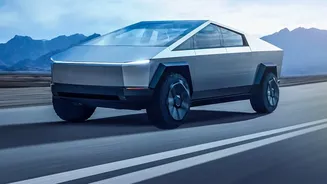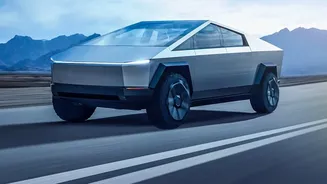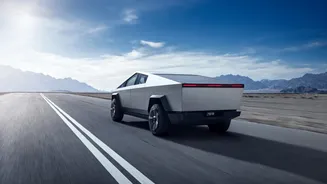




In a move signaling a major pivot, Elon Musk announced Tesla will wind down Cybertruck production by mid-2027. The decision frees up capacity for its new priority: the Cybercab robotaxi, ending a chapter for one of the most polarizing vehicles in recent
memory.
The End of the Line
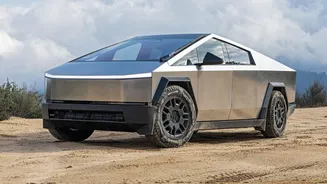
Tesla is officially pumping the brakes on its futuristic pickup. CEO Elon Musk confirmed in a post on X (formerly Twitter) that production of the Cybertruck at its Gigafactory in Texas will be phased out around the middle of 2027. The move is not subtle; it is a decisive strategic shift to reallocate precious factory space and resources to the company's next big bet, the Cybercab. This two-seat autonomous vehicle, which lacks a steering wheel or pedals, is central to Tesla's ambitions to become a leader in artificial intelligence and robotics, not just electric cars. While Musk did not explicitly state that the Cybertruck is being discontinued permanently, the Texas facility is the only plant equipped to build the unconventional truck, making a revival elsewhere unlikely without significant new investment.
A Troubled Production History
The Cybertruck's journey from a dramatic 2019 unveiling—complete with shattered 'unbreakable' glass—to the production line has been rocky. Originally slated for a 2021 release with a starting price of $39,900, multiple delays pushed the first customer deliveries to late 2023, with a much higher base price of over $60,000. Since its launch, the truck has been plagued by production difficulties, quality control issues, and numerous recalls for problems ranging to faulty accelerator pedals to software glitches. Even Musk himself admitted the company 'dug its own grave' with the Cybertruck, acknowledging the immense challenges in manufacturing its stainless-steel exoskeleton and unique design at scale while remaining profitable.
Sales Never Met the Hype
Despite a massive number of initial reservations, the Cybertruck struggled to translate hype into mass-market sales. Musk once projected that Tesla could sell 250,000 to 500,000 units annually. However, actual sales figures fell dramatically short of these ambitions. According to industry estimates, U.S. sales fell from roughly 39,000 units in 2024 to just over 20,000 in 2025, a nearly 48% decline. The trend continued into 2026, with sales further dropping. The vehicle's radical, angular design proved polarizing, and its failure to secure regulatory approval in key markets like Europe limited its global reach. The combination of high costs, production bottlenecks, and a niche appeal ultimately prevented it from becoming the mainstream success Tesla had envisioned.
Pivoting to an Autonomous Future
The decision to end Cybertruck production is less about one vehicle's failure and more about a fundamental change in Tesla's corporate strategy. The company is increasingly focusing on autonomous driving, with the Cybercab at the forefront of this new chapter. By freeing up manufacturing capacity at the Texas Gigafactory, Tesla can accelerate the production of its robotaxis. The company has already begun operating paid Cybercab rides in Austin and is expanding its robotaxi services to other cities. This pivot suggests Tesla sees its future not just in selling cars to individuals but in operating a massive fleet of autonomous vehicles that generate recurring revenue through ride-hailing services. As one engineer noted, the Cybertruck served as an 'incredible technology development platform' whose innovations will live on in the Cybercab.