



A New Playbook for the Red Planet
NASA has announced a significant evolution in its approach to exploring Mars by selecting seven U.S. companies to help design the next wave of robotic explorers. This initiative, known as Science Transport and Robotic Innovation for Deployment and Exploration
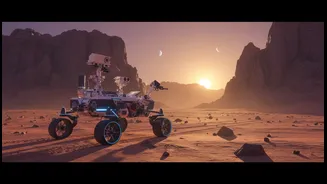
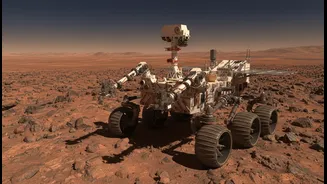
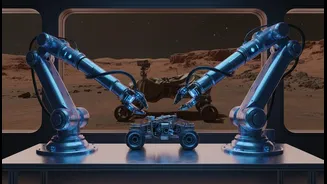
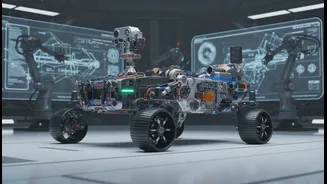
(STRIDE), signals a strategic pivot. For decades, the agency has relied on large, incredibly capable, but costly rovers like Curiosity and Perseverance. While these car-sized laboratories have been immensely successful, they are complex to build and operate. The STRIDE program, with an initial value of around $17 million, aims to complement these efforts by leveraging commercial innovation. By fostering public-private partnerships, NASA can tap into specialized expertise from the wider tech industry, accelerate development timelines, and potentially lower mission costs, enabling more frequent and diverse missions to the Red Planet.
The Innovators Tasked with Taming Mars
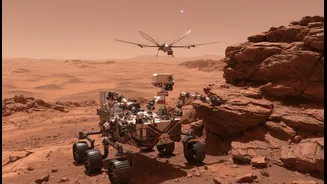
The seven companies chosen represent a dynamic mix of established aerospace giants and agile newcomers, each bringing a unique skill set to the formidable task of Martian exploration. The awardees are AeroVironment, Astrobotic, Venturi Astrolab, Ground Control Robotics, Honeybee Robotics, Intuitive Machines, and MEI Technologies. Several of these names are already well-known in space circles. AeroVironment was instrumental in the success of the Ingenuity Mars helicopter, proving flight is possible in the thin Martian atmosphere. Honeybee Robotics has a long history of developing specialized drills and sample-collection tools for NASA. Meanwhile, companies like Astrobotic and Intuitive Machines are at the forefront of the commercial lunar payload services industry, giving them invaluable experience in landing and operating hardware on other celestial bodies. This diverse portfolio suggests NASA is creating a competitive ecosystem to spur creative solutions.
Why New Robots Are Needed
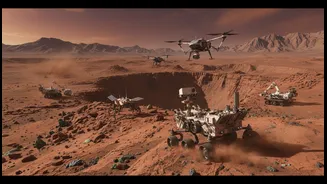
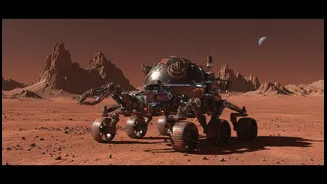
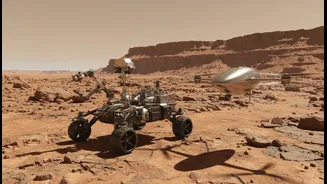
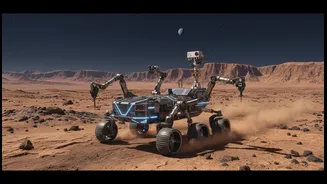
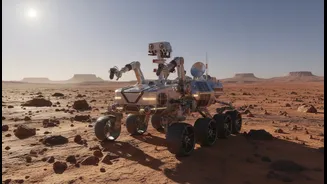
Mars is an unforgiving environment. While current rovers have provided unprecedented views of crater floors and ancient riverbeds, many of the most scientifically compelling regions remain out of reach. These include steep crater walls, canyons, the entrances to potential lava tubes, and rugged highlands. The STRIDE initiative is explicitly focused on developing mobility systems—both on the ground and in the air—that can access these challenging terrains. Past rovers have struggled with issues like getting stuck in fine Martian sand and navigating around large obstacles. The goal is to create smaller, potentially more agile and autonomous robots that can travel greater distances and work together to investigate areas that a single, large rover cannot safely reach. These future systems will need to be robust enough to handle the planet's extreme temperatures and dusty conditions, problems that have hampered missions in the past.
Beyond a Single Rover: The Future of Exploration
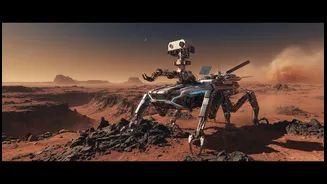
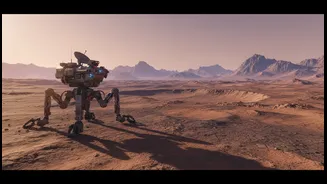
The STRIDE program is about more than just building better individual robots; it’s about creating a new paradigm for planetary science. The vision is to move towards a more distributed model of exploration, possibly involving swarms of smaller robots that can collaborate autonomously. This approach offers greater resilience—if one small robot fails, the mission can continue. It also allows for simultaneous investigation of multiple sites, dramatically increasing the pace of discovery. The technologies being explored could include advanced aerial drones inspired by Ingenuity, legged robots capable of navigating highly uneven ground, and specialized digging and sampling systems that are lighter and more efficient. This push towards diverse robotic ecosystems is a key part of NASA's long-term plan to uncover signs of past life and prepare for eventual human missions.
A Stepping Stone to Human Exploration
Ultimately, every robotic mission to Mars is a precursor to sending humans. The technologies developed under the STRIDE program will not only unlock new science but will also provide critical data for planning future crewed missions. Understanding the terrain in detail is essential for selecting safe landing sites and planning surface operations for astronauts. Furthermore, this model of commercial partnership is a blueprint for future exploration of both the Moon and Mars. By serving as a reliable partner and customer, NASA is helping to cultivate a robust commercial space economy. This creates a powerful cycle where government investment spurs private innovation, which in turn lowers the cost and increases access to space for everyone, paving the way for humanity's sustained presence beyond Earth.