



Why July Is the Magic Month
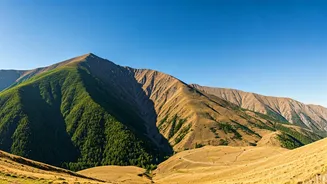
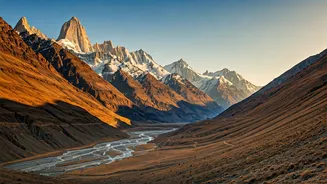
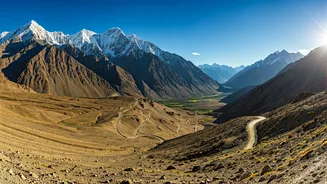
July is considered one of the best months for a Himalayan adventure in Ladakh and Spiti. Both regions are high-altitude cold deserts that sit in a rain-shadow area, meaning they receive very little monsoon rainfall compared to the rest of India. This
translates to clear blue skies and pleasant daytime temperatures perfect for sightseeing. In Ladakh's Leh, expect daytime temperatures to be around 20-25°C, while Spiti's Kaza is slightly cooler at 15-20°C. By July, all major road arteries, including the crucial Manali-Leh and Srinagar-Leh highways, are fully operational. This opens up the possibility for the classic road trip circuits that make these destinations so iconic. The downside? It's peak season, which means more crowds and higher prices for flights, hotels, and taxis.
Ladakh vs. Spiti: Which Adventure Is for You?
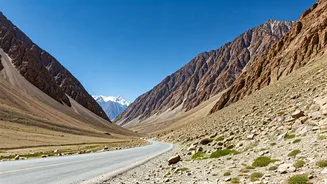
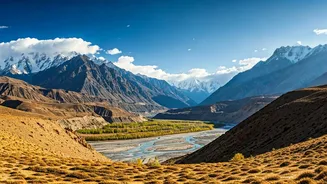
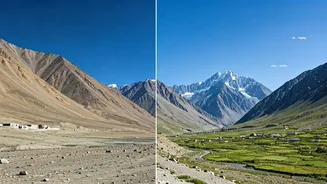
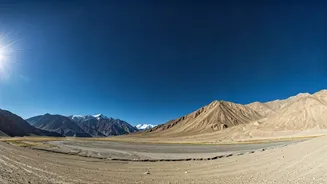
While often spoken of together, Ladakh and Spiti offer very different experiences. Ladakh is about grand scale, dramatic landscapes, and better-developed tourist infrastructure. It's home to iconic sights like Pangong Tso and the sand dunes of Nubra Valley. It's more accessible, with flights directly to Leh, making it a better option for shorter trips. Spiti, on the other hand, is a quieter, more raw, and intimate experience. The journey itself, with its challenging roads and remote villages, is a huge part of the adventure. It's significantly less crowded than Ladakh, even in peak season, making it ideal for those seeking solitude. Budget-wise, Spiti generally works out to be more economical. A trip to Spiti requires more time, typically at least 7-9 days, whereas a basic Ladakh itinerary can be managed in 5-7 days if flying in.
The All-Important Routes: Road Status for July 2026
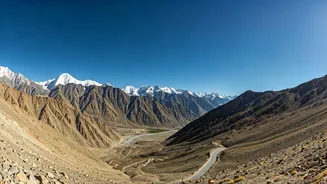
Your route is a critical part of the plan. For Ladakh, you have two primary road options: the Srinagar-Leh highway and the Manali-Leh highway. The Srinagar route offers a more gradual ascent, which is better for acclimatisation. Both highways are expected to be fully open with two-way traffic in July. For Spiti, the full circuit involves entering from Shimla via the Kinnaur valley and exiting via Manali (or vice-versa). The Shimla-Kaza road is generally more stable and stays open for longer. The Manali-Kaza road, which crosses the high Kunzum Pass, typically opens by mid-to-late June and is more rugged, especially the Gramphu-Batal stretch. While both circuits should be open in July, the approach roads, particularly around Manali and in the lower Kashmir valley, can be affected by monsoon rains, leading to potential landslides and delays. Always build buffer days into your itinerary.
Acclimatisation: The Golden Rule You Cannot Ignore
Acute Mountain Sickness (AMS) is a serious risk at altitudes above 2,500 metres (8,200 feet). Both Leh (3,500m) and Kaza (3,800m) are well above this threshold. The key to avoiding AMS is gradual ascent and proper acclimatisation. If you're flying into Leh, the official health advisory recommends at least 48 hours of complete rest before heading to higher altitudes like Pangong Lake or Khardung La. This isn't a suggestion; it's a vital safety measure. Hydration is crucial, so drink 3-4 litres of water daily. Avoid alcohol and smoking, as they can worsen AMS symptoms. The Shimla to Spiti route is naturally better for acclimatisation as it involves a slower, more gradual gain in altitude over several days.
Permits & Paperwork: What You Need
For Indian tourists, the permit system for Ladakh has been simplified. You no longer need a traditional Inner Line Permit (ILP) for standard tourist areas like Nubra Valley and Pangong Tso. Instead, you must pay an environment fee online through the official LAHDC Leh portal and carry the receipt with you. For Spiti, Indian citizens do not need any permits to enter the valley itself. However, if your route includes travel via the Rohtang Pass from the Manali side, you will need a permit for the pass, which can be obtained online. Always carry multiple copies of a valid government-issued photo ID.
Travel Responsibly: Protect the Fragile Ecosystem
The surge in tourism has put immense pressure on the fragile ecosystems of Ladakh and Spiti. As a traveller, you have a crucial role to play in preserving these beautiful regions. Opt for local homestays to ensure the economic benefits reach the local communities directly. Minimise your plastic footprint by carrying a reusable water bottle; Ladakh has a strict ban on single-use plastics. Respect local culture by dressing modestly, especially when visiting monasteries, and always ask for permission before photographing people. Don't go off-roading, as it damages the delicate landscape. The goal is to leave these places as beautiful as you found them for future generations.