


Earth's Natural Hard Drives
Deep within glaciers around the world, from the Himalayas to the polar ice sheets, lie cylindrical samples of ice known as ice cores. These are Earth’s natural hard drives. They form as snow falls and compresses over thousands of years, trapping information
layer by layer like the rings of a tree. Scientists drill deep into glaciers, sometimes miles down, to extract these cores. Each layer provides a pristine snapshot of the environment at the time it was formed, offering a direct look into the past that is impossible to obtain any other way. These cores are a fundamental tool for understanding our planet's climate history, stretching back as far as 800,000 years.
A Library of Ancient Air and Dust
The value of these ice cores lies in what they contain. Tiny air bubbles trapped within the ice are actual samples of ancient atmospheres, allowing scientists to directly measure past concentrations of greenhouse gases like carbon dioxide and methane. The chemical composition of the ice itself reveals past temperatures, while layers of dust can indicate ancient droughts or large-scale wind patterns. Volcanic ash embedded in the ice provides distinct markers that help date the layers with remarkable precision. These archives have shown us the natural cycles of ice ages and warm periods and demonstrated the clear link between higher greenhouse gas levels and rising temperatures. They provide the essential long-term context that puts today's rapid climate changes into sharp perspective.
A Record on the Verge of Disappearing
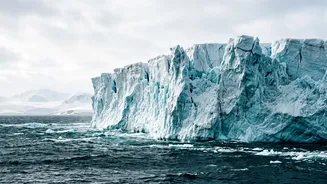
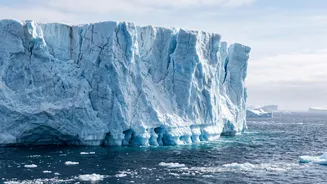
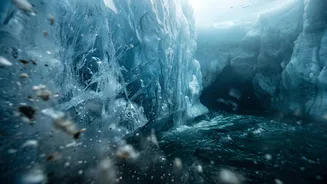
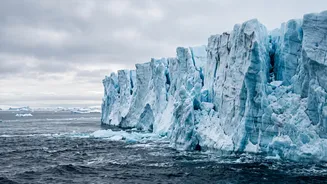
As global temperatures rise, these priceless archives are in grave danger. The threat is more complex than simple surface melting. Warmer air temperatures cause meltwater to percolate down from the surface, seeping deep into the glacier. This water acts like a solvent, blurring the distinct annual layers and washing away the chemical records they hold. Once this internal structure is compromised, the scientific value of the ice core is lost forever. A recent study of a Swiss glacier, for example, found that recent melt had completely erased the seasonal chemical signals in older layers, rendering it useless for research. Glaciers in the Alps, Andes, and even the high-altitude Himalayas are now at risk of losing their records permanently.
The Race to Save Our Climate Memory
In response to this urgent crisis, an international consortium of scientists has launched a daring rescue mission: the Ice Memory project. The goal is to drill and retrieve ice cores from the world's most threatened glaciers before their data is corrupted. Launched by French and Italian glaciologists, the project aims to sample 20 glaciers in 20 years. These 'heritage' cores are then destined for a permanent, ultra-cold storage facility in Antarctica—a natural freezer that can safeguard them for future generations of scientists. The idea is that even if the original glaciers disappear, this library of ice will remain, allowing researchers centuries from now to study our planet's past using technologies we can't yet imagine.
Why This Matters for India and the World
For India, the stakes are particularly high. The Himalayan glaciers, often called the 'Third Pole', are a critical source of water for hundreds of millions of people. Studies show melting in the Himalayas has dramatically accelerated since 2000. Ice cores from Himalayan glaciers have already provided crucial evidence of this warming, showing the last few decades have been the warmest in a millennium. Losing these specific archives means losing the ability to understand regional climate patterns, predict changes to the monsoon, and manage future water supplies. Globally, the loss of these records hobbles our ability to refine climate models and make informed decisions. Without these benchmarks from the past, we are navigating a rapidly changing future with a crucial part of our planetary memory wiped clean.