





Verify Your Operator is Licensed
The single most important safety decision you will make happens before you even see the river. Rishikesh has hundreds of rafting operators, but not all adhere to the same safety standards. Always choose a company that is licensed by the Uttarakhand Tourism
Development Board. Licensed operators are required to use certified guides, provide high-quality safety equipment (like ISI-marked life jackets and helmets), and carry insurance. Many unlicensed outfits offer cheaper trips by cutting corners on guide training, gear maintenance, and safety protocols. In the late-monsoon period, when river conditions can be unpredictable, booking with a verified, reputable company is non-negotiable. You can often check their credentials online or ask to see their permit.
Understand Late-Monsoon River Conditions
The rafting season in Rishikesh officially closes during the peak monsoon (July to mid-September) due to dangerously high and unpredictable water levels. The season typically reopens in late September. However, conditions can still be volatile. The river is often fuller and faster than during the spring or winter months. This means rapids can feel more powerful, and the water is often cloudy with sediment, reducing visibility of underwater obstacles. While exciting, this requires extra caution. Always check with your operator about the current conditions on the day of your trip, as heavy rainfall in the mountains can change water levels overnight.
Choose the Right Rafting Stretch
Rishikesh offers several rafting stretches, each with different difficulty levels based on the grade of its rapids. For a first-timer, especially post-monsoon, the Brahmapuri to Rishikesh stretch (around 9 km) is often recommended. It primarily features Grade I and II rapids, which are gentle and serve as a good introduction. The popular Shivpuri to Rishikesh stretch (16 km) includes more challenging Grade III and III+ rapids like Roller Coaster and Golf Course. More advanced stretches like Marine Drive should be avoided unless you have prior experience and are a confident swimmer. Be honest with your operator about your experience and fitness level so they can recommend the safest and most enjoyable option for you.
Wear Your Safety Gear Correctly—No Excuses
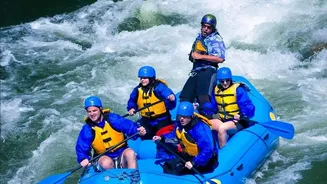
Your operator will provide a life jacket and a helmet. This is not optional. Wear them at all times on the river. A properly fitted life jacket is designed to keep you afloat even if you cannot swim. Ensure your jacket is snug and all buckles are fastened. An oversized or loose jacket can be dangerous in the water. Likewise, your helmet protects you from impact with rocks or paddles. Do not wear loose clothing like sarees or heavy materials like jeans, as they become heavy when wet and can restrict movement. Quick-drying synthetic fabrics are the best choice.
Pay Full Attention During the Safety Briefing
Before you get on the raft, your guide will conduct a 15-20 minute safety briefing. This is not just a formality; it contains critical information that could save your life. You will learn basic paddle commands (like 'forward,' 'back paddle,' and 'stop'), how to hold your paddle correctly, and what to do if the raft flips or you fall into the water. The guide will explain the 'high side' maneuver, where everyone shifts their weight to prevent a capsize. Listen intently, ask questions if you're unsure about anything, and commit the commands to memory.
Know What to Do If You Fall In
Even on a safe trip, falling out of the raft is a possibility. The key is not to panic. Your life jacket will keep you afloat. Your guide will have instructed you on the proper 'floating position': lie on your back with your feet pointed downstream. This allows you to see where you're going and use your feet to fend off any rocks. Never try to stand up in fast-moving water, as your foot could get trapped. Hold onto your paddle if you can, and listen for instructions from your guide or the safety kayaker who often accompanies trips on more challenging rapids. They will either pull you back into the raft or guide you toward a rescue line.
Stay Sober and Honest About Your Health
It is strictly forbidden to consume alcohol or any intoxicating substances before or during a rafting trip. These substances impair your judgment, coordination, and reaction time, putting you and everyone else on the raft at risk. Reputable operators will refuse to take anyone who is under the influence. Additionally, be upfront about any medical conditions you may have, such as asthma, heart conditions, or severe allergies. While rafting is accessible to many, certain conditions may require extra precautions or make it unsafe to participate.