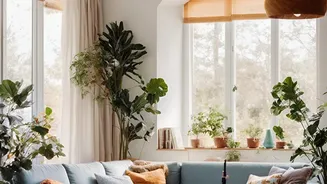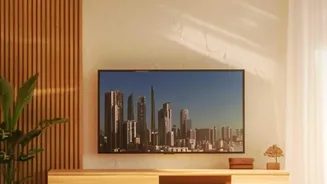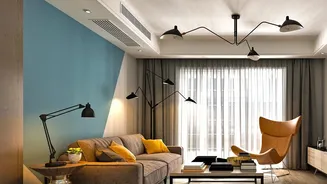





Why the Shift to a 'Lived-In' Space?
The way we use our homes has fundamentally changed. The pandemic normalized work-from-home, turning corners of living rooms into offices. Smaller apartment sizes in urban centres demand that every square foot serves multiple purposes. The living room is
no longer just for entertaining; it's a family room, a workspace, a relaxation zone, and sometimes even a dining area. This shift is less about shrinking space and more about a change in mindset. Homeowners now value how a space is inhabited over its sheer size, focusing on experience rather than mere display. The modern Indian home needs to be adaptable, and the living room is the epicentre of this transformation.
The Core Idea: Multifunctional Furniture
Flexible design starts with furniture that works harder. Multifunctional pieces are the backbone of an adaptable living room. Think beyond just a sofa and a centre table. A sofa-cum-bed, once considered just for occasional guests, is now a practical staple for naps and lounging in smaller homes. Nesting tables offer flexible surface area that can be expanded for guests and tucked away to save space. Ottomans with hidden storage provide extra seating while concealing everyday clutter. Even TV units are now designed with integrated storage, while slim console tables can create a functional surface in a narrow entryway or behind a sofa without blocking movement.
Creating Zones Without Building Walls
An open-plan living area can feel chaotic without clear visual cues. The key is to create distinct 'zones' for different activities without erecting physical barriers. Area rugs are highly effective at anchoring a seating area and visually separating it from a dining or work zone. The arrangement of furniture itself can create a natural partition; for example, placing a sofa with its back to the dining area subtly divides the two spaces. Using an open-backed bookshelf as a 'soft wall' is another popular strategy, as it defines a boundary while still allowing light to pass through. Even lighting can be used to demarcate zones, with focused task lighting over a work desk and warmer, ambient light in the relaxation area.
Embracing Vertical Space and Smart Storage
In many Indian apartments, floor space is a premium, but wall space is often underutilised. A flexible living room relies on clever storage to remain clutter-free. 'Going vertical' is a key strategy. Wall-mounted shelves, floating workstations that fold flat when not in use, and tall cabinets that reach the ceiling maximize storage without eating into the floor area. A wall-mounted desk, for example, can create a functional work corner in a living room that completely disappears when the workday is over. This approach isn't about having less, but having smarter furniture that does more, keeping the home feeling organized and genuinely open.
The Fusion of Modern and Traditional
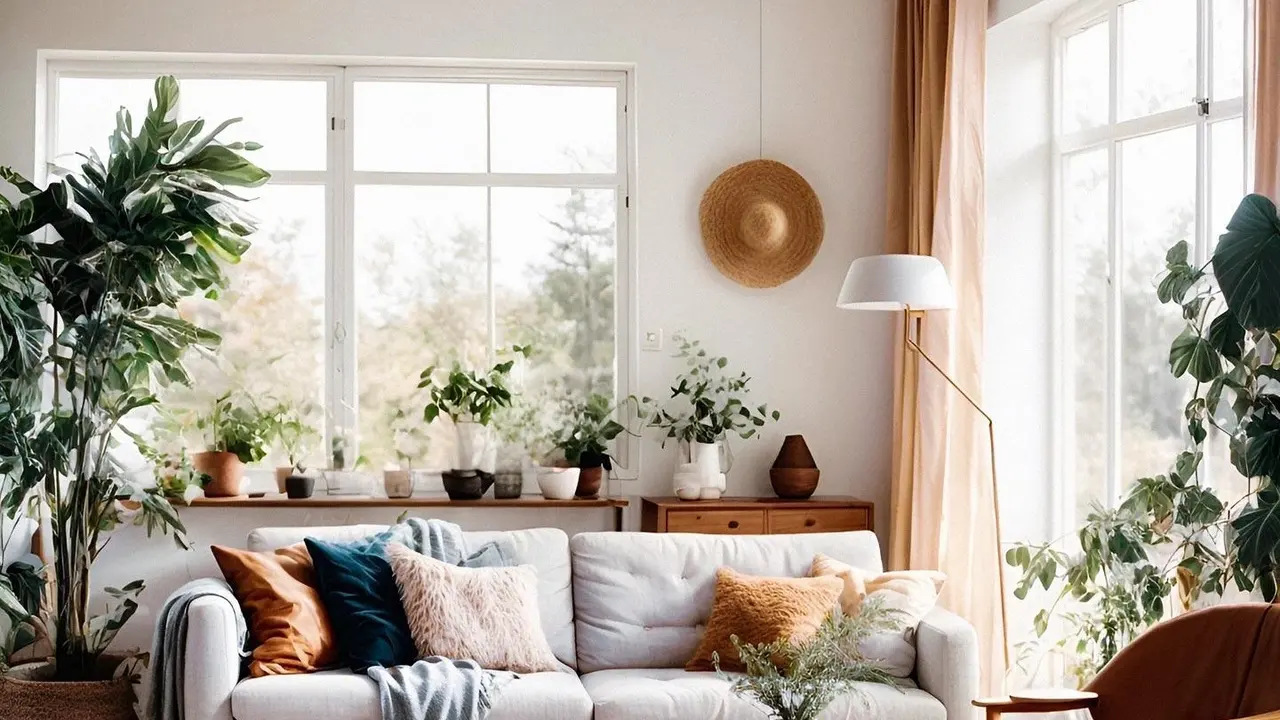
This shift towards flexibility doesn't mean abandoning Indian aesthetics. In fact, it has led to a creative fusion of global trends and local traditions. A minimalist layout might be warmed up with handwoven dhurries or rich Indian textiles. Sleek, modular furniture can be paired with intricately carved wooden accent pieces or decorative cabinets with traditional inlay work. Many are also integrating biophilic design by adding indoor plants to connect with nature, which has long been a principle of traditional Indian architecture. The result is a home that is both globally modern in its functionality and distinctly Indian in its soul.