
Why the Thirst for Lunar Water?
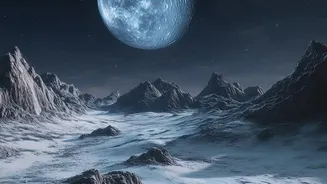
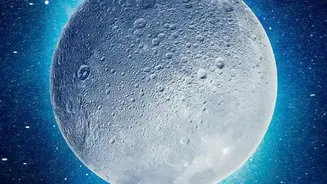
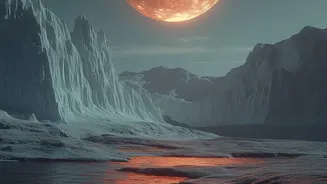
For decades, the Moon was thought to be completely dry. However, a series of missions have confirmed the presence of water ice, particularly concentrated in permanently shadowed craters near the lunar poles. These regions, some of the coldest places in the solar
system, have acted as cosmic cold traps, preserving ice for potentially billions of years. This discovery is a game-changer for space exploration. Water is not just for drinking; its constituent elements, hydrogen and oxygen, are the primary components of rocket fuel. The ability to harvest water on the Moon—a process known as In-Situ Resource Utilization (ISRU)—would mean that lunar bases could generate their own breathable air and create propellant. This would dramatically reduce the cost and complexity of missions, as less material would need to be launched from Earth. A self-sustaining lunar outpost could become a crucial stepping stone for more ambitious crewed missions to Mars and beyond.
Spectrometers: Seeing Water with Light
Finding this lunar water is one thing; mapping it is another. Much of our understanding comes from spectrometers, powerful instruments that can identify materials from a distance by analyzing light. When sunlight hits the lunar surface, some of it is absorbed and some is reflected. Different materials absorb and reflect light at specific wavelengths, creating a unique 'fingerprint'. Spectrometers, whether on orbiting spacecraft like India's Chandrayaan-1 or even telescopes like the airborne SOFIA observatory, are designed to read these fingerprints. For water ice, scientists look for a characteristic absorption feature in the infrared spectrum. Early observations could detect hydrogen but struggled to distinguish molecular water (H2O) from its chemical cousin, hydroxyl (OH). More advanced instruments, however, can now isolate the specific signature of H2O, confirming not just its presence but also giving clues about its concentration and form—whether it’s mixed in with the soil (regolith) or exists in purer deposits.
What the New Maps Reveal
Recent orbital data has allowed scientists to create the most detailed maps of south pole water ice to date. Instruments like NASA's Moon Mineralogy Mapper (M3) have provided high-resolution data showing that the ice is not a uniform sheet but is instead distributed in patchy deposits. Some data suggests that water might even exist in tiny, shadowed micro-craters outside the large, permanently dark regions. Findings from India's Chandrayaan-3 lander in 2023 further complicated the picture, suggesting subsurface temperatures farther from the pole could still support stable water ice, potentially making it more accessible than previously thought. However, more recent 2026 data from NASA's ShadowCam instrument suggests these deposits might be smaller or less concentrated than earlier, more optimistic estimates. This evolving understanding highlights the importance of combining orbital data with ground-truth measurements to know exactly what future missions will find.
Paving the Way for Artemis
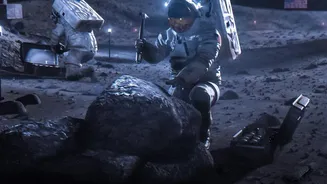
These maps are not just academic exercises; they are essential blueprints for NASA's Artemis program, which aims to establish a long-term human presence on the Moon. Choosing a landing site for astronauts and robotic prospectors depends heavily on proximity to vital resources like water ice. Missions like the planned LUPEX rover, a joint effort by the space agencies of Japan and India, will carry a NASA-built Neutron Spectrometer System (NSS) specifically to scout for hydrogen-rich deposits from the surface. While NASA's dedicated ice-mapping rover, VIPER, was cancelled, the agency has integrated its instruments and objectives into other commercial and international missions. The goal is to move from broad orbital maps to precise, on-the-ground resource maps that can guide drill locations and mining experiments, verifying the accessibility and purity of the water ice.
From Maps to Moonquakes
The hunt for lunar water is now entering a new phase, incorporating novel techniques. A study published in August 2026 proposes using seismology—the study of vibrations—to locate hidden ice deposits. Just as earthquakes reveal Earth's internal structure, small 'moonquakes' could send vibrations through the lunar subsurface. Researchers believe that these seismic waves would travel differently through ice-rich regolith compared to dry soil, creating a distinct signature that seismometers could detect. China's Chang'e-7 mission, expected to land near the south pole in late 2026, will carry a seismometer that could test this theory. This blend of remote sensing from orbit, direct surface analysis by rovers, and subsurface geophysical surveys represents a comprehensive strategy to finally unlock the Moon's most valuable hidden resource.