





India's diverse landscape is dotted with countless water bodies, each with a unique story. From high-altitude Himalayan wonders to sprawling coastal lagoons, these lakes offer more than just water—they are spectacles of nature at its finest.
Pangong Tso, Ladakh
Arguably one
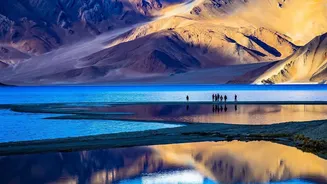
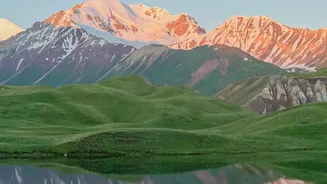
of India's most famous lakes, Pangong Tso is a high-altitude marvel stretching over 130 kilometres from India to China. Situated at about 14,270 feet, its claim to fame is its incredible ability to change colours, shifting between shades of blue, green, and even red throughout the day. The stark, barren mountains that surround it create a dramatic contrast with the shimmering, saline water, making for a photographer's paradise. Despite its salt water, the lake freezes completely solid in the winter. Its breathtaking beauty, amplified by its appearance in the film '3 Idiots,' has made it a must-visit destination for travellers seeking pristine, otherworldly landscapes.
Loktak Lake, Manipur
Known as the only floating lake in the world, Loktak Lake is an ecological marvel and the largest freshwater lake in Northeast India. What makes it truly offbeat are the 'phumdis'—heterogeneous masses of vegetation, soil, and organic matter that float on its surface. These phumdis are solid enough to support the homes of local fishermen. The largest of these phumdis, covering 40 square kilometres, is home to the Keibul Lamjao National Park, the world's only floating national park. This unique park was created to protect the endangered Sangai, or 'dancing deer', which has adapted to the spongy ground.
Gurudongmar Lake, Sikkim
Perched at a dizzying altitude of 17,800 feet in North Sikkim, Gurudongmar Lake is one of the highest lakes in the world. Surrounded by snow-capped peaks and located just a few kilometres from the Chinese border, this glacial lake is considered sacred by Buddhists and Sikhs. Legend has it that Guru Padmasambhava, the founder of Tibetan Buddhism, touched a part of the lake in the 8th century, and that portion never freezes, providing drinking water to the local people even in harsh winters. The crystal-clear turquoise water against the rugged mountain backdrop creates a spiritually serene and visually stunning atmosphere.
Lonar Lake, Maharashtra
This offbeat wonder in Maharashtra’s Buldhana district is not of volcanic origin but was created by a meteorite impact over 50,000 years ago. Lonar Lake is the world's only known hyper-velocity impact crater in basaltic rock. The water in this nearly circular crater is both saline and alkaline, creating a unique ecosystem that supports microorganisms not found elsewhere. The crater's rim is enveloped in lush greenery, and the area is dotted with ancient temples, some now in ruins, adding a layer of historical mystery to its geological significance.
Prashar Lake, Himachal Pradesh
Nestled in the Mandi district of Himachal Pradesh at an altitude of about 8,960 feet, Prashar Lake is a hidden gem with a mystical aura. Its most fascinating feature is a small, circular floating island of plant matter that drifts across the deep blue waters. The true depth of the lake remains unknown, adding to its enigma. Beside the lake stands a beautiful 13th-century, three-storied pagoda-like temple dedicated to the sage Prashar, who is believed to have meditated here. Surrounded by the snow-clad Dhauladhar ranges, the lake offers a perfect blend of spirituality and serene natural beauty.
Vembanad Lake, Kerala
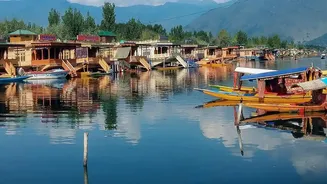
The longest lake in India and the heart of the famous Kerala backwaters, Vembanad is a vast and vital waterbody. Stretching across several districts, this expansive network of canals, lagoons, and rivers is a sight to behold. It is famous for its iconic houseboats, or 'kettuvallams', which offer a unique way to experience the region's tranquil beauty and witness the daily life of communities living along its shores. The lake's ecosystem, a mix of freshwater from rivers and saltwater from the Arabian Sea, supports a rich variety of flora and fauna, including a bird sanctuary.
Chilika Lake, Odisha
As Asia's largest brackish water lagoon, Chilika Lake in Odisha is a massive ecological wonder. Spanning over 1,100 square kilometres, it is a haven for biodiversity. During winter, it becomes one of the most important grounds for migratory birds in the Indian subcontinent, hosting species from as far as Siberia. But its most famous residents are the endangered Irrawaddy dolphins, which can be spotted near the point where the lagoon meets the Bay of Bengal. The combination of its vast waters, numerous small islands de vibrant wildlife makes Chilika a truly special destination.