


Worlds Without a Sun
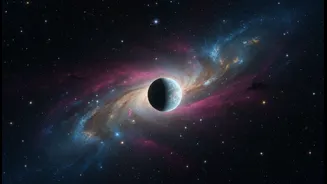
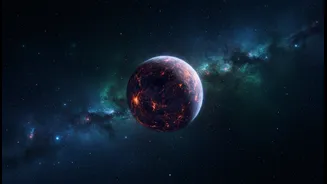
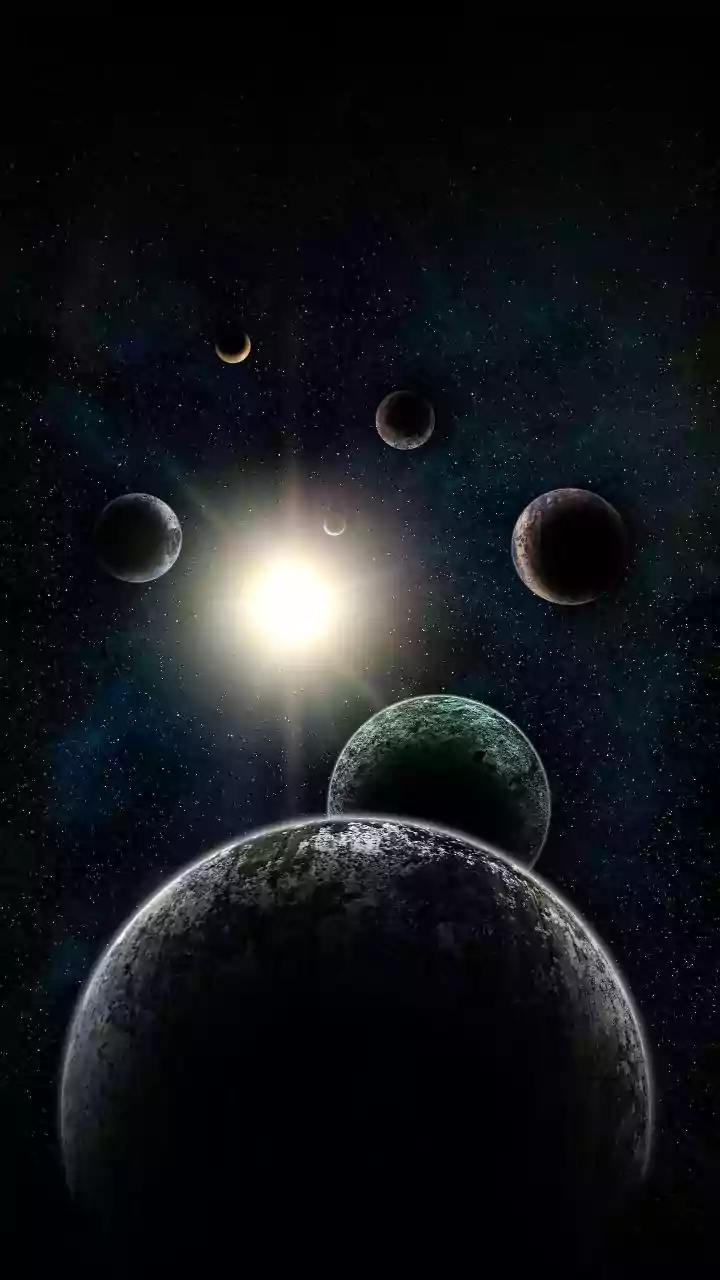
Our galaxy could be filled with trillions of planets that don't orbit a star. Known as free-floating or rogue planets, these cosmic nomads drift through interstellar space in permanent darkness. Scientists believe they form in one of two ways. Some are
likely born in traditional solar systems, like our own, but are violently ejected due to gravitational battles with other, larger planets. Others might form directly from the collapse of a gas cloud that is too small to ignite into a star, creating a planet without ever having a solar system to call home. Whatever their origin, these worlds are one of the most mysterious populations of celestial objects in the Milky Way. Theoretical estimates suggest they could be incredibly numerous, perhaps even more common than the planets that are gravitationally bound to stars.
The Challenge of Cosmic Darkness
So if there are so many of these rogue planets, why haven't we found more of them? The answer is simple: they are almost impossible to see. Traditional planet-hunting methods rely on observing a planet's effect on its host star. The transit method, for example, watches for the tiny dip in a star's light as a planet passes in front of it. The radial velocity method measures the slight wobble of a star caused by a planet's gravitational tug. Since free-floating planets have no host star, these techniques are useless. They emit virtually no light of their own and are lost in the vast darkness between stars, making them incredibly faint and difficult to detect with conventional telescopes.
A New Eye on the Galaxy
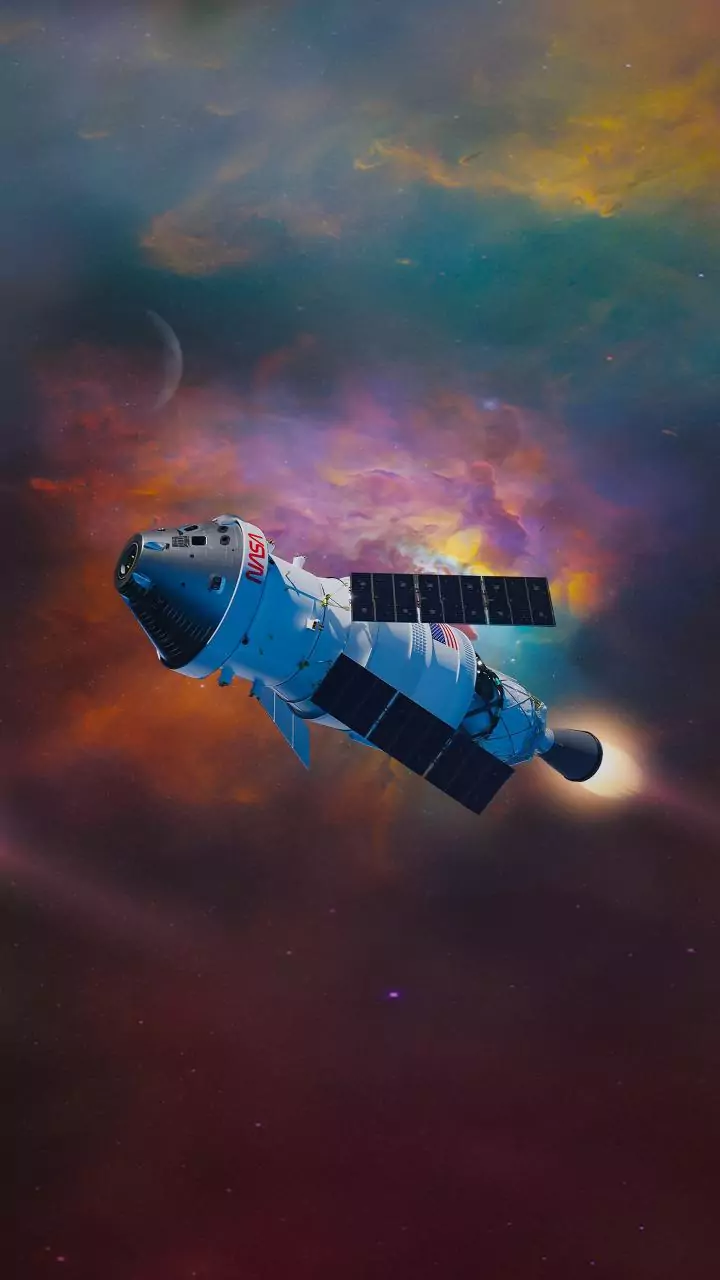
This is where NASA's Nancy Grace Roman Space Telescope comes in. Scheduled to launch by May 2027, this next-generation observatory is poised to revolutionize our understanding of the universe. While it has many scientific goals, one of its most exciting missions is to conduct a massive search for rogue planets. Simulations show that Roman will be able to discover hundreds of these wandering worlds, from massive gas giants down to planets the size of Earth or even smaller. It will provide the first real census of this hidden population, giving us a much clearer picture of how common these lonely planets truly are.
Bending Light to Find a Planet
To find these dark worlds, Roman will use a clever technique called gravitational microlensing. This phenomenon, first predicted by Albert Einstein's theory of general relativity, occurs when a massive object—like a star or a planet—passes almost directly in front of a more distant background star from our point of view. The gravity of the foreground object acts like a natural magnifying glass, bending and amplifying the light from the background star, causing it to temporarily appear brighter. When a rogue planet drifts in front of a star, it creates a very specific, brief spike in the star's brightness that can last for a few hours or days. Roman will stare at a dense field of hundreds of millions of stars toward the center of our galaxy, watching for these tell-tale flickers of light that signal the passage of a hidden planet. This method is uniquely sensitive to low-mass planets and is the only practical way to detect starless worlds.
Unlocking Galactic Secrets
By building the first large-scale catalog of free-floating planets, the Roman Space Telescope will help answer fundamental questions about our galaxy. Studying the number, size, and distribution of these worlds will provide crucial insights into the chaotic processes of planet formation and evolution. Are most rogue planets rocky worlds like Earth, violently flung from their homes, or are they gas giants that formed in isolation? Learning about their population can tell us how common it is for planetary systems to become unstable. This census will test theories of planet formation and could dramatically change our understanding of the galaxy's planetary demographics. The universe, it seems, may be teeming with wandering worlds, and we are finally about to meet them.