







Spain's sun-drenched beaches and historic cities have long been a magnet for travellers. But the dream of a perfect Spanish holiday is now clashing with a harsh reality: overwhelming crowds and growing local anger.
The Paradise Paradox
Spain's tourism sector is a cornerstone
of its economy, accounting for over 12% of the nation's GDP. However, the very success of this industry is now a source of intense conflict. The phenomenon of 'overtourism'—where the sheer volume of visitors overwhelms local infrastructure and damages quality of life—has reached a tipping point. From the mainland to its idyllic islands, residents are raising their voices, arguing that the current model of unlimited growth is environmentally and socially unsustainable. Chants of 'Less Tourism, More Life' and banners declaring 'Tourists go home' are becoming increasingly common sights at large-scale protests.
Ground Zero: Barcelona's Battle
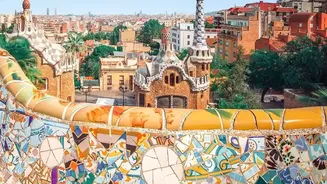
Barcelona has become the epicentre of the anti-tourism movement. With a population of 1.6 million, the city grappled with over 26 million visitors in 2025. Iconic landmarks like the Sagrada Familia are now struggling to manage the influx. The area around the basilica sees an estimated 18 to 22 million people annually, creating a 'saturation point' that disrupts daily life for locals. In response, authorities have planned designated 'selfie stations' to prevent crowds from blocking streets and are even removing popular bus routes from mapping apps to ease congestion on public transport. The famous La Boqueria market, once a hub for residents, has seen fresh food stalls replaced by takeaway snack bars catering to tourists, a trend the city now plans to reverse.
Islands Under Siege
The problem extends far beyond the mainland. The Balearic and Canary Islands are also experiencing intense pressure. In July 2026, Mallorca saw one of its largest-ever demonstrations, with tens of thousands marching against the 'touristification' of the island. With over 13 million visitors in 2025, the island's resources are strained. A severe housing crisis is a primary grievance, as the proliferation of tourist accommodations—over 100,000 properties, both legal and illegal—has driven up rental prices, forcing some locals to live in vehicles despite having jobs. Similar protests have erupted across the Canary Islands, where residents argue the economic model leads to environmental degradation and social inequality.
The Ripple Effect on Local Life
The scrutiny of Spain's tourism model is driven by tangible negative impacts on its residents. In many hotspots, the character of historic neighbourhoods is being eroded, replaced by businesses that cater exclusively to tourists. This cultural erosion is coupled with severe economic pressure. In Barcelona, rental prices have surged by nearly 70% over the last decade. Public services, from sanitation to transport, are stretched to their limits. The environmental cost is also steep, with tourists consuming significantly more water and generating more waste than locals, exacerbating issues like drought.
A Search for Sustainable Solutions
In response to the growing unrest, authorities are beginning to act. Barcelona's mayor has announced a plan to eliminate all licensed tourist apartments by 2028, aiming to return 10,000 homes to the residential market. The city has also increased its tourist tax and is limiting the number of cruise ships. Across Spain, other measures are being implemented, including tourist taxes in the Balearic Islands, limits on group sizes in San Sebastián, and stricter rules on antisocial behaviour. The Spanish government has acknowledged that 'old formulas no longer work' and is promoting a strategy to diversify its offerings beyond the traditional 'sun and sand' model.