







What is a 'Planetary Parade'?
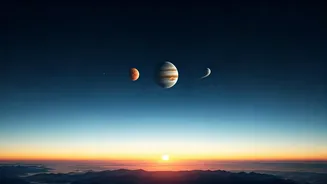
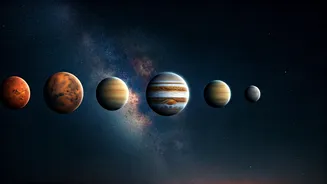
First, let's clear up the terminology. While 'planetary parade' sounds like a neat, orderly line of planets marching across the sky, the reality is a bit more complex. Astronomers use the term 'planetary alignment' to describe when several planets gather
in the same small section of the sky from our perspective on Earth. They won't form a perfect straight line, but they will be clustered together in the same general direction. These events are not exceedingly rare, but an alignment involving six planets is certainly noteworthy for sky-watchers. The 'parade' happening now involves Mercury, Mars, Jupiter, Saturn, Uranus, and Neptune, all located within the same 90-degree arc of the sky.
Managing Expectations: What You'll Actually See
Here’s the most important part: while six planets are technically aligned, not all will be visible. The word “epic” might be an overstatement for the casual observer. Jupiter and Mercury are positioned extremely close to the sun in the sky, meaning they will be lost in the bright glare of dawn and practically impossible to spot. Uranus and Neptune are so far away and faint that you’ll need a powerful telescope and a very dark sky to even have a chance of seeing them. That leaves two planets for most of us: Saturn, which will appear as a steady, yellowish point of light, and a faint, reddish Mars. So, you're looking for a two-planet show, not a six-planet spectacle.
When and Where to Look From India
Timing and location are everything. To catch this alignment, you need to be an early riser. The best viewing window is in the pre-dawn hour, roughly 60 to 30 minutes before your local sunrise. You’ll need to look towards the eastern horizon, where the sun will eventually rise. The planets will be spread out in a diagonal line. Saturn will be the highest and easiest to spot. As the sky begins to lighten, a fainter Mars will appear lower and closer to the horizon. Because the crucial planets are low on the horizon, you'll need an unobstructed view, free from tall buildings or trees.
Gear Up: Naked Eye vs. Binoculars
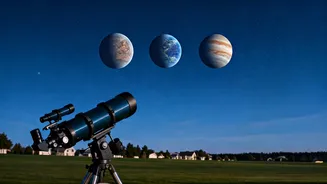
The headline mentions gearing up, so what do you need? For the most basic experience, your eyes are enough. You should be able to spot Saturn without any aid. Mars might be more of a challenge depending on your location and sky conditions. However, a simple pair of binoculars will significantly improve your view. With binoculars, Saturn will appear sharper and its yellowish hue more distinct. You’ll also have a much better chance of spotting Mars, especially if you’re in an area with some light pollution. Binoculars help cut through the haze and make faint objects pop. If you have a telescope, you can try hunting for Uranus and Neptune, but they will only appear as tiny, star-like dots.
Tips for the Best Viewing Experience
To make the most of your pre-dawn sky-watching session, a little preparation goes a long way. First, get away from city lights if you can. Light pollution washes out faint celestial objects, and even a short drive to a darker park can make a huge difference. Second, give your eyes time to adapt to the darkness—it takes about 15-20 minutes for them to become fully sensitive. Avoid looking at your bright phone screen during this time. If you need help locating the planets, a stargazing app like Stellarium or SkyView can be your best friend. Just point your phone at the sky, and it will show you exactly what you're looking at.