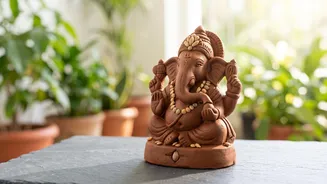








The Heart of the Celebration: The Idol
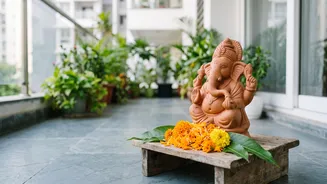
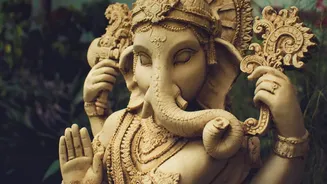
The centerpiece of the festival is the Ganesh idol, and choosing a green one is the most significant step. For generations, idols were made from shadu mati—natural, riverbed clay—that dissolves easily in water. These are making a comeback as devotees
move away from idols made of Plaster of Paris (PoP). PoP is non-biodegradable and can take months, or even years, to dissolve. Worse, the chemical paints often used on PoP idols contain heavy metals like lead and mercury, which poison water bodies, harm aquatic life, and can enter the human food chain. Today, the options for eco-friendly idols are abundant. You can find beautiful idols made from terracotta, paper mâché, and even unique materials like coconut husks or rice flour. These are often decorated with natural, non-toxic dyes derived from turmeric, sandalwood, and other plant-based sources.
Decorations from Nature's Palette
Move over, plastic and thermocol. A truly beautiful mandap can be created using materials that are both traditional and kind to the earth. Thermocol, in particular, is a major pollutant that crumbles but never biodegrades. Instead, create a stunning backdrop with natural fabrics like cotton, jute, or even colourful, upcycled sarees and dupattas. Fresh flowers like marigolds, roses, and hibiscus not only add vibrant colour and fragrance but can be composted after the festivities. Traditional decorations made from mango and banana leaves are not only auspicious but also completely biodegradable. For a creative twist, use whole spices, grains, or make rangoli from rice flour and flower petals instead of chemical colours. The headline's 'seed decor' refers to a growing trend of 'plantable' Ganeshas—idols embedded with seeds that can be grown in a pot after immersion, creating life from the celebration.
A Gentle Farewell: Responsible Visarjan
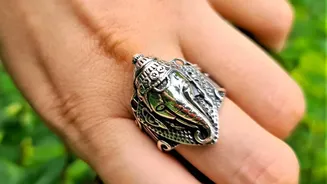
The visarjan, or immersion ceremony, marks a poignant farewell to Lord Ganesha, symbolising his return to the elements. However, immersing PoP idols in lakes and rivers causes significant pollution. An eco-friendly visarjan completes the cycle of nature respectfully. If you have a clay idol, the best method is home immersion. You can perform the ritual by gently submerging the idol in a bucket or tub of water at home. Natural clay will dissolve within a few hours. This nutrient-rich water can then be poured into your garden or potted plants, allowing Bappa to nurture the earth. Many communities also organise artificial ponds or tanks for immersion, which prevents the pollution of natural water bodies and allows for easier management of the remains. For those with permanent or metal idols, a symbolic immersion—sprinkling a few drops of water on the idol or immersing a betel nut as a substitute—is a wonderful, reusable option.
Conscious Offerings and Community Spirit
The spirit of giving and sharing is central to Ganesh Chaturthi, especially when it comes to prasad. You can extend your green commitment here by avoiding single-use plastics. Instead of plastic bags or plates, distribute offerings in traditional leaf-based containers (donas), cloth bags, or reusable steel tiffins. Managing the floral waste, or nirmalya, is another important aspect. Instead of discarding them in regular waste, the flowers used for puja can be composted at home. Many temples and local bodies also organise collection drives to turn this organic matter into valuable manure. Finally, consider celebrating on a community level to reduce overall consumption. Sharing a single, larger pandal between several families can minimise waste and energy use while fostering a stronger sense of togetherness.