







Why Ankle Stability Is Your Foundation
Think of your ankles as the foundation of a building. If they are weak or unstable, the entire structure above—your knees, hips, and back—is compromised. Strong, stable ankles are essential not just for athletes, but for everyone. They allow you to walk
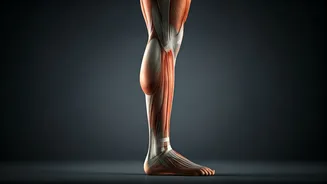
on uneven surfaces, climb stairs, and react quickly to a sudden misstep without rolling an ankle. This stability comes from a complex network of muscles, ligaments, and a neural feedback system called proprioception. Proprioception is your body's ability to sense its position in space. When it’s sharp, your ankle can make tiny, rapid adjustments to maintain balance and prevent injury. When it’s dull, you’re far more susceptible to sprains and falls.
The Power of Standing on One Leg
The secret to improving ankle stability lies in challenging it. Single-leg exercises are exceptionally effective because they force the small stabiliser muscles in your feet, ankles, and lower legs to work overtime. When you stand on one foot, your body is inherently unstable. Your nervous system immediately fires up, sending messages to these muscles to contract and relax in a coordinated dance to keep you upright. This process is a direct workout for your proprioceptive system. By repeatedly practising these movements, you’re not just building muscle strength; you are re-training the brain-to-muscle connection, making your ankle’s automatic responses faster and more accurate. This is why these simple drills can deliver such significant improvements in balance and resilience.
1. The Basic Single-Leg Stand
This is the cornerstone of ankle stability training. Start by standing near a wall or chair for support. Shift your weight onto one foot, lifting the other a few inches off the floor. Keep your standing leg’s knee slightly bent, not locked. Focus on a spot in front of you to help maintain your balance. Your goal is to stand without wobbling. You will feel the muscles in your foot and ankle working hard. Aim to hold this position for 30 seconds. If it’s easy, try to hold it for 60 seconds. Then, switch legs and repeat. Perform 2-3 sets on each leg. The key is quality over quantity; focus on keeping your hips level and your posture upright.
2. The Single-Leg Clock Reach
Once you’ve mastered the basic stand, add movement to challenge your stability further. Balance on your left leg. Imagine you are at the centre of a clock face. Slowly, with control, reach your right arm and right leg towards the 12 o’clock position in front of you, then return to the start. Next, reach towards 3 o’clock to your side, and finally towards 6 o’clock behind you. The goal is to tap the floor lightly in each position without losing your balance or putting your other foot down. This exercise forces your ankle to stabilise through a range of motion. Perform 3-5 full “clock” sequences on each leg. Keep the movement slow and deliberate.
3. Progressing with a Challenge
To continue making progress, you need to make the exercises more difficult. The simplest way to do this is by closing your eyes while performing the Basic Single-Leg Stand. This removes visual feedback and forces your proprioceptive system to work even harder. You will immediately notice how much more you wobble. Start by trying to hold for just 5-10 seconds and build from there. Another progression is to stand on a slightly unstable surface, like a pillow or a folded towel. This mimics the uneven ground you encounter in daily life and provides an advanced challenge for your stabiliser muscles. Always have something to hold onto when first attempting these progressions.
Building a Consistent Routine
Consistency is more important than intensity. You don't need to dedicate an hour to these exercises. The best approach is to integrate them into your daily life. Try doing single-leg stands while brushing your teeth, waiting for water to boil, or during commercial breaks on TV. Aim to perform these exercises for a few minutes every day. This frequent, low-intensity stimulation is incredibly effective for rewiring your neuromuscular pathways. Listen to your body; muscle fatigue is normal, but sharp pain is a signal to stop. Within a few weeks of consistent practice, you should notice a significant improvement in your balance and a newfound confidence in your steps.