
India's Next Interplanetary Leap
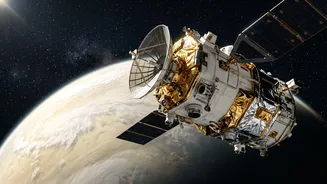
Following the historic successes of its Mars Orbiter Mission (Mangalyaan) and lunar Chandrayaan missions, ISRO is setting its sights on the second planet from the Sun. Shukrayaan-1, which translates from Sanskrit to "Venus Craft," is India's dedicated
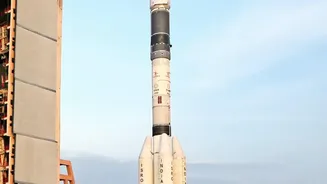
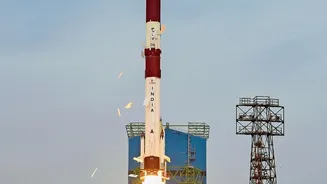
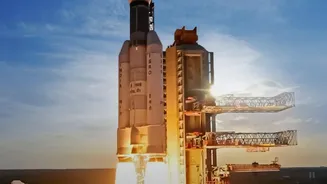
mission to study our planetary neighbour. Formally approved by the Union Cabinet in September 2024 with a budget of approximately ₹1,236 crore, the mission represents a significant step in India's focus on deep-space planetary exploration. The orbiter is scheduled to launch aboard the powerful LVM-3 rocket on March 29, 2028. It will then embark on a 112-day journey to enter a highly elliptical orbit around Venus, beginning its scientific observations from July 2028.
The Mysteries of the Venusian Clouds
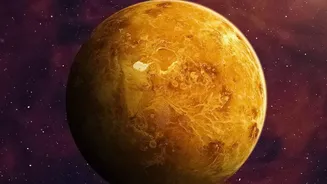
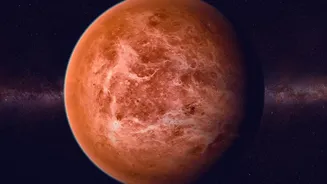
Venus is permanently shrouded in a thick, opaque blanket of clouds unlike anything on Earth. Composed mainly of sulfuric acid droplets, these clouds are a primary focus for Shukrayaan. They create a runaway greenhouse effect, trapping heat and driving surface temperatures to a scorching 467°C, hot enough to melt lead. The atmospheric pressure at the surface is over 90 times that of Earth's. Scientists are eager to understand the chemistry and dynamics of this hostile atmosphere. One of the enduring mysteries is what causes strange, dark patches that are only visible in ultraviolet light. Shukrayaan’s instruments will probe the composition and structure of these clouds, seeking answers to why Earth’s twin evolved into such an inhospitable world.
A Toolkit for an Alien Atmosphere
To achieve its goals, Shukrayaan-1 will carry a suite of around 19 scientific instruments, weighing approximately 100 kilograms in total. A significant number of these payloads are developed in India, complemented by international collaborations with Russia, Sweden, and Germany. Key instruments are focused on atmospheric analysis, including the Venus InfraRed Atmospheric Gases Linker (VIRAL), provided by Russia, to study atmospheric gases. Other sensors, like a thermal camera and various spectrometers, will map thermal emissions, study cloud structure, and analyze how the solar wind interacts with the Venusian ionosphere. A high-resolution Synthetic Aperture Radar (SAR) will also pierce through the dense clouds to map the planet's volcanic surface, looking for signs of geological activity.
A Renewed Global Race to Venus
ISRO's mission joins a resurgence of global interest in Venus. After decades of being relatively overlooked in favour of Mars, space agencies are once again turning their attention to our sister planet. NASA is planning two ambitious missions, VERITAS and DAVINCI, scheduled to launch around the late 2020s or early 2030s. The European Space Agency (ESA) also has its Envision orbiter planned for the early 2030s. Together, these missions will provide the most comprehensive study of Venus ever undertaken. Shukrayaan-1 is poised to make a significant contribution, positioning India as a key player in this new era of planetary exploration and helping scientists understand why a planet so similar to our own had such a dramatically different evolutionary path.