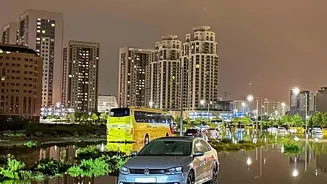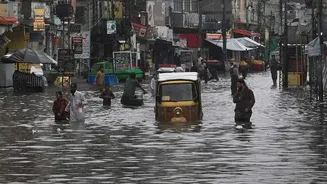






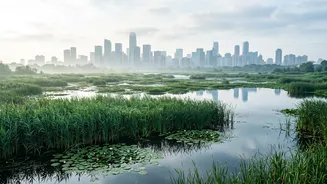
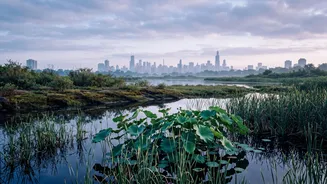

Every monsoon, images of waterlogged streets and stranded vehicles flood social media from India’s metros. But what if one of the best defences against this urban deluge isn’t more concrete, but something we have long neglected: the humble wetland?
The Modern Urban Deluge
Cities
like Chennai, Mumbai, and Bengaluru are facing a recurring crisis. Intense rainfall, driven by a changing climate, overwhelms decades-old drainage systems. Unplanned urbanisation has transformed these cities into vast stretches of impervious concrete and asphalt. Rainwater, with nowhere to go, pools on roads and floods low-lying neighbourhoods. This isn't just an inconvenience; it causes massive economic damage, disrupts lives, and poses significant safety risks. India has lost nearly a third of its natural wetlands over the last four decades to urbanisation and agriculture. Cities have been hit particularly hard, with Chennai losing around 85% of its wetlands and Mumbai about 71%. This destruction is directly linked to increased urban flooding.
Nature’s Forgotten Sponge
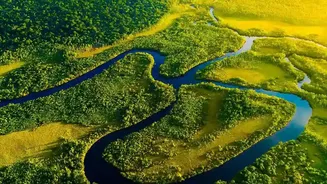
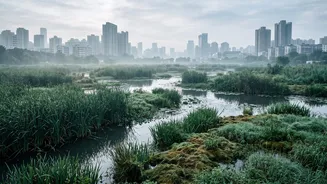
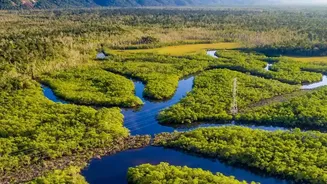
Often dismissed as wastelands, wetlands are among the most productive ecosystems on Earth. They are areas where water covers the soil, either permanently or seasonally, and include marshes, lakes, and floodplains. Think of a healthy wetland as a giant natural sponge. During heavy downpours, they absorb and store enormous volumes of excess rainwater. Instead of rushing into overburdened drains, the water is held back, its flow slowed, and then released gradually over time. This simple, natural mechanism is a powerful buffer against flash floods. The loss of these natural sponges is a key reason why many Indian cities now face a paradox of floods during the monsoon and acute water scarcity in the summer.
Lessons from Kolkata and Chennai
The tale of two cities offers a stark lesson. The East Kolkata Wetlands, a 12,500-hectare Ramsar site, have long served as the city's natural flood defence system. The city's land slopes away from the Hooghly river, and these wetlands naturally receive and retain stormwater, protecting Kolkata from severe waterlogging. Moreover, they function as the world's largest natural resource recovery ecosystem, treating a significant portion of the city's sewage. In stark contrast, Chennai has paid a heavy price for destroying its wetlands. The Pallikaranai Marsh, which once spanned nearly 6,000 hectares, has shrunk dramatically due to urban sprawl. This degradation is widely cited by experts as a major contributor to the devastating floods of 2015 and the recurring water crises the city faces. Studies have shown that the loss of hundreds of water bodies in the Pallikaranai catchment area has severely compromised the region's ability to absorb rainwater, putting large areas at high risk of flooding.
How Restoration Works
Restoring a wetland is more than just filling an area with water. It involves a scientific approach to reviving an ecosystem. This can include desilting and deepening water bodies to increase their storage capacity, removing encroachments, and planting native vegetation that helps filter pollutants and anchor the soil. In some cases, it involves creating new 'sponge parks', which are artificially engineered wetlands designed to mimic natural functions in dense urban areas. Chennai, for instance, has started developing such parks to reclaim lost water bodies and enhance permeability. A crucial aspect of restoration is also managing the release of stored water, which can be done based on rainfall forecasts to ensure the wetland has enough capacity before the next downpour.
More Than Just Flood Control
The benefits of healthy wetlands extend far beyond flood mitigation. They are critical for recharging groundwater, which is vital for water security in cities that often rely on depleting aquifers. They act as natural filters, or 'kidneys of the landscape', purifying water by trapping sediments and pollutants. These ecosystems are also hotspots of biodiversity, providing habitats for countless species of birds, fish, and plants. Furthermore, wetlands help regulate local microclimates, reduce the urban heat island effect, and sequester large amounts of carbon, contributing to climate change mitigation. By providing green spaces for recreation, they also significantly improve the quality of life for urban residents.