



Seeing the Invisible Universe
Our eyes are tuned to a narrow band of light called the visible spectrum. But light comes in many other 'colors' our eyes can't see, from low-energy radio waves to extremely high-energy X-rays and gamma rays. Different cosmic objects and events shine
brightest in different types of light. A cool gas cloud might be visible in radio waves, while an exploding star blazes in X-rays. To truly understand what's happening in a distant galaxy, scientists need to look at it across this entire electromagnetic spectrum. This practice, known as multi-wavelength astronomy, is like switching from seeing in black and white to viewing the universe in a million new colors, each telling a different part of the story.
A Case Study in Cosmic Chaos
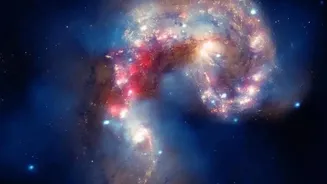
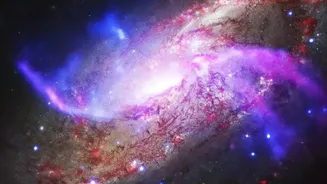
A stunning example of this technique in action is the galaxy cluster Abell 2256, located about 780 million light-years from Earth. This isn't just one galaxy, but a chaotic construction site where at least three separate clusters of galaxies are smashing into each other. These mergers are one of the main ways such colossal structures grow. By combining observations from X-ray telescopes like NASA's Chandra X-ray Observatory with several powerful radio telescopes, astronomers have been able to disentangle the violent processes at play in this cosmic pile-up. The result is a composite image where each type of light reveals a different layer of the action.
The X-Ray View: A Hot Mess
When viewed in X-rays, Abell 2256 reveals its hottest and most energetic components. X-ray telescopes are designed to detect phenomena involving millions of degrees of heat, such as matter swirling near a black hole or the remnants of a supernova. In Abell 2256, the X-ray data (often colored blue in composite images) maps out vast clouds of superheated gas that fill the space between the galaxies. This gas, which is invisible in optical light, actually contains more mass than all the stars in the cluster's galaxies combined. The X-ray image shows the shockwaves and turbulence created as the different galaxy clusters collide, like a weather map of a cosmic hurricane.
The Radio View: Tracing Shocks and Jets
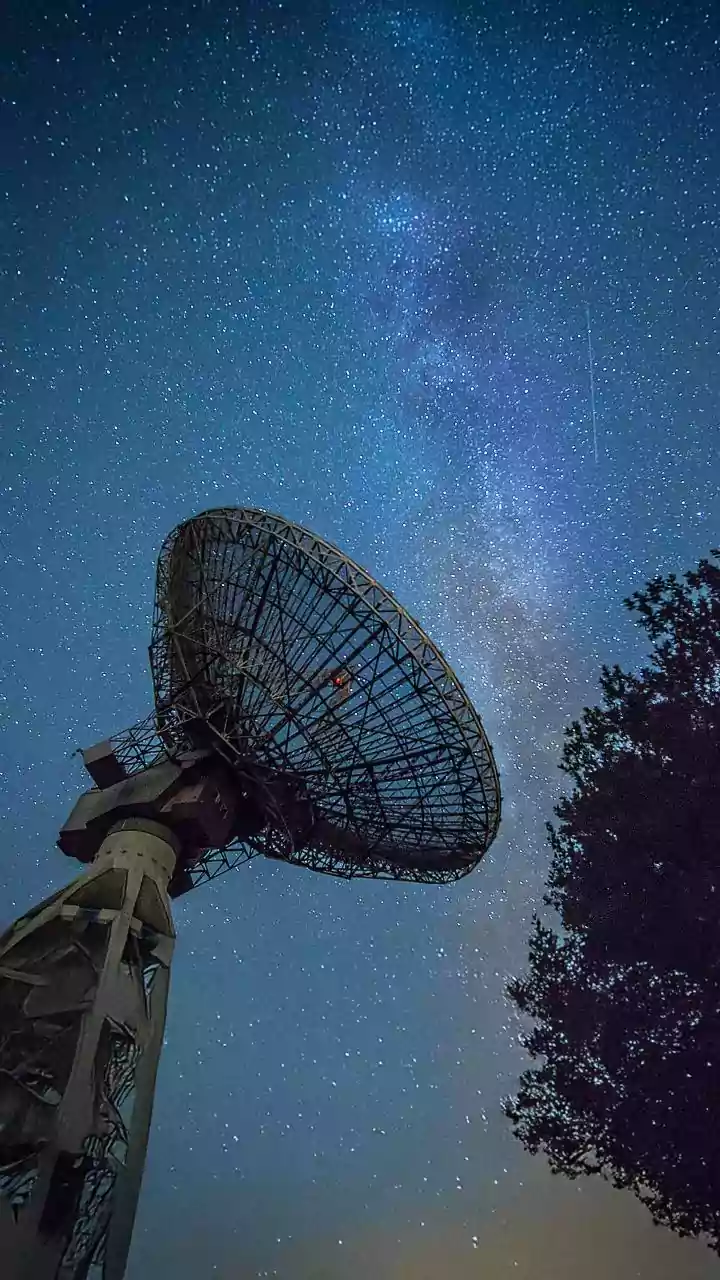
Switching to the radio view tells a completely different story. Radio telescopes detect lower-energy light, which reveals phenomena like jets of particles shooting from supermassive black holes and the complex magnetic fields that weave through galaxies. In Abell 2256, the radio data (often colored red) highlights features called 'radio relics'—enormous, arc-shaped structures on the outskirts of the cluster. These are created when shockwaves from the merger accelerate electrons to nearly the speed of light, causing them to emit radio waves as they spiral through magnetic fields. This view essentially traces the cosmic particle accelerators powered by the immense collision.
The Complete Picture
Neither the X-ray nor the radio view alone could explain what is happening in Abell 2256. The X-rays show the hot, dense gas, but not the particle acceleration. The radio waves show the accelerated particles, but not the superheated plasma they travel through. It's only by overlaying these different views that a complete picture emerges. Astronomers can see how the shockwaves visible in X-rays are connected to the radio-emitting relics. They can trace how energy flows through the system, from the raw power of the collision to the heating of gas and the acceleration of particles. This combined approach allows scientists to test theories about how galaxy clusters form and evolve into the largest gravitationally bound structures in the universe.