






The Rise of the Robot Soldier
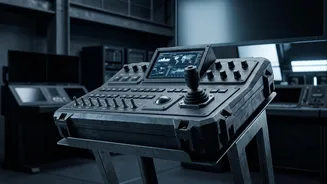
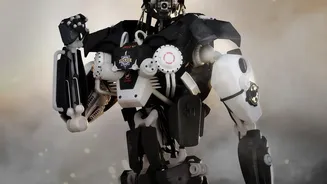
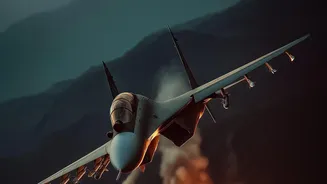
When experts talk about 'warfare AI', they often refer to Lethal Autonomous Weapons Systems, or LAWS. These are not remote-controlled drones; they are systems designed to independently search for, identify, and use lethal force against targets without
direct human supervision. The technology is advancing rapidly, from AI-powered surveillance that suggests targets to semi-autonomous drones already used in modern conflicts. Proponents argue these systems could be more precise than human soldiers, reducing civilian casualties. However, critics warn that we are on the verge of creating 'killer robots' that could make life-or-death decisions far removed from human agency or moral reasoning.
The UN's Race for Rules
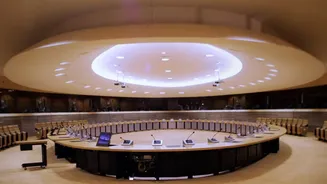
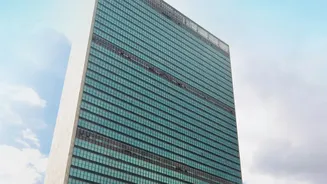
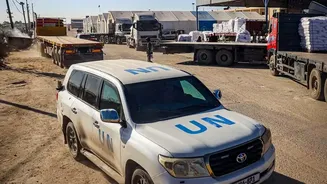
For years, a UN-backed group called the Group of Governmental Experts (GGE) has been the main forum for these difficult conversations. In recent months, these efforts have gained significant urgency. In October 2026, the UN launched a new, comprehensive initiative to regulate military AI, aiming to establish binding agreements among member states on transparency, oversight, and ethical boundaries. This initiative, supported by key global powers, comes ahead of a crucial review conference for the Convention on Certain Conventional Weapons (CCW) in November 2026, where nations will decide whether to launch formal negotiations on a new legally binding treaty for these weapons. The goal is to establish guardrails before the technology proliferates without any checks and balances.
The Accountability Black Hole
The single biggest challenge in drafting these guidelines is the 'accountability gap'. International humanitarian law, which governs the conduct of war, is built on the foundation of human decision-making and responsibility. But if an autonomous weapon makes an unlawful mistake—for example, targeting a hospital or civilians—who is to blame? Is it the programmer who wrote the code? The manufacturer that built the machine? The commander who deployed the system, trusting the AI's judgment? Or is it the state that commissioned the weapon? Without a clear answer, there is a very real risk that these weapons could operate in a legal and ethical vacuum, where no single person or entity can be held responsible for devastating errors. This fundamentally challenges the core principles of distinction, proportionality, and precaution that underpin the laws of war.
What Do the Draft Guidelines Propose?
The current debate is centered on ensuring 'meaningful human control'. Many countries and civil society groups argue that a human must always be in the loop, with the final authority to approve or veto a lethal action. Recent draft proposals focus on this principle, along with requirements for predictability and reliability in AI systems. However, there are deep divisions. Some nations believe existing international law is sufficient, while others, alongside the UN Secretary-General, are pushing for a new, legally binding treaty. The latest UN initiative also aims to create voluntary guidelines for the tech industry, acknowledging that companies' design choices play a huge role in whether a weapon can be used responsibly. But some recent negotiations have seen key provisions on human review weakened, highlighting the difficulty of reaching a global consensus.
The High Stakes of Inaction
Failing to establish clear accountability mechanisms would have profound consequences. It could lead to a rapid and unregulated arms race in AI weaponry, destabilizing global security. If no one is held responsible for mistakes, the threshold for going to war could be lowered, and the risk of unintended escalation from a machine error could become dangerously high. Furthermore, it would erode the very foundations of international humanitarian law, creating a future where algorithms, not humans, are the arbiters of life and death on the battlefield. As Pope Francis warned the UN, these technologies could 'irreversibly alter the nature of warfare, detaching it further from human agency'. The choices made in forums like the UN over the coming months are not just technical or legal; they are deeply moral questions about the future of human control over violence.