






The Vanishing 'Pain of Paying'
Behavioural economists have a concept called the 'pain of paying'. It’s the small psychological sting you feel when you physically hand over cash. You see the notes leave your wallet, you feel the tangible loss, and your brain registers it as a real cost.
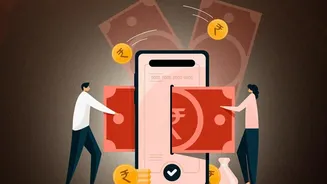
This friction makes you more mindful of your spending. Digital payments, however, have all but eliminated this sensation. When you tap your phone or scan a QR code, the transaction is abstract. Money becomes just a number on a screen, not a physical object you're giving up. Studies have shown this for years; people are willing to spend significantly more when using a card compared to cash because the payment is 'decoupled' from the purchase. Mobile payments take this even further, with research suggesting they are even less 'painful' than using a physical card, further reducing spending restraint.
Pixels Over Pocket Money
For many young Indians, particularly Gen Z, the Unified Payments Interface (UPI) isn't just a payment method; it's their first and primary interaction with the financial system. Unlike previous generations who learned the value of money through physical pocket money—saving coins, counting notes—today’s youth experience finance as an instantaneous, digital flow. This behavioural shift is significant. Gen Z, being digital natives, prioritises speed and simplicity, and UPI has become an embedded utility in their daily lives, used for everything from peer-to-peer transfers to daily essentials. While this drives financial inclusion, it also means the fundamental lesson of money's finite, physical nature is often bypassed. A recent study in Delhi NCR found that the convenience of UPI encourages more frequent transactions and impulsive purchases among the youth.
The Danger of a Thousand Tiny Taps
The headline mentions 'micro-payments', and this is a crucial piece of the puzzle. A single ₹100 tap for a snack feels insignificant. A ₹250 online purchase seems minor. But these small, frictionless transactions add up. Because each individual payment is so small and easy, it bypasses the part of our brain that might pause and consider the bigger picture. This 'latte effect' is amplified in the digital world. Research highlights that the ease of digital transactions leads to a higher frequency of spending and reduced awareness of the total amount spent. Studies on digital wallet users confirm this, with a significant percentage of respondents admitting to an increase in impulse buying and overall monthly spending after adopting these platforms. Around 7 in 10 Gen Zers and millennials with debt say that convenience purchases have contributed to what they owe.
Is Financial Literacy Keeping Up?
The rapid digitisation of finance raises a critical question: is financial education evolving at the same pace? Often, it is not. Traditional financial literacy models may not adequately prepare young people for a world of 'Buy Now, Pay Later' schemes, one-click checkouts, and instant digital credit. The very design of many fintech apps, with their seamless user experience and embedded rewards, encourages spending. While some platforms offer budgeting tools, the core convenience factor often leads to weakened budgeting discipline. This creates a generation that is highly fluent in digital transactions but may lack the foundational understanding of concepts like debt accumulation and long-term financial planning. With a significant portion of young adults already carrying debt, this gap between digital fluency and financial prudence is a growing concern.