






A New Cosmic Mapmaker
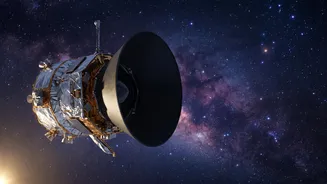
SPHEREx, which stands for Spectro-Photometer for the History of the Universe, Epoch of Reionization, and Ices Explorer, is a space observatory with an ambitious goal: to map the entire sky not just once, but four times over its two-year mission. Launched
in March 2025, it's unlike telescopes such as Hubble or James Webb, which perform deep dives into small, specific patches of the sky. SPHEREx is a wide-angle surveyor, designed to create a comprehensive, 3D map of hundreds of millions of galaxies and stars in our own Milky Way. By scanning everything, it provides a crucial big-picture context that helps astronomers understand the universe's large-scale structure. After a checkout period, the observatory began its science mission, capturing thousands of images daily to build its unprecedented map.
Seeing the Universe in 102 Colors
The mission's power lies in its ability to see the sky in near-infrared light, a spectrum invisible to the human eye. Think of it as a form of cosmic night vision that can pierce through the dense clouds of gas and dust that obscure large parts of the universe. SPHEREx uses a technique called spectroscopy, which breaks light down into its component wavelengths, much like a prism creates a rainbow. But instead of seven colors, SPHEREx will map the sky in 102 distinct infrared colors. This detailed color information reveals an object’s chemical composition and, crucially, its distance. This allows scientists to build their map in three dimensions, plotting the precise location of galaxies in the vastness of space.
Answering Three Great Mysteries
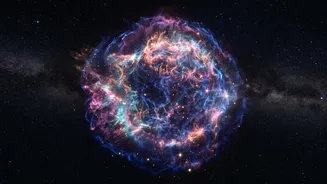
The mission is designed to tackle three fundamental scientific questions. First, it will study the immediate aftermath of the Big Bang by examining what’s called 'cosmic inflation'—a period less than a second after the universe began when it expanded exponentially. The patterns of this event are imprinted on the large-scale distribution of galaxies, and SPHEREx's 3D map will be the largest ever created to study it. Second, the mission will investigate the history of galaxy formation by measuring the faint, collective glow of all galaxies, including those too distant or dim to be seen individually. This helps create a more complete census of all the light ever produced in the universe.
Searching for the Ingredients of Life
The third major goal brings the search closer to home. SPHEREx is hunting for water and organic molecules—the essential building blocks for life as we know it—frozen as ice in the stellar nurseries and planet-forming disks within our own Milky Way galaxy. These ices coat tiny dust grains in vast, cold clouds where new stars and planets are born. By creating an all-sky survey of these ices, SPHEREx will provide the first comprehensive inventory of where these vital ingredients are located and how abundant they are, offering clues about the potential for life to arise elsewhere. Since its launch, SPHEREx has already begun delivering on this promise, with recent findings in April 2026 highlighting its ability to map these vast 'interstellar glaciers'.
A Legacy for the Future
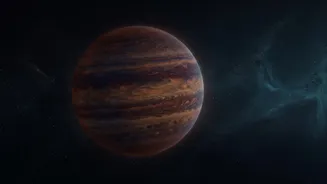
The data from SPHEREx is not being kept under lock and key. The mission began delivering its survey data to a public archive on a weekly basis shortly after starting its science operations. This allows scientists worldwide to use its all-sky map to investigate countless other cosmic phenomena, from tracking interstellar comets to studying brown dwarfs—celestial objects that straddle the line between planets and stars. A recent discovery, announced in October 2026, used SPHEREx data to reveal the chemically rich atmospheres of these intriguing objects. By providing a universal reference map, SPHEREx is designed to work in synergy with other observatories, identifying prime targets for more detailed study by powerful telescopes like the James Webb Space Telescope.