

A Taste Born from Legend
The story of Mathura Peda is inseparable from the lore of Lord Krishna. Mathura, known as his birthplace, is the heart of the Braj region, a land where dairy is not just food but a cultural cornerstone. Stories of Krishna's love for milk and butter are
woven into the fabric of the local identity. Legend has it that the peda was first created when milk, left simmering for too long, thickened and caramelised, creating a delicious treat that became a favoured offering. This deep connection to Krishna means the peda is more than a dessert; it is a sacred offering, or 'prasadam', purchased by millions of pilgrims visiting the temples of Mathura and Vrindavan. This dual identity as both a divine offering and a gastronomic delight has cemented its iconic status.
The Art of Roasting Khoya
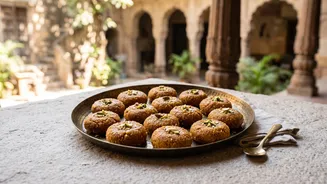
What truly sets Mathura Peda apart from its countless pale, softer cousins across India is its unique preparation method. The journey begins with khoya, or mawa — milk that is patiently simmered in a large, wide pan until most of the water evaporates, leaving behind rich milk solids. While this is the base for many Indian sweets, the artisans of Mathura take it a crucial step further. They continue to roast the khoya over a low flame, stirring constantly. This slow-roasting process is an art form that requires patience and precision. As the khoya cooks, the milk sugars begin to caramelise, a process that gives the peda its signature light brown or tan colour and a deep, nutty aroma. This technique not only develops a complex, caramel-like flavour but also results in a longer shelf life compared to other milk-based sweets.
Texture That Tells a Story
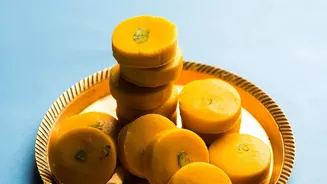
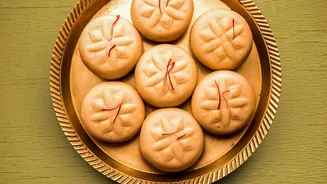
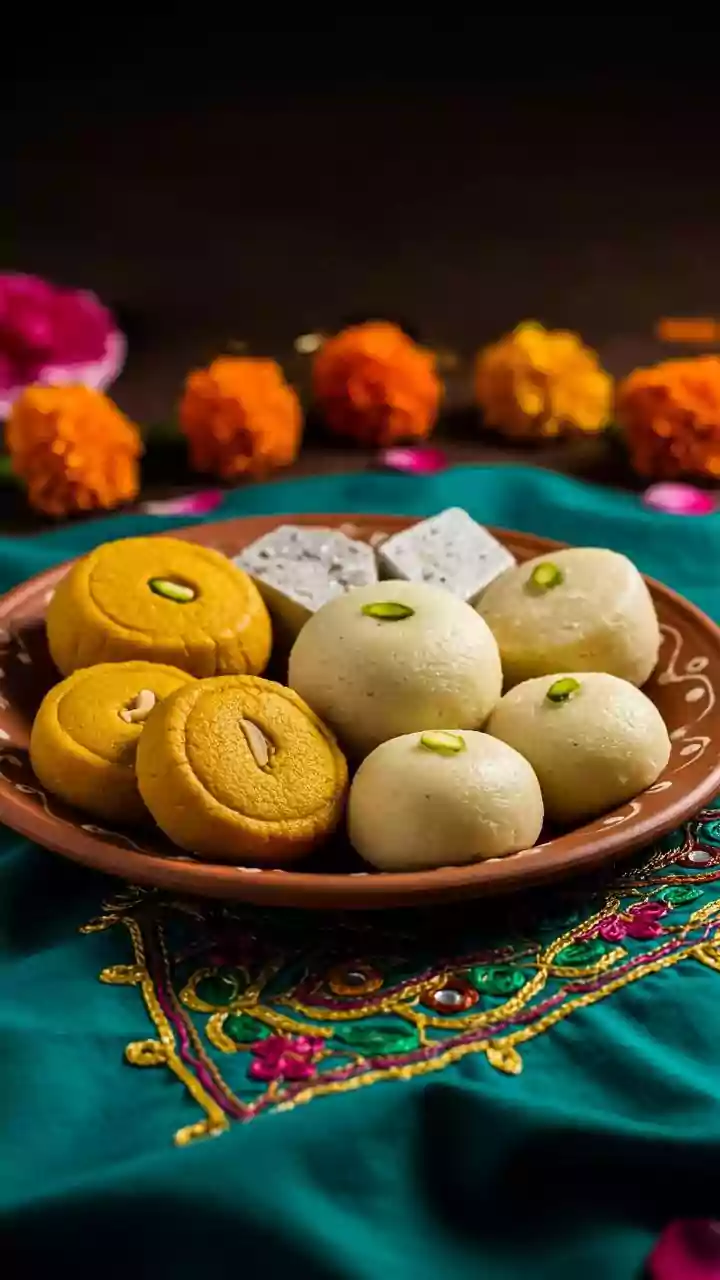
The distinctive taste of Mathura Peda is matched by its unique texture. The prolonged roasting of the khoya creates a final product that is not perfectly smooth but has a slightly grainy, crumbly consistency that melts in your mouth. After the roasted khoya has cooled slightly, sugar is mixed in. Traditionally, a special kind of sugar called 'tagar' or 'boora' is used. Unlike finely powdered icing sugar, tagar has a slightly crystalline texture that doesn't fully dissolve, contributing to the peda's characteristic mouthfeel. Finally, the mixture is flavoured with a hint of cardamom powder before being shaped into its familiar flattened disc shape. Many sweet makers then roll the finished pedas in a light coating of this boora sugar, giving them a dusty, enticing appearance.
An Icon of Authenticity
The fame of Mathura Peda is so widespread that the term 'Mathura ka peda' has become a benchmark for quality, even appearing in folk songs and proverbs. This popularity, however, also brings the challenge of imitation and adulteration, with many trying to replicate the sweet without the traditional, time-consuming methods. To protect its unique heritage, applications have been made to secure a Geographical Indication (GI) tag for the Mathura Peda. While the process is ongoing, this move acknowledges the sweet's deep cultural and economic importance to the region. For visitors, a trip to Mathura often feels incomplete without tasting an authentic peda from a busy, reputable shop. It’s not just a souvenir, but a taste of Braj's sacred and culinary heritage.