

Reading an Alien Atmosphere
Before diving into what Webb has found, it's crucial to understand how it looks. The telescope doesn't take direct pictures of water on exoplanets. Instead, it uses a technique called transmission spectroscopy. When a distant planet passes in front of its
host star from our point of view, a tiny fraction of the starlight filters through the planet's atmosphere. The gases in that atmosphere absorb very specific frequencies, or colours, of light. This process leaves a unique chemical fingerprint, like a barcode, imprinted on the starlight that reaches Webb’s sensitive instruments. By analysing this spectrum of light, scientists can identify the molecules present in that alien air, including the one most essential for life as we know it: water.
A Steamy Signal with a Catch
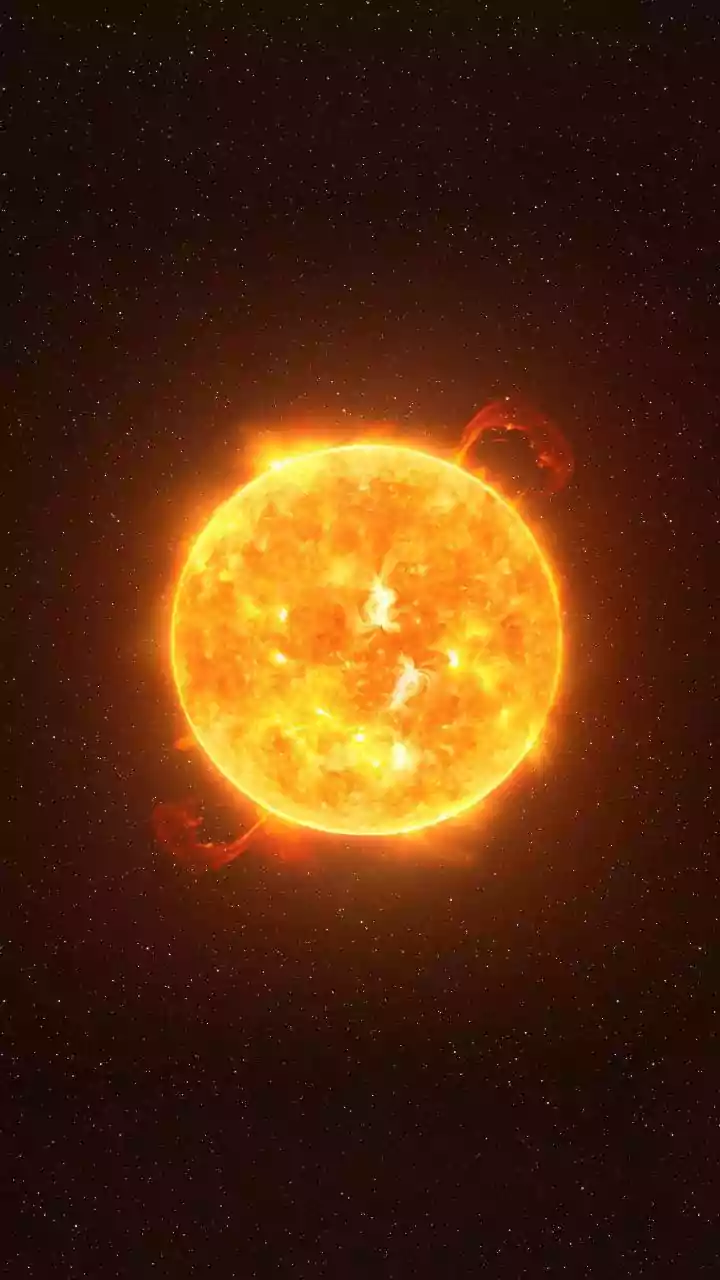
One of the most tantalising recent discoveries involves a rocky 'super-Earth' named GJ 486 b, located just 26 light-years away. Observations using Webb's Near-Infrared Spectrograph (NIRSpec) showed hints of water vapour. This was a thrilling development, as detecting any kind of atmosphere around a rocky exoplanet is a monumental step forward. A world like GJ 486 b, which is incredibly hot with a surface temperature around 430 degrees Celsius, would need a constantly replenishing source like volcanic activity to sustain a steamy atmosphere. However, scientists are exercising caution. The same water vapour signal could be coming not from the planet, but from its star. Red dwarf stars like GJ 486 b's host are cooler than our sun, and it's possible for water vapour to gather in cool 'starspots' on the star's surface. This could create a false signal that mimics a planetary atmosphere. Researchers are clear that while the signal is almost certainly water, they cannot yet definitively say if it belongs to the planet or the star. Future observations will be needed to solve this cosmic mystery.
Water at the Source of Creation
In another groundbreaking discovery, Webb looked at a much younger system, PDS 70, about 370 light-years away. Here, planets are still in the process of forming. Using its Mid-Infrared Instrument (MIRI), the telescope detected abundant water vapour in the system's inner disk—the very region where rocky, Earth-like planets are expected to assemble. This is the first time water has been spotted this close to the star in a system known to be forming planets. The discovery was surprising because many astronomers thought the harsh radiation from a young star would create a dry environment for planet formation. Instead, it suggests that the raw ingredients for water-rich worlds are available from the very beginning. Planets forming in this region won't have to wait for icy comets or asteroids to deliver water later; they can be born with it from the start.
Building a Complete Picture
Webb's power lies in its ability to see a wide range of molecules, not just water. The same spectrum data that reveals water vapour can also show the presence of carbon dioxide, methane, and other compounds. Finding a combination of these gases gives scientists a much richer understanding of a planet's atmosphere and climate. For example, detecting water is one thing, but finding it alongside gases that could be produced by biological processes would be a transformative discovery. This ability to perform a complete chemical inventory is what sets Webb apart. It is moving the field of exoplanet science from simply cataloguing planets to truly characterising them, providing the detailed context needed to assess which worlds might be genuinely habitable.