





The Supermarket Mind Game
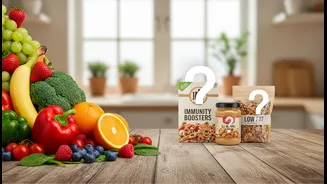
Food packaging is designed to persuade. Brands use appealing words and images to make their products seem like the healthiest, most wholesome choice available. Terms like “all-natural,” “multigrain,” and “lightly sweetened” are crafted to create a “health
halo” around a product, making us feel good about buying it. Often, these claims are legally regulated but can still be misleading. A recent study found that packaging health claims do not consistently reflect how healthy a food actually is. The key is to shift from being a passive recipient of these messages to an active investigator. The simplest way to do this is by turning every claim you read into a question. This small change in mindset forces you to look for proof instead of accepting a marketing slogan as fact.
Claim: 'Natural' or 'Made with Real Fruit'
You see a box of fruit snacks with pictures of fresh strawberries and the words “Made with Real Fruit.” The claim sounds great, but it’s time to ask questions. Question 1: How much real fruit is actually in here? Question 2: What are the other ingredients? Turn the box over. The ingredients list, which is always ordered by weight, will give you the answer. You might find that “real fruit” is actually a small amount of fruit puree concentrate, listed after several types of sugar or corn syrup. Similarly, the claim “Natural” is used on everything from crisps to sweets. The question to ask is: What does “natural” mean for this product? According to the FDA, the term can be used if a food doesn't contain anything artificial that you wouldn't normally expect to be there. This means foods high in salt, fat, or sugar can still be labelled “natural.”
Claim: 'Low-Fat' or 'Fat-Free'
For decades, we’ve been told to avoid fat, so a “low-fat” claim can seem like an obvious win. But a smart shopper asks: If they took the fat out, what did they put in to make it taste good? When manufacturers remove fat from products like yoghurt or salad dressings, they often compensate for the loss of flavour and texture by adding sugar, sodium, or artificial ingredients. A product can also legally claim to be “fat-free” if it has less than 0.5 grams of fat per serving. The question to ask about serving size is crucial: Is the listed serving size realistic? If the serving size is tiny, you could easily consume more fat than you realize by eating a normal portion.
Claim: 'Multigrain' or 'High in Fibre'
Bread, crackers, and cereals love to boast about grains. When you see “Made with Whole Grains” or “Multigrain,” the questions to ask are: How much of the grain is whole? Is it the main ingredient? “Multigrain” simply means more than one type of grain is used; it doesn't guarantee any of them are whole grains. To find the truth, check the ingredients list. You want to see the word “whole” before the first ingredient, such as “100% whole wheat” or “whole oats.” For a “high in fibre” claim, a product must contain 20% or more of the recommended daily value. While helpful, ask: Where does the fibre come from? Is it from whole foods, or is it an isolated fibre like inulin added during processing? While not necessarily bad, fibre from whole food sources is generally preferred.
Beyond Claims: Your Real Toolkit
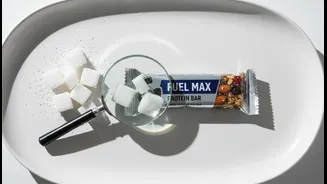
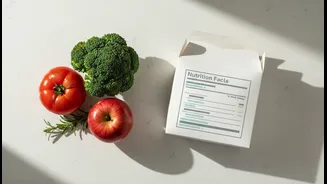
After you’ve questioned the front of the box, the back is where you find the real answers. Your two best friends are the Nutrition Facts label and the ingredients list. The ingredients are listed in descending order by weight, so the first few ingredients make up most of the product. If sugar or refined flour is near the top, it’s not a great sign. The Nutrition Facts panel gives you the hard numbers on calories, fat, sodium, and sugar per serving. Pay close attention to “added sugars,” as this separates naturally occurring sugars (like in fruit) from sugars added during processing. A simple rule of thumb is to look for short ingredient lists with words you can recognize. This is often a better indicator of a healthier product than any claim on the front.