







Why Your Brain Needs Time to Catch Up
Have you ever finished a meal so quickly you barely tasted it, only to feel uncomfortably full moments later? There's a scientific reason for that. It takes approximately 20 minutes for your brain to receive and process fullness signals from your gut.
This communication happens through a complex system of hormones. When you eat, your digestive tract suppresses ghrelin, the 'hunger hormone', while releasing satiety hormones like cholecystokinin (CCK) and leptin, which tell your brain you've had enough. When you eat too fast, you can easily consume more food than your body needs before this intricate hormonal system has a chance to kick in. Slowing down gives your brain the time it needs to register these signals, allowing you to recognize feelings of fullness and satisfaction more accurately.
Fast Eating and Its Health Implications
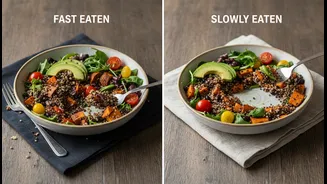
Racing through meals isn't just about missing out on the enjoyment of your food; it has tangible health consequences. Consistently eating quickly is linked to a higher calorie intake and an increased risk of being overweight. Studies have shown that fast eaters can be up to twice as likely to have obesity compared to their slower-eating counterparts. Beyond weight, rapid eating is also associated with a greater risk for metabolic syndrome—a cluster of conditions including high blood pressure, excess body fat around the waist, and elevated blood sugar and cholesterol levels. This may be due to factors like developing insulin resistance. Furthermore, when you eat too fast, you tend to swallow more air, which can lead to bloating and gas, and you often don't chew your food thoroughly, which makes digestion harder on your stomach and can lead to indigestion and acid reflux.
Managing Expectations: Habit, Not a Miracle
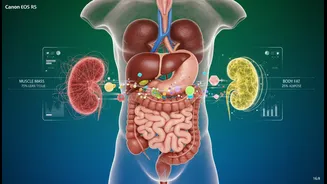
It's crucial to frame eating speed correctly: it is a single, powerful habit, not a standalone cure. While slowing down can aid in better portion control and reduce overall calorie consumption, it won’t magically transform your body composition on its own. Body composition—the ratio of fat to muscle in your body—is influenced by a wide array of factors, including your overall diet, physical activity, genetics, and sleep. A recent study in Gujarat, India, found a positive link between faster eating and higher BMI and visceral fat (the dangerous fat around your organs). However, changing this one behavior is a piece of a larger puzzle. Think of it as a foundational practice that supports other healthy choices. By eating slower, you become more in tune with your body’s signals, which can lead to more mindful food choices and better portion management, ultimately supporting your long-term health and body composition goals.
Practical Steps to Actually Eat Slower
The idea of eating slower is simple, but putting it into practice can be challenging. The key is to introduce small, manageable changes. Start by creating a distraction-free eating environment; turn off the TV and put your phone away to focus on your meal. One of the most effective techniques is to simply put your utensils down between bites. This forces a natural pause, allowing you to chew more thoroughly and check in with your hunger levels. Aim to chew each mouthful around 20 to 30 times; this not only slows you down but also aids digestion, which begins in the mouth. Taking sips of water throughout your meal can also help you pace yourself and contributes to feelings of fullness. If you're dining with others, try to match the pace of the slowest eater at the table. These actions might feel awkward at first, but with practice, they can become second nature.
Beyond Pace: The Power of Mindful Presence
Slowing down is a cornerstone of a broader practice known as mindful eating. This goes beyond just the speed of consumption and encourages you to be fully present with your food. Pay attention to the sensory details of your meal—the flavors, textures, and aromas. Before you even start, take a moment to consider your level of hunger. While you're eating, periodically ask yourself if you're still hungry or if you're starting to feel satisfied. Mindful eating helps to break the cycle of automatic, often emotional, eating. It shifts the focus from simply filling an empty stomach to truly nourishing your body and deriving pleasure from the experience. This heightened awareness can lead to a healthier relationship with food, where you feel more in control and satisfied, not just full. It fosters an appreciation for your food and a deeper connection to your body's true needs.