



A New Vision of the Moon
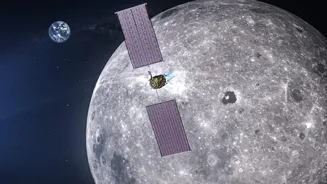
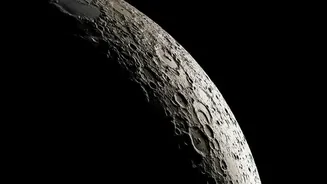
The primary goal of Artemis II was to test the Orion spacecraft, but a very close second was to turn a new, high-definition eye toward the Moon. The mission was equipped with an advanced camera system, including handheld Nikon D5s and over a dozen integrated
cameras, to capture the lunar surface in unprecedented detail. The four-person crew received geology training to act as expert observers, describing textures and colours that robotic probes might miss. Their verbal observations and thousands of photos of features like the vast Orientale basin and the shadowy South Pole provide crucial data for planning future landing sites. The crew even reported seeing subtle hues of green and tan, offering clues to the mineral composition of the lunar surface. This human-in-the-loop science, combining astronaut observation with high-tech imaging, creates a richer understanding than either could achieve alone.
The Human Factor in Deep Space
Artemis II was arguably the most important human health study in half a century. For the first time since the Apollo missions, scientists had a chance to see how the human body reacts to the deep space environment beyond Earth's protective magnetic field. The crew participated in a battery of experiments, collecting blood, urine, and saliva samples to track everything from their immune response to nutritional status. One study, called ARCHeR, used wearable wristbands to monitor sleep patterns and stress levels, providing data on the psychological rigors of deep space travel. Another, 'Immune Biomarkers', investigated how spaceflight alters the immune system, looking for signs that dormant viruses might reactivate. This data is essential for developing the protocols and countermeasures needed to keep astronauts safe on longer missions to the Moon and, eventually, Mars.
Listening to the Spacecraft
Not all the data was visual. The mission also returned hours of audio recordings. While some of this was the crew's scientific narration of the lunar flyby, a significant portion was dedicated to listening to the Orion capsule itself. This 'audio data' helps engineers understand the health of the spacecraft. The sounds of pumps, the hum of life support, and the vibrations during maneuvers provide a rich dataset on how the vehicle performs in the harsh environment of space. These recordings will be meticulously analyzed against pre-flight models to fine-tune operations for future missions. In addition to vehicle sounds, the crew also had the unique opportunity to report on witnessing meteoroid impacts on the lunar surface during a solar eclipse, providing rare, real-time observations of the dynamic lunar environment.
Testing Tech for Tomorrow's Missions
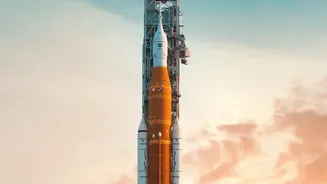
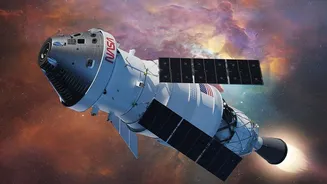
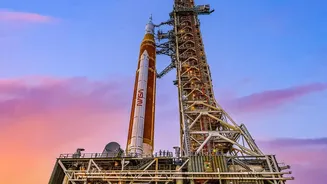
At its heart, Artemis II was a flight test designed to validate the Space Launch System (SLS) rocket and the Orion spacecraft for crewed missions. Every piece of data, from life support system performance to how the crew managed trash, was vital. Engineers tested Orion's navigation systems, communications, and propulsion, pushing the vehicle to ensure its reliability. The crew even demonstrated emergency procedures like using the spacecraft as a radiation shelter. Other experiments tested how biological systems, from yeast to plant cells, fare against deep-space radiation, providing foundational knowledge for developing life support systems and understanding DNA damage. Every successfully demonstrated system and every verified piece of hardware is a critical step, proving the technology is ready for the next giant leap: landing humans back on the lunar surface with Artemis III.