







The 'Can't-Get-This-at-Home' Experience
The single biggest shift in entertainment over the past decade has been the rise of streaming. Platforms like Netflix, Disney+, and Amazon Prime Video have become the default home for mid-budget dramas, comedies, and thrillers. For the cost of two movie
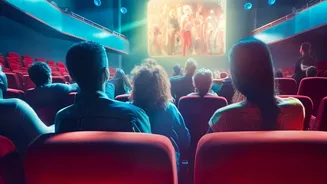
tickets, a family can access a vast library of content for a month. This has forced cinemas to answer a tough question: why should people leave their couches? The answer has been to double down on what the living room can't offer: overwhelming scale. Theatrical releases are increasingly positioned as 'events'. Think of the booming sound of 'Dune', the immersive 3D of 'Avatar: The Way of Water', or the shared gasps during a superhero team-up. These are sensory experiences designed for giant screens and state-of-the-art sound systems, creating a communal spectacle that streaming can't replicate.
The Economics of Global Franchises
From a business perspective, originality is risky. A $200 million budget for a new idea is a massive gamble. A $200 million budget for the next chapter in a beloved franchise like the Marvel Cinematic Universe, 'Jurassic World', or a James Bond film is a calculated investment. These properties come with a built-in global fanbase, guaranteeing a massive opening weekend. This is why sequels, prequels, and cinematic universes dominate release schedules. They are less like individual films and more like ongoing television seasons that air once every couple of years, ensuring audiences return for the next instalment. The marketing often focuses on the spectacle and the promise of answering lingering questions, creating a sense of urgency. In India, this is seen with blockbuster franchises like 'Baahubali', 'K.G.F.', and the burgeoning 'Astraverse', which prove the model's universal appeal.
Visuals as a Universal Language
One of the reasons spectacle films are so economically powerful is their ability to travel. A fast-paced action sequence or a stunning alien landscape needs no translation. Unlike a dialogue-heavy comedy or a culturally specific drama, visually driven stories have a near-universal appeal that makes them easy to market across the globe. This is crucial in today's global box office, where international markets, including India and China, are often as important as North America. A film like 'RRR' found a global audience not just for its story, but for its jaw-dropping action set pieces. Hollywood studios now design their biggest blockbusters with this global audience in mind from day one, ensuring the themes and, most importantly, the visuals resonate from Mumbai to Mexico City.
The Squeeze on Everything Else
The dominance of the spectacle event has a clear consequence: it squeezes out other types of films. When a multiplex dedicates most of its screens to one or two major releases to maximize profit, there's little room for smaller, independent, or character-driven films to find an audience. This has created a two-tiered system: massive event films for the cinema, and everything else for streaming. While recent years have shown a slight resurgence in mid-budget films finding theatrical success by offering strong, content-driven alternatives, the overall trend remains stark. The 'event film' strategy means fewer diverse choices at your local theatre, pushing genres that once thrived on the big screen—like romantic comedies and courtroom dramas—almost exclusively to streaming platforms.