






The Great Monsoon Misconception
It’s a common belief: if the sun isn’t visible, your skin is safe. The cool, grey, overcast skies of the monsoon season make it easy to assume that the risk of sun damage has washed away with the rain. However, the rays that cause long-term skin damage are
not the ones you can see or feel as heat. Ultraviolet (UV) radiation is invisible and remains a threat even when the sun is hidden behind a thick blanket of clouds. In fact, up to 80% of the sun's UV rays can penetrate cloud cover. Skipping sunscreen during this season is a crucial error, as the damage is cumulative, silently contributing to skin issues that may only appear years later.
Meet the Invisible Culprits: UVA and UVB
To understand the risk, it's important to know the difference between the two main types of UV rays that reach the Earth's surface: UVA and UVB. A simple way to remember them is UVA for 'Ageing' and UVB for 'Burning'. UVB rays have a shorter wavelength and are the primary cause of sunburn and redness; their intensity decreases significantly on cloudy days. This is why you're less likely to get an immediate sunburn during the monsoon, creating a false sense of security. UVA rays, on the other hand, have a longer wavelength. They penetrate deeper into the skin, breaking down collagen and contributing to premature ageing, wrinkles, and pigmentation. Crucially, UVA rays can easily pass through clouds and even glass, and they make up about 95% of the UV radiation reaching us, remaining potent all year round, regardless of the weather.
How Clouds Can Deceive Your Skin
Clouds are not a perfect shield. While very thick, heavy storm clouds can block a significant amount of UV radiation, lighter, scattered, or broken cloud cover does very little. Some studies show that certain types of clouds can even enhance UV levels through a scattering effect, where rays are reflected and bounced around, increasing your total exposure. Furthermore, the cool temperatures and lack of direct sunlight trick our senses into believing the UV index is low. This sensory disconnect is what makes cloudy days so deceptive. You don't feel the burn, but the silent, deeper damage from UVA rays continues unabated.
Your All-Weather Protection Plan
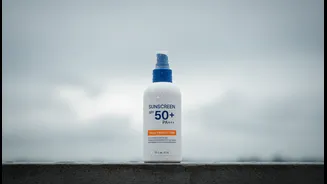
The lesson from the monsoon is that sun protection isn't seasonal; it's a daily necessity. The key is to choose the right kind of sunscreen. Look for the words "broad-spectrum" on the label, as this ensures protection from both UVA and UVB rays. For the Indian climate, dermatologists often recommend an SPF of 30 or higher, along with a high PA rating (like PA+++ or PA++++), which specifically measures UVA protection. Given the high humidity of the monsoon season, the texture of your sunscreen is also important. Many people stop using sunscreen because it feels heavy, greasy, or sticky. Opt for lightweight, non-comedogenic gel or fluid formulations that absorb quickly without leaving a heavy residue. Water-resistant formulas are also a smart choice to withstand sweat and rain.