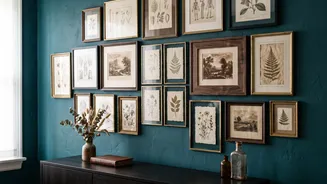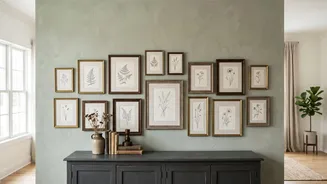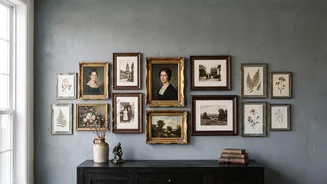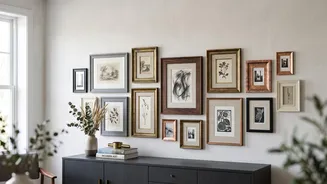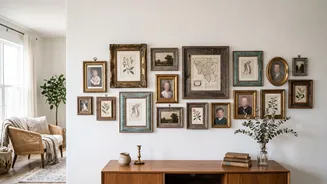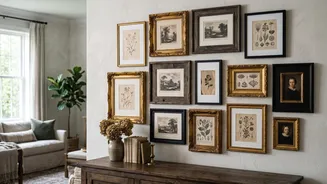


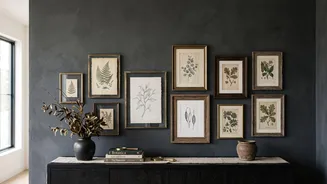

A well-designed gallery wall is more than just a collection of pictures; it's a story told through art and frames. Embracing a vintage aesthetic with mixed shapes and styles creates a display with character, depth, and a collected-over-time charm.
Begin Your Treasure Hunt
The
soul of a vintage gallery wall lies in the hunt for its pieces. The goal is to gather frames and art that feel personal and unique, not mass-produced. Thrift stores, flea markets, and estate sales are your best friends in this endeavour. Look past the current artwork within a frame; you're looking for frames with good bones, interesting shapes, and a little bit of history. Don't be afraid of minor imperfections, as they add to the authenticity. You can often find beautiful, ornate wood or metal frames for a fraction of the cost of new ones. Consider family heirlooms, old photographs, and even children's drawings to add a deeply personal layer to your collection. The story of your wall begins with the stories of the pieces you choose to include.
Find a Common Thread
To prevent your eclectic mix from looking chaotic, it's crucial to establish a unifying element. This common thread will tie the disparate pieces together into a cohesive whole. You could opt for a consistent color palette in the artwork itself, such as warm sepia tones, black and white photography, or moody landscapes. Alternatively, let the frames guide you. Limiting your frames to two or three main colors, like black, gold, and natural wood, can create harmony. Repeating a color or material creates a visual rhythm that guides the eye. This doesn't mean everything has to match perfectly. Think of it like a 60-30-10 rule: 60% of one frame color, 30% of a secondary color, and 10% as a unique accent. This ensures the collection feels curated, not accidental.
Master the Art of the Mix
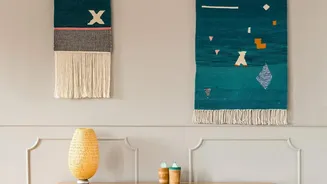
Mixing different shapes and sizes is what gives a vintage gallery wall its dynamic energy. Combine traditional rectangular and square frames with ovals, circles, and even architectural pieces or small shelves. The key is to balance visual weight. A large, heavy, ornate frame can be balanced by a cluster of three smaller, simpler pieces. An asymmetrical layout often feels more organic and collected over time than a rigid grid. Don't just mix frames; mix the content as well. Pair a vintage oil painting with a modern abstract print, a botanical sketch with a personal photograph, or even a small mirror or textile piece. This juxtaposition of old and new, and of different textures, creates layers of interest and tells a more complex story.
Plan Your Layout on the Floor
Before a single nail hits the wall, map out your arrangement. This is the most critical step to ensure a balanced, intentional design. Lay all your framed pieces on the floor in the approximate size of your wall space. Start by placing your 'anchor' piece—this is typically your largest or most visually striking item. Place it slightly off-center and build the rest of the arrangement around it. Play with different combinations, moving smaller pieces to fill gaps. Pay close attention to spacing; a consistent gap of about 2 to 3 inches between frames generally creates a polished, professional look. Use a cut piece of cardboard as a spacer to keep the gaps uniform. For a more foolproof method, trace each frame onto craft paper, cut them out, and tape the paper templates to the wall to finalize your layout.
Hang with Confidence
Once your paper layout is perfect, it's time to hang. The general rule is to have the center of the entire gallery wall at eye level, which is typically about 57-60 inches from the floor. If hanging above furniture like a sofa or console, leave about 6 to 8 inches of space between the top of the furniture and the bottom of the lowest frame. Start by hanging your anchor piece first, then work your way outward. Use a level for each piece to ensure it's straight. Double-check your measurements as you go, ensuring the spacing remains consistent. Step back frequently to assess the overall balance of the composition. Remember that a gallery wall is a living part of your home; it can evolve and grow over time as you find new treasures.