






Start With Your Daily Path
Before moving a single piece of furniture, think about how you move within the room. This is the most crucial step for a functional layout. Consider your path from the door to the bed, from the bed to the wardrobe, and from the wardrobe to the door. These
are your primary 'traffic routes'. Any furniture that obstructs these paths will make the room feel cramped and frustrating. By keeping these walkways clear, you create a sense of openness and ensure you can get to your most-used areas without hassle. The goal is to design around your actual routine, not just to fit furniture against the walls. A common mistake is placing a bulky dresser or chair in a direct line of travel, forcing you to squeeze past it daily.
Choose Smart, Hardworking Furniture
In a compact bedroom, every piece of furniture should earn its place by serving more than one purpose. Multi-functional furniture is your greatest ally. Think of beds with hydraulic storage underneath for stowing away seasonal clothing or extra bedding. A slim desk can double as a dressing table, and a storage bench at the foot of the bed offers both seating and a place to hide blankets or shoes. Instead of a wide, low dresser, opt for a tall, narrow chest of drawers. This 'vertical' approach to storage draws the eye upward and frees up valuable floor space, making the room feel larger than it is.
Master the Bedside Command Centre
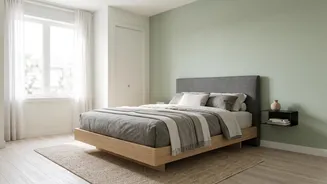
The nightstand area is often a magnet for clutter, but it's also where your most essential items need to be. To keep this zone functional, be ruthless about what you store there. A phone, a lamp, a book, and perhaps a glass of water are all you truly need within arm's reach at night. If a traditional nightstand feels too bulky, consider alternatives. A floating shelf mounted on the wall provides a surface for your essentials without taking up any floor space. Wall-mounted pendant lights or sconces can replace table lamps, freeing up even more room. For renters or those wanting more flexibility, a 'C-table' can slide over the edge of your bed, offering a temporary surface that can be moved away easily.
Create a Designated 'Drop Zone'
One of the biggest sources of bedroom clutter is the pile of items that accumulates when you walk in the door: your bag, keys, and the jacket you just took off. To prevent this, create a small, intentional 'drop zone' near the entrance. This doesn't require a lot of space. A few simple hooks on the wall can hold your everyday bag and outerwear. A small, stylish basket on the floor or on a low shelf can be the designated spot for shoes you wear frequently. This simple habit prevents your bed or a lone chair from becoming a 'chairdrobe'—that infamous pile of clothes that are not quite dirty but not quite clean. By giving these items a home, you keep surfaces clear and the room looking tidy.
Optimize Your Wardrobe for Daily Use
Accessibility isn't just about furniture placement; it's also about how you organise your belongings. A well-planned wardrobe can transform your morning routine. In many Indian homes, floor-to-ceiling wardrobes are an excellent way to maximize storage. Use the higher, harder-to-reach shelves for seasonal items like heavy quilts or travel bags. Keep your most-worn clothes at eye level and within easy reach. Consider using modular storage solutions inside your closet, like pull-out baskets or adjustable shelves, to make every item visible and accessible. If your closet doors swing outward and block a pathway, consider switching to sliding doors, which save valuable floor space.