
More Than Just a Race Boat
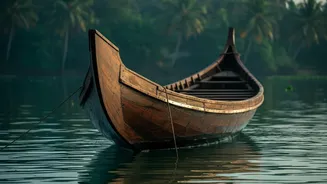
Before a single oar hits the water, the snake boat is already the heart of its village. These magnificent vessels, often over 100 feet long, are more than just sporting equipment; they are a matter of immense pride and are treated with a reverence usually
reserved for deities. Each Chundan Vallam represents an entire community, and its success in races like the Nehru Trophy is the village's success. The boats themselves are masterpieces of traditional naval architecture, constructed according to specifications laid out in ancient texts. Master craftsmen, known as 'moothasharis', lead the construction using Anjili wood (wild jackfruit), prized for its flexibility and water resistance. This deep cultural connection is the foundation upon which the physical preparation for the race begins.
The Secret in the Oily Paste
The key to a snake boat’s performance lies in a potent, all-natural finishing coat. It’s a closely guarded recipe, a foul-smelling but highly effective concoction that waterproofs the wood and makes the hull exceptionally slippery. The primary ingredient is fish oil, which penetrates and protects the wooden planks. This is blended with other crucial components, each with a specific purpose. Charred coconut shells are ground into a fine carbon powder, which adds to the waterproofing. Egg whites are often mixed in, acting as a natural binder and creating a smoother finish. Some recipes also include animal fats boiled with lime. Together, these ingredients form a thick, dark paste that is essential for transforming the wooden giant into a lightning-fast racer.
A Ritual of Labour and Love
Applying the seasoning is a communal event, a ritual that marks the run-up to the racing season. The entire process is done by hand. First, the massive boat, which can weigh several tons, is hauled from the water and placed on supports. Any repairs from the previous season are meticulously carried out by the village carpenters. Then, the work of seasoning begins. Teams of men, often from the village's crew, work together to smear the oily paste over every inch of the hull's exterior. The work is laborious and messy, but it is performed with dedication. The mixture is rubbed deep into the wood, filling every pore and seam. This process is not just about maintenance; it's a collective effort that strengthens the bond between the rowers and their vessel, building anticipation for the fierce competition ahead.
The Science Behind the Speed
This traditional treatment is a brilliant example of early fluid dynamics. The goal is not just to make the boat waterproof but to reduce friction, or drag, as it moves through the water. The oil-based mixture makes the hull hydrophobic, meaning it repels water molecules. Instead of sticking to the surface, the water glides effortlessly past the boat. This creates a slippery, lubricious surface that allows the 100-plus oarsmen to propel the vessel forward with maximum efficiency. By minimising water absorption and resistance, the boat remains lighter and faster throughout the race. The smooth, glossy finish achieved by the final application of fish oil and eggs is what gives the Chundan Vallam its critical edge, allowing it to slice through the water like a blade rather than ploughing through it.
Guardians of an Enduring Tradition
The knowledge of how to build, maintain, and season a snake boat is not written in modern manuals. It is a living heritage, passed down from one generation of artisans to the next. The moothashari and the village carpenters are the custodians of this ancient wisdom. They understand the character of the wood, the precise balance of ingredients in the oil mixture, and the feel of a properly seasoned hull. This expertise is indispensable. In a world of modern materials like fiberglass and epoxy resins, the snake boat races of Kerala are a powerful testament to the effectiveness and resilience of traditional craftsmanship. The annual ritual of oiling the boats ensures that this centuries-old knowledge stays alive, proving that sometimes the old ways are still the best ways to win a race.