




The Rush of Rushed Tourism
The typical holiday itinerary often feels like a checklist. Get in the cab, drive to viewpoint one, take a photo, drive to viewpoint two, repeat. This 'fast travel' approach, focused on covering as many spots as possible, can leave you feeling more exhausted
than refreshed. You see the scenery, but only as a passive observer behind glass. The world whizzes by in a blur of green and brown, with the sounds of nature muffled by the engine's hum and the smells replaced by the car's air freshener. This whirlwind approach prioritises quantity over quality, often leading to a surprisingly hollow feeling. You collect photos, but do you collect memories?
Awakening the Senses on Foot
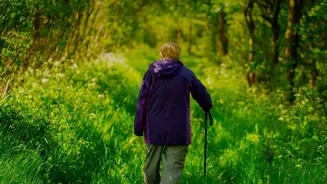
Now, imagine stepping out of the cab and onto a forest trail. The experience is immediately different. Your feet feel the crunch of dry leaves and the soft give of the damp earth. Instead of a monotonous engine, you hear the symphony of the forest: a bird's distinct call, the rustle of an unseen creature in the undergrowth, the wind whispering through the trees. You can smell the rich, earthy scent of the soil and the sweet fragrance of pine. Walking forces you to slow down and engage all your senses, transforming you from a mere spectator into an active participant in the environment around you. It's an invitation to be fully present.
Your Brain on Nature: The 'Forest Bathing' Effect
This immersive experience has a name and a science to back it up: 'Shinrin-yoku', or forest bathing. Developed in Japan in the 1980s, this practice is not about exercise but about simply 'bathing' in the forest's atmosphere. Research has shown that spending mindful, intentional time in a forest can have profound health benefits. Studies indicate that it can lower blood pressure, reduce levels of the stress hormone cortisol, and decrease feelings of anxiety and anger. By directing your attention away from worrying thoughts and towards the sights, sounds, and smells of nature, you activate your body's 'rest-and-digest' nervous system, promoting a state of calm and mental clarity.
Discovering the World in Miniature
A vehicle is designed to cover distance, which means it's built to ignore the details. Walking, by its very nature, is about discovery. At a slower pace, you start to notice the intricate world you would have otherwise sped past. You might spot the complex architecture of a spider's web, the vibrant colour of a wildflower pushing through the soil, or the fascinating patterns on a mushroom. These are the spontaneous, unplanned discoveries that are often missed when you're rushing to the next major landmark. This slow, deliberate observation fosters a deeper connection and appreciation for the environment, turning a simple walk into a treasure hunt.
How to Embrace the Slower Path
Adopting a slow travel mindset doesn't require a radical overhaul of your plans. It can be as simple as dedicating one afternoon of your trip to a deliberate, mindful walk. Choose a well-marked trail, whether in a national park or a local green space. Put your phone on silent to minimise digital distractions and focus on your surroundings. The goal isn't to cover a certain distance or burn calories; it's simply to wander without an agenda. Let your curiosity guide you. Pause to touch the bark of a tree, listen for different bird songs, or simply sit and watch the light filter through the leaves. The experience is the destination.