



Pattachitra: Stories on a Scroll
The crown jewel of Odia artistry is Pattachitra, a tradition of scroll painting so revered it has earned a GI tag. Centred in the heritage village of Raghurajpur, this art form involves painting intricate mythological narratives on a specially prepared
cloth canvas ('patta'). Artists, known as Chitrakars, use natural pigments derived from minerals and plants to depict tales from Hindu epics like the Ramayana and Mahabharata, with a particular focus on Lord Jagannath. A visit to Raghurajpur is an immersion; nearly every home is a studio and gallery, with artists eager to demonstrate the painstaking process, from preparing the tamarind-seed gum canvas to the final, delicate brushstroke.
Tarakasi: Weaving Magic with Silver
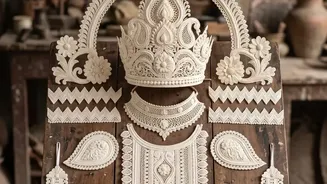
In the bustling lanes of Cuttack, known as the 'Silver City', artisans practice Tarakasi, a 500-year-old form of silver filigree work. The name itself, from 'tara' (wire) and 'kasi' (design), describes the process: drawing pure silver into fine threads and twisting them into delicate, lace-like patterns. This art, which may have origins tracing back to ancient Persian or Indonesian trade, adorns everything from jewellery worn in Odia marriages to the magnificent backdrops ('Chandi Medhas') for Durga Puja idols. Experiencing Tarakasi means watching a master artisan transform a lump of silver into an exquisite piece of art, a testament to immense patience and precision.
Pipili Chandua: The Appliqué of the Gods
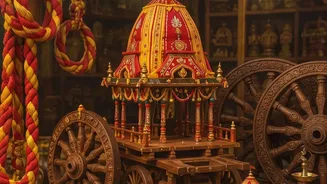
A short drive from Puri lies Pipili, a town bursting with colour thanks to its signature craft: Chandua, or appliqué work. This technique involves stitching brightly coloured fabric shapes onto a base cloth to create vibrant and bold designs. The craft's origins are deeply tied to the Jagannath Temple, with artisans traditionally creating the massive, colourful canopies, umbrellas, and banners that adorn the chariots during the annual Rath Yatra. Today, you can find everything from wall hangings to garden umbrellas, but the true experience is witnessing how these elaborate pieces, designed to be strong and eye-catching, are still central to the state's most important festival.
Dhokra: The Lost-Wax Metalwork of Tribes
Dhokra is an ancient metal casting technique, over 4,000 years old, practised by tribal communities across Odisha. It uses the 'lost-wax' method, a fascinating and complex process where a model is first created from beeswax. This wax model is then coated in clay, which hardens into a mould. When heated, the wax melts away, leaving a cavity into which molten brass or bronze is poured. Because the clay mould must be broken to reveal the final object, every single Dhokra piece is unique. The resulting figurines, jewellery, and decor items are known for their rustic, tribal motifs and antique finish, offering a direct connection to the state's indigenous artistic traditions.
Talapatra Chitra: Engraving on Palm Leaf
Before paper was commonplace, knowledge in Odisha was preserved on palm leaves. This practice evolved into the exquisite art of Talapatra Chitra, or palm leaf engraving. Artists etch intricate designs and narratives onto dried, treated palm leaves with a sharp steel stylus. Lampblack is then rubbed over the surface, filling the grooves and bringing the delicate lines to life. These works often depict mythological stories, horoscopes, or even wedding invitations. To hold a piece of Talapatra Chitra is to hold a fragment of history, a sacred and enduring art form mastered in villages like Raghurajpur.
Sambalpuri Ikat: The Art of the Tie-Dye Weave
Sambalpuri Ikat, known locally as Bandha Kala, is a globally renowned handloom tradition from western Odisha. Unlike other dyeing methods, Ikat involves resist-dyeing the yarns before they are woven. Bundles of thread are meticulously tied to create a pattern and then dyed. The process is repeated for each colour. When these threads are placed on the loom, the weaver must skillfully align them to reveal the intended design, which is famous for its characteristic soft, 'feathered' edges. This incredibly complex and time-consuming craft, used to create stunning sarees and textiles, is a testament to the mathematical precision and artistic vision of Odisha's weavers.