






A Nation's High-Speed Ambition
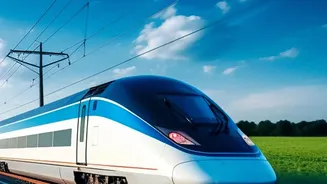
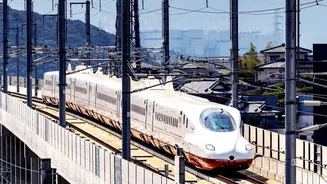
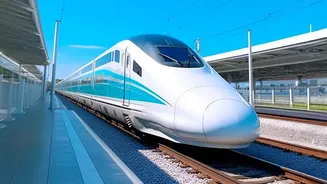
The bullet train is no longer just a distant promise. The Mumbai-Ahmedabad High-Speed Rail (MAHSR) corridor, a flagship infrastructure project, is visibly taking shape. The announcement that the first section will be operational by the end of 2027 marks
a significant moment for the project, which has faced its share of delays. Full construction began in earnest in 2021 after hold-ups related to land acquisition in Maharashtra and the global pandemic. The 508-kilometre corridor, developed with technical and financial cooperation from Japan, is designed to connect India's financial capital, Mumbai, with the economic hub of Ahmedabad. When fully operational, it promises to slash travel time between the two cities to just under two hours. The project is being implemented by the National High Speed Rail Corporation Limited (NHSRCL).
Why Surat to Vapi First?
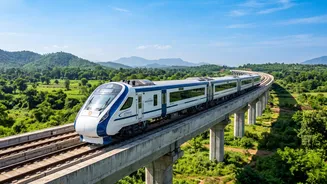
The decision to launch the inaugural service between Surat and Vapi is strategic. This section is part of the corridor's Gujarat stretch, where land acquisition and construction have progressed most rapidly. According to Railway Minister Ashwini Vaishnaw, the construction work on this initial segment is expected to be completed by late 2026, paving the way for extensive testing. Recent updates confirm significant construction milestones across Gujarat, including hundreds of kilometres of pier and viaduct work, the completion of civil works at eight stations, and the installation of noise barriers. Focusing on this approximately 100-kilometre stretch allows Indian Railways to operationalise a key industrial corridor, test systems in a live environment, and deliver a tangible result while work continues on more complex sections.
Track Trials and Indigenous Technology
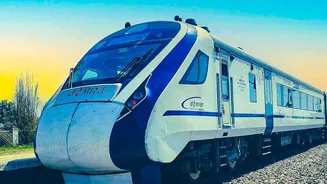
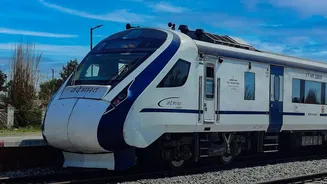
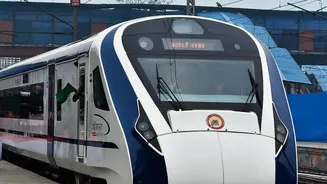
Before passengers can board, the system must undergo rigorous testing. Track trials for the bullet train are slated to begin by mid-2027, with the first trials planned on the 50-kilometre Surat to Bilimora section. This stretch recently achieved a major milestone with the energisation of its overhead electrical equipment. The initial trials will use the indigenous B-28 trainset, which is designed for speeds up to 280 kmph. Developed jointly by the Integral Coach Factory (ICF) and BEML, the first body frame of this 'Made in India' train has already been completed and is undergoing structural testing. This focus on domestic manufacturing is a core part of the project, aimed at building India's capabilities in high-speed rail technology. A more advanced B35 trainset, designed for 350 kmph, is planned for the next phase.
Navigating Complex Challenges
While progress in Gujarat is accelerating, the Maharashtra portion of the project presents unique engineering and logistical challenges. The most significant is the construction of a 21-kilometre tunnel, which includes India's first undersea rail tunnel running for seven kilometres beneath Thane Creek. To expedite this complex work, massive tunnel boring machines—each as tall as a four-storey building—were launched in July 2026. The phased opening, starting with Surat-Vapi in 2027 and potentially extending services towards Thane by 2029, reflects a practical approach to managing these complexities. The successful completion of the entire corridor hinges on overcoming these final hurdles in Maharashtra.
The Impact on Travel and Trade
The launch of the Surat-Vapi section will be more than just a symbolic victory; it will be a preview of a new era in Indian transportation. For the bustling industrial belt of southern Gujarat, the bullet train promises to dramatically reduce travel time and enhance connectivity for business and leisure travellers alike. The project is seen as a catalyst for economic growth, creating new linkages between key commercial centres like Surat, Vapi, Vadodara, and eventually Mumbai and Ahmedabad. By providing a faster, smoother, and more predictable mode of transport, the high-speed rail network is expected to boost productivity and open up new opportunities for regional development long before the entire 508-kilometre route is complete.