




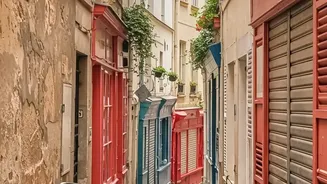
Beyond Lisbon's trams and the Algarve's popular beaches lies a quieter, more authentic Portugal. It's found in the heart of the countryside, where life unfolds slowly in charming town squares that reward those willing to wander off the beaten path.
Monsaraz: The Whitewashed Marvel
Perched
high above the Alqueva Lake in the Alentejo region, Monsaraz is a village where time seems to stand still. Its main square, Largo D. Nuno Álvares Pereira, is the village's social heart. The square is home to the 16th-century parish church, built from local schist and whitewashed to gleam in the sun. In front of it, an 18th-century marble pillory stands as a symbol of the town's historic autonomy. The real magic here is the atmosphere. With its cobblestones and surrounding historic buildings, the square invites you to sit at an outdoor café and simply absorb the tranquility of a place that has remained largely unchanged for centuries. It’s a perfect introduction to the slow, spacious rhythm of the Alentejo.
Sortelha: The Granite Fortress
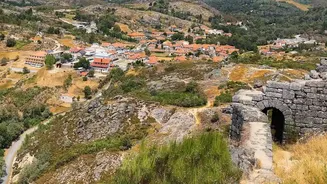
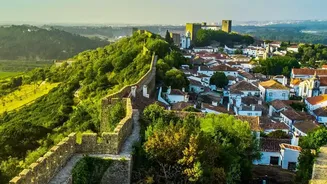
Entering Sortelha is like stepping into a medieval film set. This exceptionally preserved walled village is built almost entirely of granite, from its formidable 13th-century castle to the houses lining its narrow streets. The main square, located near the town hall and castle entrance, is a sober, powerful space defined by stone. Here, a Manueline-era pillory marks the historic center of justice. Unlike the whitewashed charm of the south, Sortelha’s beauty is rugged and dramatic. Exploring the village means walking along ancient defensive walls, discovering carved stonemasons' marks, and taking in panoramic views of the rocky landscape. It offers a powerful sense of Portugal's borderland history, where architecture was first and foremost about defense.
Ponte de Lima: The Riverside Charmer
As the oldest chartered town in Portugal, Ponte de Lima exudes a gentle, historic grace. Its heart is Largo de Camões, a welcoming square on the banks of the Lima River. This plaza serves as the town's living room, centered around an elegant 17th-century fountain. It’s the perfect starting point for a stroll across the famous Roman-medieval bridge that gives the town its name. The atmosphere is relaxed and easygoing; it's a place to watch the world go by from a café or wander along the river. Unlike heavily touristed spots, Ponte de Lima maintains a strong local character, with a famous market and traditional festivals that keep its culture vibrant and accessible.
Marvão: The Eagle's Nest
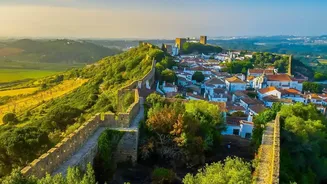
Called the 'eagle's nest' for its dramatic perch nearly 3,000 feet up on a rocky cliff, Marvão is a breathtaking fortified village in the Alentejo region, close to the Spanish border. Inside its medieval walls, you'll find winding cobbled streets and whitewashed houses. While the entire village is an attraction, its small squares, like the Praça do Pelourinho, offer moments of quiet charm amidst the grandeur. These spaces provide stunning views of the surrounding Serra de São Mamede Natural Park. The experience of Marvão is about exploring on foot, from the magnificent castle to the tiny churches and museums, all while feeling suspended between the sky and the rolling plains below. It's a place that combines immense history with an even grander sense of scale.
Tavira: The Graceful Algarve Alternative
While much of the Algarve is known for bustling resorts, Tavira offers a more graceful and tranquil experience. The town is elegantly draped across both banks of the Gilão River, with its main square, Praça da República, serving as a hub of relaxed activity. Lined with cafés and sitting adjacent to the historic Roman Bridge, the square is a shady, inviting space to enjoy the region's famously pleasant weather. Tavira blends Moorish echoes with Renaissance churches and traditional tiled buildings, creating a rich architectural tapestry. It proves that you can find quiet squares and authentic culture even in Portugal's most popular region, simply by looking inland from the crowded coast.