


A New Era of Discovery
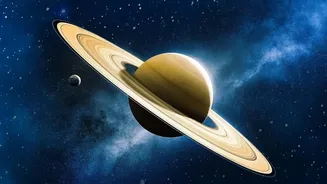
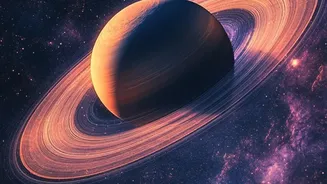
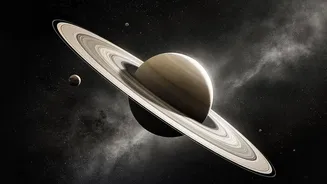
For centuries, astronomers discovered Saturn's moons one by one, from Titan in 1655 to Phoebe in 1899. The Voyager spacecraft added a few more in the 1980s. But recent advances in telescope technology and observation techniques have triggered an explosion
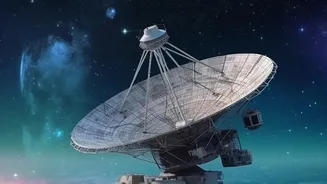
in discoveries. Teams of astronomers using powerful ground-based telescopes can now detect incredibly faint and distant objects. By taking many images of the same patch of sky and stacking them, they can spot tiny points of light moving against the background stars. This method has allowed them to confirm hundreds of new moons in just the last few years, pushing Saturn's official tally to nearly 300. These new moons are tiny, some just a few kilometres wide, which is why they remained hidden for so long.
Meet the 'Irregular' Moons
The vast majority of these newly found moons are classified as 'irregular'. This means they are not in neat, circular orbits around Saturn’s equator like the larger, more familiar moons such as Titan and Enceladus. Instead, they have large, elliptical, and highly inclined orbits. They are often clustered into groups that travel together. Most of them even orbit 'backwards', in a retrograde motion opposite to Saturn's own rotation. This strange behaviour is a huge clue for astronomers: these moons probably didn't form alongside Saturn. Instead, they are ancient objects—likely from the Kuiper Belt or beyond—that were captured by the gas giant's immense gravity billions of years ago.
Cosmic Fossils of a Violent Past
Because these irregular moons are captured relics, they are like cosmic fossils. They provide a snapshot of the chemical and physical conditions of the early solar system from which they came. But their story gets more interesting. The orbital groupings suggest that many of today's small moons are not the original captured objects. Instead, they are likely fragments of larger parent moons that were shattered in violent collisions with comets or other moons long ago. By studying the orbits and sizes of these fragments, scientists can piece together the history of these ancient impacts, revealing a much more chaotic past for the Saturn system than previously imagined.
The Ghostly Ring of Phoebe
The insights from these outer moons extend beyond the moons themselves. Phoebe, one of Saturn's largest irregular moons, is a prime example. Discovered in 1899, this dark, retrograde moon was long a curiosity. In 2009, scientists discovered that Phoebe is the source of a colossal, yet nearly invisible, ring of dust—the largest planetary ring in our solar system. This faint 'Phoebe ring' is tilted relative to Saturn's main rings and shares Phoebe's backward orbit. Dust knocked off Phoebe by micrometeoroid impacts spreads out to form this immense structure. This discovery also solved a long-standing mystery about another moon, Iapetus, which has a strange two-toned surface. Scientists now know that as Iapetus orbits, it plows through dark material from the Phoebe ring, painting one of its hemispheres black.
Clues to How Planets Form
Studying how a giant planet like Saturn captured such a vast and diverse family of moons helps scientists refine their models of how the solar system formed and evolved. The presence of these captured objects supports theories that the giant planets may have migrated from where they originally formed, sweeping up smaller bodies as they moved. Each new moon, no matter how small, adds another data point. It helps astronomers test their theories about gravity, collisions, and the building blocks of planets. They are not just rocks in space; they are pieces of a grand puzzle about our own origins.