







The Old Way of Flying Abroad
Not long ago, the path to an international flight for anyone living outside of India's biggest metropolitan areas was a predictable, two-step hassle. The journey began with a separate, often costly, domestic flight to a major international gateway like
Mumbai, Delhi, or Bengaluru. This meant booking two different tickets, enduring long layovers, collecting and re-checking baggage, and navigating multiple security checks. The total cost wasn't just in rupees; it was measured in time, stress, and missed connections. This model heavily favored a centralized system where major hubs acted as gatekeepers to the world, keeping both domestic feeder flights and the subsequent international legs priced at a premium due to a lack of integrated competition.
A Government Push for the Skies
The single biggest catalyst for change has been a government initiative with a catchy name: UDAN, or 'Ude Desh ka Aam Nagrik' (Let the Common Citizen of the Country Fly). Launched in 2016, the scheme was designed to make air travel affordable and to connect India's vast number of unserved and underserved airports. By subsidizing routes to smaller towns and capping fares on certain flights, the government created a fertile ground for airlines to expand into regional markets. As a result, India's airport network has exploded, growing from 74 operational airports in 2014 to nearly 160 just a decade later. This infrastructure boom didn't just connect small towns to big cities; it laid the foundation for a complete overhaul of how Indians travel internationally.
The Budget Airline Effect
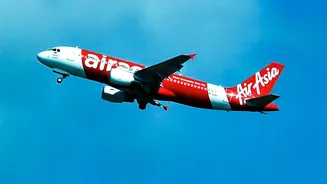
Into this newly connected landscape flew the low-cost carriers (LCCs). Airlines like IndiGo, SpiceJet, and the newer Akasa Air saw a massive opportunity. Armed with fuel-efficient, smaller aircraft suited for shorter routes, they began connecting Tier-2 and Tier-3 cities—think Jaipur, Lucknow, Kochi, and Guwahati—to each other and to the major hubs. This introduced fierce competition on domestic routes, drastically lowering the cost of the first leg of an international journey. More importantly, as these LCCs expanded their own international networks, particularly to the Middle East and Southeast Asia, they began offering single-ticket, seamless connections from these smaller cities. Suddenly, a traveler from Varanasi could book a single itinerary to Dubai, bypassing the need for a separate, expensive ticket to Delhi.
From Hub-and-Spoke to Point-to-Point
The result is a fundamental shift in India's aviation model. While the hub-and-spoke system dominated by major airports still exists, it's now complemented by a growing number of point-to-point international flights from regional centers. Indian carriers are leveraging their strong domestic networks as a competitive advantage over foreign airlines, offering one-stop international connectivity that their global rivals can't easily match. Air India, for instance, has launched services like 'Easy Connect,' allowing passengers from cities like Varanasi to clear immigration at their local airport before a seamless transit through Delhi. This not only drives down fares through increased supply and competition but also dramatically cuts down on travel time and complexity, making the entire experience more comparable to major global transit hubs.
The Future Is Regional
This trend shows no sign of slowing down. Indian airlines are projected to dramatically increase their share of international traffic, in part by capitalizing on these domestic feeder routes. New international flights are being announced not just from Mumbai and Delhi, but from cities like Guwahati, which recently gained direct connections to Dubai and Abu Dhabi. This decentralization is a win-win: travelers get lower fares and more convenience, regional economies get a significant boost from direct global connectivity, and India as a whole becomes a more accessible destination for tourism and business. While challenges like infrastructure at smaller airports and route viability remain, the direction is clear. The next time you search for a flight to India, you might find that the cheapest and easiest route is no longer through a megacity, but through a rising regional star.