
The Evening Star's Grand Performance
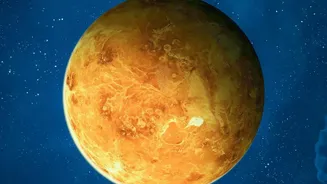
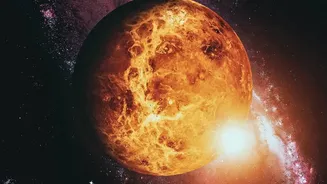
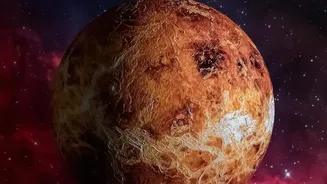
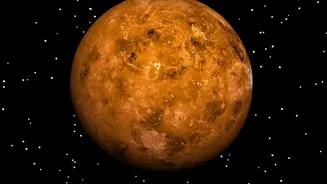
Throughout August 2026, Venus is putting on a spectacular show in the evening sky. Often mistaken for a bright star or even an airplane, Venus is actually the second planet from the Sun and our closest planetary neighbour. Its thick, reflective clouds
bounce so much sunlight back at us that it becomes the brightest planet visible from Earth. This month is particularly special because Venus is reaching its greatest elongation, meaning its farthest apparent distance from the sun in our sky. This placement makes it easier to see, as it lingers in the deepening twilight long after the sun has vanished.
When and Where to Look
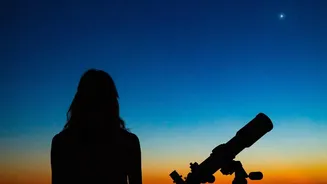
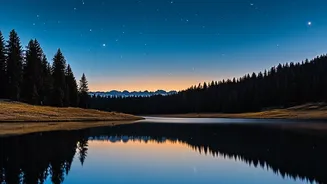
Finding Venus is surprisingly simple. You don't need a telescope or any special equipment. Look low in the western to west-southwestern sky about 30 to 45 minutes after your local sunset. Venus will be the first and brightest point of light to appear in that direction, piercing through the fading glow of twilight. Throughout August, it will remain a prominent fixture, though its exact position relative to the horizon may shift slightly each night. If you have a clear view of the western horizon, free from tall buildings or trees, you will not be able to miss it.
A Step-by-Step Viewing Guide
Ready to find it? Follow these simple steps. First, check the exact sunset time for your location. Websites like Time and Date or the Old Farmer's Almanac can provide this. Second, find a good viewing spot with an unobstructed western horizon. Third, as the sun dips below the horizon, give your eyes about 15-20 minutes to begin adjusting to the darkness. Finally, scan the sky in the direction of the sunset. The most brilliant, steady, non-twinkling point of light you see will be Venus. It’s that easy.
Look for a Celestial Neighbour
To confirm you’re looking at Venus, you can look for its stellar companion this month. The bright star Spica, in the constellation Virgo, will be visible nearby. Throughout August, Venus and Spica will appear to draw closer to each other, heading for a conjunction in early September. On some nights, like August 16, the slender crescent Moon will also join Venus and Spica, creating a beautiful trio in the twilight sky. Using these other celestial markers can give you confidence that you've correctly identified the dazzling Evening Star.
Tips for an Enhanced Experience
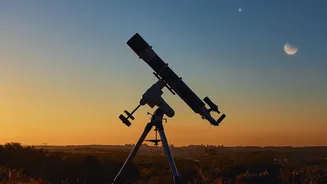
While you can easily see Venus from a brightly lit city, heading to a darker location will always enhance the view and reveal more stars. If you have a pair of binoculars, you can get a better look, though Venus will still just appear as a very bright disc. A small telescope will reveal more detail, showing that Venus goes through phases just like our Moon. In August, it will appear as about half-lit or a thick crescent. You can also use a stargazing app on your smartphone. By pointing your phone at the sky, these apps can identify planets, stars, and constellations in real-time, confirming your discovery of Venus and helping you learn even more about the night sky.