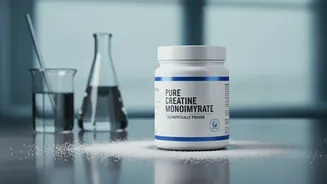







What Exactly Is Creatine?
Creatine is a natural compound that your body produces from amino acids, and it's also found in foods like red meat and fish. About 95% of your body's creatine is stored in your muscles, with smaller amounts in your brain. Its primary role is to help
your cells produce and recycle energy. Specifically, it helps regenerate adenosine triphosphate (ATP), which is the main energy currency your cells use for quick, powerful movements. Think of it as an emergency power pack for your muscles and brain cells. During intense activity, your ATP stores run out in seconds, and creatine steps in to quickly replenish them, allowing you to push harder for longer.
The Engine for Strength and Power
The reason creatine is so popular among athletes and gym-goers is simple: it works. When you supplement with creatine monohydrate, the most studied form, you increase your muscles' phosphocreatine stores. This enhanced energy availability allows you to perform more work during short, high-intensity bursts of exercise, like lifting weights or sprinting. Over time, this ability to handle heavier loads and complete more repetitions translates directly into greater gains in muscle strength, size, and overall athletic performance. Studies consistently show that athletes who combine creatine with resistance training see significantly greater improvements compared to those who don't.
A Surprising Boost for the Brain
While its muscle-building prowess is well-known, the cognitive benefits of creatine are an exciting and growing area of research. Just like your muscles, your brain is an energy-demanding organ. Creatine supplementation can increase creatine levels in the brain, helping to fuel brain cells and improve mental performance, especially under stress or fatigue. Research suggests these cognitive benefits may include improved short-term memory, faster information processing, and enhanced attention. One meta-analysis found a significant positive impact on memory function. While more research is needed, the current evidence indicates that the same supplement that powers your workout can also help keep your mind sharp.
How to Use It: Daily and Consistently
To reap the benefits, consistency is key. The most common and effective approach is a daily maintenance dose of 3 to 5 grams of creatine monohydrate. Some people opt for an initial "loading phase," taking around 20 grams per day (split into four doses) for 5-7 days to saturate their muscles quickly. This can bring results in about a week, whereas a maintenance-only approach takes about three to four weeks to reach the same saturation level. However, the loading phase is not necessary; both methods ultimately lead to the same result. Skipping the loading phase can also help avoid potential minor side effects like bloating or GI discomfort some people experience with higher doses.
Debunking Common Myths
Despite its strong safety profile, myths about creatine persist. One common misconception is that it causes dehydration and muscle cramping, but studies have not supported this; some research suggests it may even reduce cramping. Another persistent myth is that it's harmful to the kidneys. In healthy individuals taking recommended doses, extensive research has found no evidence that creatine harms kidney function. The initial weight gain some people notice is also misunderstood. Creatine draws water into the muscle cells, a process called intracellular hydration, which makes muscles look fuller and supports growth—it's not fat gain or the kind of bloating caused by water retention under the skin.