



The Case of the Vanishing Planet
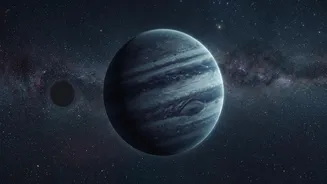
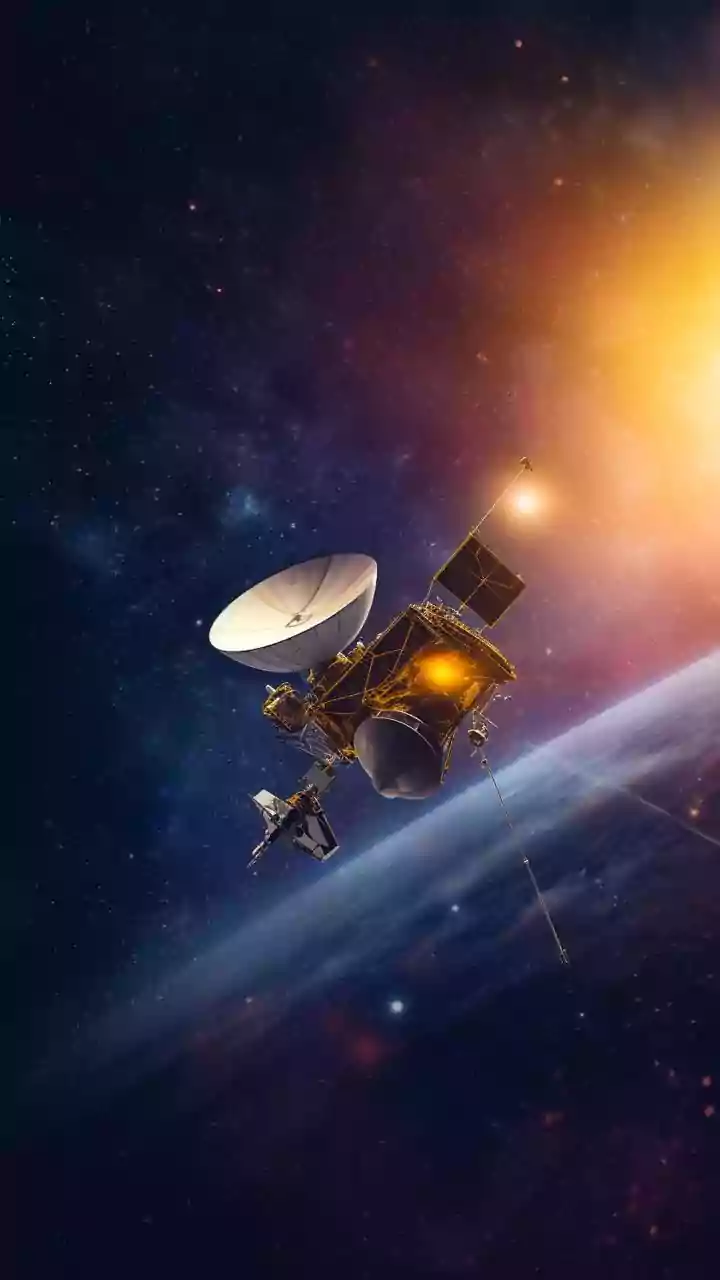
For seven years, from April 2019 to March 2026, astronomers using NASA's Transiting Exoplanet Survey Satellite (TESS) kept a close eye on TOI-2535 b. This massive exoplanet, known as a 'hot Jupiter' for its size and scorching proximity to its star, completed
an orbit in just over eight days. TESS finds planets by detecting the slight, periodic dip in a star's brightness as a planet passes in front of it from our perspective—an event called a transit. But with TOI-2535 b, astronomers noticed something strange. The transits became shorter, shallower, and arrived at unpredictable times, sometimes up to six hours early or late. Then, in early 2026, the planet stopped showing up altogether. It had, from our point of view, disappeared.
A Telltale Wobble
Planets don't just vanish into thin air. The strange behaviour leading up to its disappearance provided crucial clues. A planet orbiting its star alone should transit like clockwork. The significant variations in the timing of TOI-2535 b's transits told astronomers that something else was pulling on it. This gravitational tug-of-war is the work of a hidden companion: another large planet in the same system. Researchers believe an unseen planet, likely at least the mass of Saturn, is orbiting nearby on a tilted axis. The two worlds are locked in a gravitational dance, causing each other's orbits to precess, or wobble, much like a spinning top.
The Hidden Planet Hypothesis
The leading theory is that this unseen neighbour's gravity has slowly tilted TOI-2535 b's orbit out of our line of sight. Imagine the planet's path as a flat disc. For a transit to occur, that disc must be perfectly aligned edge-on with Earth. The gravitational pull from the second planet has tilted that disc, so now TOI-2535 b passes 'above' or 'below' its star from our vantage point, and no longer blocks its light. This is the first time astronomers have directly observed a planet's transits ceasing due to such a rapid orbital change around a single star. The effect is similar to why solar eclipses are rare on Earth; the Moon's orbit is slightly tilted relative to Earth's, so it only perfectly blocks the Sun on rare occasions.
What This Means for Planet Hunting
The discovery of this dynamic duo challenges the idea of planetary systems as perfectly regular, clockwork mechanisms. It shows that planetary orbits can be chaotic and change dramatically over surprisingly short timescales. The precession period for TOI-2535 b is measured in decades, far faster than other known systems. This finding also sheds light on the mystery of how hot Jupiters form. These giants are thought to form far from their stars where ice is plentiful and then migrate inward. The presence of a close, massive neighbour suggests TOI-2535 b likely migrated slowly, spiralling inward rather than being violently flung into its current orbit, a process that helps astronomers refine their models of planetary formation.