




What Is a Planetary Alignment?
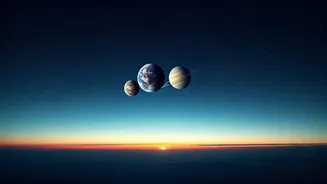
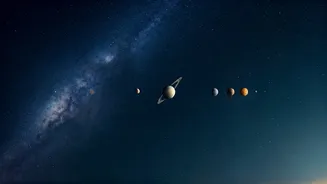
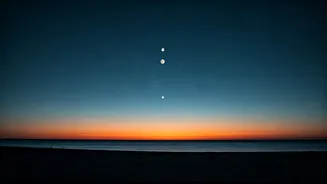
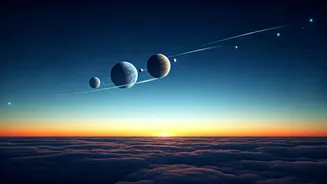
First, let's clarify what a planetary 'line up' means. While the planets won't form a perfectly straight line in space like beads on a string, they will appear grouped together in a small section of the sky from our vantage point on Earth. This is an optical
illusion, but a spectacular one. It happens as the planets, each orbiting the sun at different speeds and on different paths, periodically appear to pass near each other in our night sky. These events, also known as conjunctions, are a treat for stargazers because they offer a chance to see multiple worlds in a single glance.
Meet the Stars of the Show
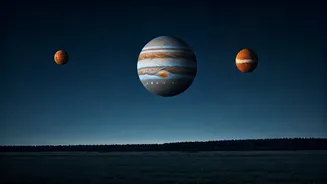
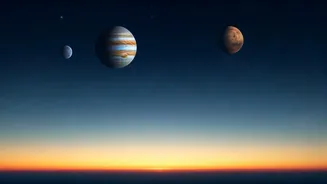
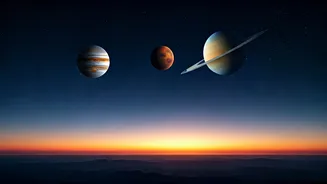
The celestial trio currently gracing our skies are Mars, Jupiter, and Saturn. These are three of the most fascinating and distinct planets in our solar system. Jupiter, the giant, will appear as the brightest, most unwavering point of light. You can't miss its brilliant, steady glow. Saturn, the famous ringed planet, will appear slightly dimmer, with a characteristically yellowish-white hue. Finally, Mars will be identifiable by its distinct reddish or ochre tint, a colour that has earned it the nickname 'the Red Planet'. Seeing their different colours and brightness levels clustered together is part of the magic.
When and Where to Look
The best time to view this planetary parade is during the pre-dawn hours. Set your alarm for about an hour and a half before your local sunrise time. Find a spot with a clear, unobstructed view of the eastern horizon, away from the glare of city lights if possible. The planets will be rising in the east, forming a rough diagonal line. Jupiter will be the most prominent, making it a great anchor point to find the others. Don't worry if you miss one morning; this celestial arrangement will be visible for several weeks, though the spacing between the planets will slowly change each day.
Tips for the Best Viewing Experience
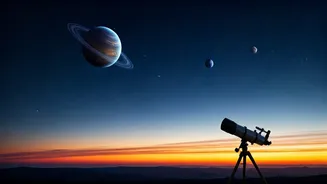
The good news is you don't need any special equipment. All three planets are bright enough to be seen with the naked eye, even from moderately light-polluted urban areas. However, to enhance your view, consider these tips. First, let your eyes adapt to the darkness for at least 15 minutes. This will make it easier to spot the dimmer planets and surrounding stars. If you have a pair of binoculars, they will dramatically improve the view, possibly even revealing Jupiter's four largest moons as tiny pinpricks of light beside the planet. A basic telescope, of course, will offer a breathtaking look at Saturn's rings.
How to Tell Planets from Stars
A common question for new stargazers is how to distinguish a planet from a star. There's a simple trick: planets tend to shine with a steady light, while stars appear to twinkle. This twinkling effect (scientifically known as scintillation) happens because the light from distant stars is distorted as it passes through Earth's turbulent atmosphere. Because planets are much closer to us, their light appears as a more stable, solid disk, making them less prone to twinkling. Once you find a bright 'star' that isn't twinkling, chances are you've found a planet.