
Why August is a Great Month
August 2026 is an excellent time for spotting Saturn. The ringed planet will be visible for much of the night, rising in the east in the evening and tracking across the sky until dawn. While its brightest point for the year, an event called opposition,
isn't until early October, late August provides a superb viewing window as the planet gets brighter and more prominent. During this time, Saturn will be visible in the constellation Pisces, which conveniently doesn't have many bright stars, making the planet easier to single out. On a few nights, like August 3rd and 31st, the Moon will pass nearby, acting as a helpful guidepost to locate the planet.
What You Will Need
The best part about hunting for Saturn is that you can start with just your eyes. It is the most distant planet easily visible without any equipment. However, to truly appreciate it, a little help goes a long way. A good pair of binoculars will stabilize its light and might give you the first hint that it's not perfectly round. A small telescope, even a beginner's model with at least 30x magnification, is what you'll need to resolve its famous rings. Beyond optics, consider a stargazing app on your smartphone. These apps use your phone's location to show you a real-time map of the sky, making it simple to identify constellations and confirm you're looking at Saturn and not a star. A comfortable chair and a blanket can also make your viewing session much more enjoyable, especially as you wait for your eyes to adjust to the darkness.
Finding a Good Spot
Your viewing location is crucial. The biggest challenge for most city and suburban dwellers is light pollution—the glow from artificial lights that washes out the fainter stars. To give yourself the best chance, try to find a spot as far away from city lights as possible, such as a large park, a rural area, or a designated dark sky place. The key is an unobstructed view of the eastern horizon, as this is where Saturn will rise in the evening. Before you head out, give your eyes at least 15-20 minutes to fully adapt to the darkness. This means avoiding looking at your bright phone screen. Many stargazing apps have a red-light mode to help preserve your night vision.
When and Where to Look
Throughout August 2026, Saturn will rise in the east a couple of hours after sunset. As the month progresses, it will rise earlier and earlier. By late evening, around 10 or 11 p.m., it will be high enough above the horizon to get a clear view. Look towards the eastern sky for the constellation Pisces. If you're not familiar with constellations, don't worry. Saturn will be one of the brightest objects in that area. You're looking for a steady, non-twinkling point of light. Planets tend to shine with a more stable light compared to the twinkling of distant stars. Saturn itself has a distinct yellowish-white or golden hue, which can help you distinguish it from the whiter or blue-white stars.
What You Will See
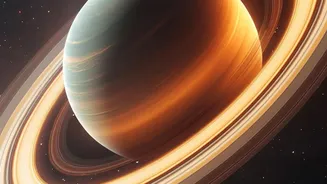
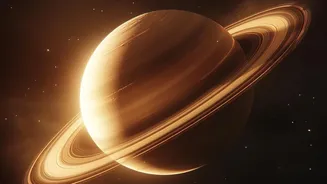
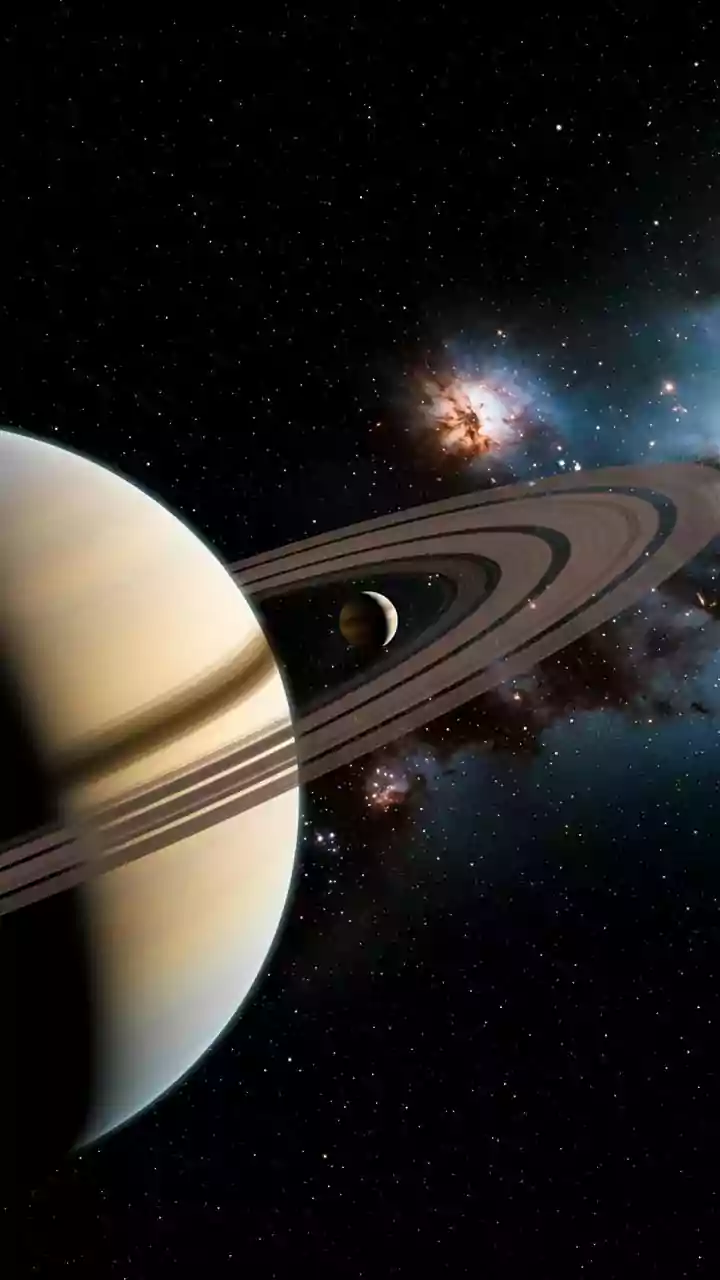
To your naked eye, Saturn will appear as a bright, star-like object. The magic begins when you use optical aid. Through a good pair of binoculars, you might notice its shape is slightly elongated or oval, a first clue to its magnificent rings. Through a telescope, the sight is unforgettable. You will be able to see the planet as a distinct orb, separate from its rings. In 2026, the rings will be tilted enough for a good view. With a small telescope, you should be able to see the gap between the planet and the rings, a truly breathtaking sight that has captivated astronomers for centuries. If your telescope is powerful enough, you might even spot its largest moon, Titan, which will look like a tiny star very close to the planet.