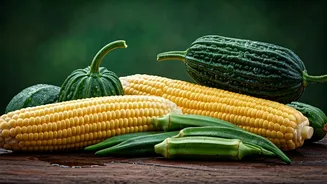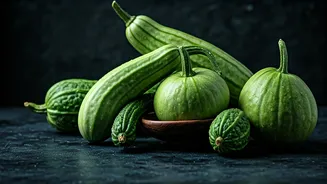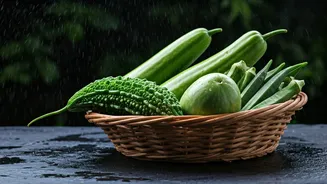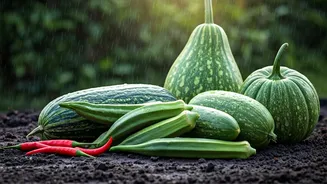

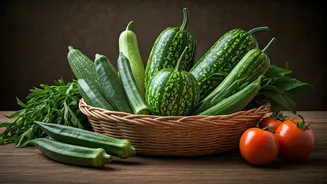


Pointed Gourd (Parwal)
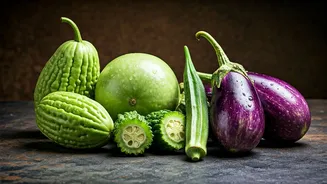
Often hailed as the king of monsoon vegetables, parwal is a hardy vine plant that flourishes during the rainy season. Its ability to withstand heavy water-logging makes it a reliable crop for farmers. Rich in vitamins A and C, antioxidants, and fibre,
this small, green gourd is a powerhouse of nutrition. It’s known in Ayurveda for helping to purify the blood and improve digestion, which can sometimes be sluggish during the humid monsoon months. Its subtle flavour makes it incredibly versatile. You can stuff it with masalas for a classic Bharwa Parwal, toss it into a simple stir-fry with potatoes, or add it to rich, gravy-based curries. It’s a humble vegetable that truly shines this time of year.
Bitter Gourd (Karela)
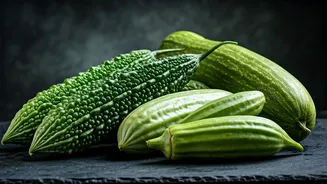
Love it or hate it, you can’t ignore it—especially during the monsoon. Karela is known for its incredible immunity-boosting properties, which are particularly welcome when the season brings a higher risk of infections. It’s packed with antiviral and antibacterial compounds. The monsoon crop is often less bitter and more tender than its summer counterpart. The key to enjoying karela is preparing it correctly. Slicing it, salting it, and letting it rest for 30 minutes can draw out much of the bitterness. From there, you can make crispy, deep-fried chips, a tangy stuffed karela, or a simple sabzi with onions and tomatoes that balances its strong flavour.
Bottle Gourd (Lauki/Doodhi)
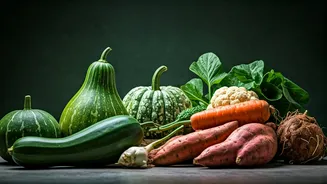
Lauki is the ultimate comfort vegetable. Light, easy to digest, and with high water content (over 90%), it’s perfect for staying hydrated and keeping meals from feeling too heavy. It grows abundantly during the rains. While some find it bland, lauki is a culinary chameleon, absorbing the flavours of whatever spices it’s cooked with. It’s a fantastic source of dietary fibre, aiding digestion, and is low in calories. Beyond the classic lauki sabzi, try grating it to make delicious koftas, blending it into a spiced soup, or even adding it to dals to make them more nutritious. It's the simple, soothing ingredient your monsoon kitchen needs.
Ridge Gourd (Tori)
With its distinct ridges and soft, spongy flesh, tori (or turai) is another monsoon staple. This gourd is exceptionally good for you, known for its blood-purifying properties and its high fibre content, which helps maintain gut health. It has a delicate, slightly sweet taste that pairs beautifully with simple spices. Because it cooks down significantly, it’s great for creating light yet flavourful curries. A popular preparation involves cooking it with soaked chana dal for a textural contrast, or simply stir-frying it with mustard seeds, turmeric, and a hint of chilli. Don't throw away the peels! If they are tender, they can be used to make a delicious and nutritious chutney.
Sweet Corn (Bhutta)
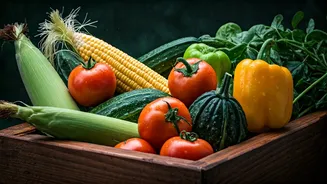
Is it even monsoon without a roasted bhutta, charred over hot coals and rubbed with salt, chilli, and lime? Corn is harvested during this season, making it incredibly fresh, sweet, and juicy. It’s a complex carbohydrate that provides sustained energy, and it's also a good source of fibre and antioxidants like lutein and zeaxanthin, which are beneficial for eye health. Beyond the street-side classic, you can enjoy fresh corn kernels in salads, soups, and sabzis. Steamed corn mixed with chopped onions, tomatoes, and chaat masala makes for a perfect rainy-day snack that’s both healthy and satisfying.
Indian Squash (Tinda)
Also known as apple gourd, tinda is a small, round vegetable that is almost exclusively available during the monsoon. It has a very mild flavour and a tender texture, making it a favourite in many North Indian households. Like other gourds, it's low in calories, high in water content, and easy on the digestive system. Its subtle taste makes it a perfect vehicle for robust spices. Tinda is most commonly prepared as a simple homestyle sabzi with tomatoes, ginger, and garlic, but it can also be stuffed with a spiced paneer or potato mixture for a more elaborate dish. Its arrival in the market is a sure sign that the rains are here to stay.