





What is a Lunar Close Approach?
In astronomy, a close approach, or conjunction, is a beautiful illusion. Two celestial objects aren't actually close to each other in space—Venus is millions of kilometres away from the Moon. However, from our vantage point on Earth, their paths across
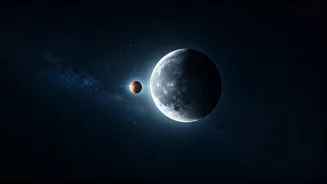
the sky appear to intersect, making them look like celestial neighbours for a short while. On June 17, the waning crescent Moon will pass very close to Venus. This isn't just an astronomical curiosity; it's one of the most visually stunning types of conjunctions because both the Moon and Venus are the brightest objects in our night sky after the Sun.
Why This Event is Special
While lunar conjunctions with planets happen periodically, the proximity and visibility of this event make it noteworthy. The 'rare' aspect comes from how tight the pairing will be, appearing less than a degree apart for some observers. This is close enough for both objects to be seen together in the field of view of a telescope or binoculars, and even framed beautifully in a single photograph. The scene will feature a delicate, slim crescent Moon alongside the dazzlingly bright Venus, creating a photogenic 'cosmic duo' against the backdrop of the pre-dawn twilight. This combination of brightness and closeness is what has astrophotographers particularly excited.
A Viewing Guide for India
This celestial show is an early morning event. For viewers across India, the best time to look will be in the pre-dawn hours of Saturday, June 17. You'll need a clear view of the eastern horizon. The duo will rise at approximately 4:00 AM IST, though this may vary by a few minutes depending on your exact location. From major cities like Delhi, Mumbai, Bengaluru, and Kolkata, the pair will be visible low in the east-northeast sky before sunrise. They will be bright enough to be easily seen with the naked eye, so no special equipment is required to simply enjoy the view. As the sky begins to brighten around 5:30 AM, they will eventually fade into the glare of the morning sun.
How to Photograph the Celestial Pair
Capturing this event is achievable with almost any camera. Here’s a quick guide based on your gear: Smartphone: Modern smartphones are surprisingly capable. Use the 'Pro' or 'Night' mode. Tap on the Moon to set focus and exposure, then manually lower the brightness to avoid blowing out the details of the crescent. To keep the shot steady, brace your phone against a stable surface or use a small tripod. Point-and-Shoot/Bridge Camera: If your camera has a zoom, use it sparingly to frame the scene. A longer zoom will require a tripod to prevent blurry images. Like with a smartphone, use manual settings if possible to control exposure and focus. DSLR/Mirrorless Camera: This is where you can get creative. A tripod is essential. Use a lens anywhere from 50mm to 200mm. Start with these settings and adjust: Aperture f/4 to f/8, ISO 200 to 800, and a shutter speed of 1 to 4 seconds. Use a 2-second timer or a remote shutter to avoid camera shake.
Tips for a Memorable Shot
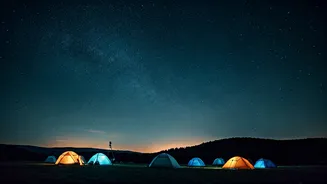
To elevate your photo from a simple snapshot to a stunning image, consider composition. Don't just shoot the sky; include a foreground element to give your photo a sense of place and scale. This could be a cityscape silhouette, a lone tree, a temple spire, or a mountain range. Arrive at your chosen location early to set up and compose your shot before the celestial pair rises. Take multiple exposures—some focused on the bright highlights of the Moon and Venus, others on the darker foreground—which you can later blend into a single, well-exposed high dynamic range (HDR) image. But most importantly, remember to put the camera down for a moment and simply appreciate the quiet beauty of the event with your own eyes.