


Saturn just had its biggest and brightest night of the year, but the party in the night sky is far from over. October is packed with celestial events, from the lingering glow of the ringed planet to multiple meteor showers and other planetary cameos.
Saturn's Continued Brilliance
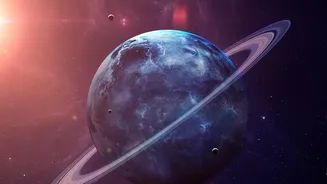
On October 4, Saturn reached opposition, the point where Earth passes directly between the sun and the ringed planet. This alignment makes Saturn appear at its brightest and largest for the year, and it remains visible all night long, rising around sunset and setting around sunrise. While its absolute peak has passed, the planet's apparent size and brightness change very slowly. For the rest of October, Saturn will continue to be a fantastic target for skywatchers. You don't need any special equipment to spot it; it will appear as a steady, bright, yellowish point of light in the eastern evening sky. Unlike twinkling stars, Saturn shines with a constant glow. It’s located in a relatively dim patch of the sky, in the constellation Cetus, making it the most prominent object in that area and easy to pick out.
Catching a Glimpse of the Rings
While Saturn itself is visible to the naked eye, its famous rings require some optical aid. Even a good pair of binoculars might only reveal Saturn as a slightly elongated dot, but a small backyard telescope will bring the iconic rings into view. After being nearly edge-on and invisible in 2025, the rings have tilted back towards us, making for a spectacular sight. For the best view, wait until Saturn is higher in the sky, ideally around midnight, to minimize the amount of Earth’s turbulent atmosphere you have to look through. Many local astronomy clubs and planetariums host public viewing nights, which can be a great way to see the planet through a powerful telescope.
An Evening Meteor Shower: The Draconids
October features two notable meteor showers, starting with the Draconids. This shower is active from October 6 to 10, peaking on the night of October 8-9. Unlike most meteor showers that are best viewed after midnight, the Draconids are an exception, offering their best performance in the early evening hours, right after dark. This is because their radiant point—the spot in the sky where they appear to originate—is in the constellation Draco, which is high in the northern sky after sunset. The Draconids are typically a modest shower, producing about 5 to 10 meteors per hour, but they have been known to produce surprising outbursts. This year, the peak occurs close to the new moon on October 10, meaning moonlight won't interfere, creating excellent viewing conditions for spotting these shooting stars.
Debris from Halley's Comet: The Orionids
Later in the month, the Orionid meteor shower takes the stage, peaking on the night of October 21-22. Produced by dust and debris left behind by the famous Halley's Comet, the Orionids can produce up to 20 meteors per hour under dark skies. These meteors are known for being fast and can often leave persistent, glowing trains. The shower's radiant is in the constellation Orion, but you can see meteors streaking across any part of the sky. This year, a bright waxing gibbous moon will be present for much of the night, washing out some of the fainter meteors. For the best chance of a good show, head out in the hours before dawn, after the moon has set.
Other Planetary Highlights
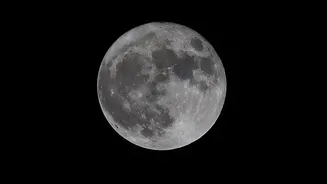
Saturn isn't the only planet gracing the October sky. Bright Jupiter and reddish Mars are both prominent in the pre-dawn hours. On the morning of October 6, the waning crescent moon will pass incredibly close to Jupiter, with some parts of the U.S. and Canada even witnessing a lunar occultation, where the moon briefly passes in front of the giant planet. Mars also gets a visitor, with the moon passing nearby on the morning of October 5. Later, around October 11, Mars can be seen passing through the Beehive Cluster (M44), a beautiful sight in binoculars or a small telescope.