

Igniting a Fire of Curiosity
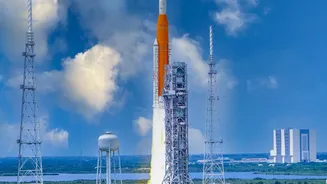
For many students, subjects like physics and mathematics can feel abstract and disconnected from the real world. Space exploration changes that. When a student witnesses a rocket launch or sees the first images from a distant planet, it sparks a sense
of curiosity that textbook problems often cannot. This is not just about a fleeting moment of excitement; it's about connecting complex scientific principles to an awe-inspiring, tangible achievement. The successes of the Indian Space Research Organisation (ISRO), from the Chandrayaan missions to preparations for Gaganyaan, have powerfully demonstrated that these extraordinary feats are within our nation's reach, making careers in science and technology feel more accessible and exciting for young minds across the country.
Making Theory Tangible
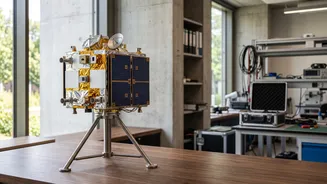
Space provides the ultimate real-world application of STEM concepts. The principles of aerodynamics and propulsion become clear when a student builds and launches a model rocket. The complexities of orbital mechanics are no longer just equations on a page but the reason a satellite stays in the sky. Educational programmes that allow students to design experiments for the International Space Station (ISS) or build their own miniature satellites (CubeSats) transform them from passive learners into active participants in the scientific process. These hands-on experiences bridge the gap between theory and practice, fostering a deeper, more intuitive understanding of difficult subjects.
Building India's Future Workforce
India's ambitions in technology and its growing space economy, projected to reach over USD 40 billion in the next decade, depend on a robust pipeline of skilled professionals. The space sector is a key driver for careers not just in aerospace engineering, but in robotics, data science, electronics, and telecommunications. Recognising this, ISRO has initiated several programmes to “catch them young.” Initiatives like the YUva VIgyani KAryakram (YUVIKA) or Young Scientist Programme impart basic knowledge on space science and applications to school children, with a focus on those in rural areas. By providing a clear overview of career paths and research opportunities, these programmes help build the human capacity needed to lead India's space and technology sectors in the future.
Developing 21st-Century Skills
A STEM education is not just about memorising facts; it is about developing a mindset. The challenges inherent in space exploration—designing systems that can withstand extreme environments, solving problems from millions of kilometres away, and ensuring mission success against all odds—are exercises in critical thinking, creative problem-solving, and resilience. Furthermore, space missions are massive collaborative efforts, often involving international cooperation. Exposing students to this environment teaches them the value of teamwork and communication. These are not just skills for a future astronaut or space scientist; they are versatile abilities essential for success in almost any modern career.